

 미리보기
미리보기
 공유하기
공유하기 공유하기
공유하기
 상세 정보
상세 정보

 다운로드
다운로드
 유사 작품
유사 작품 X-레이
X-레이 슬라이드 쇼
 통계 정보
통계 정보Venus and Adonis


 더 보기
더 보기
수제 유화 복제품
원하는 크기와 액자로 주문 제작되는, 작가들이 직접 캔버스에 손으로 그린 유화 작품입니다. ( 프린트 판매로 전환 디지털 이미지로 전환)




P118B $10

P118H $10

P118W $10

P438Z $10

P508JH $12

P508YH $12

P805H $10

P805Z $10

P919BZ $10

P919G $10

P919XJ $10

P959ZH $10

P968JZ $12

W106C $8

W218G $10

W218JH $8

W218Y $10

W307PJ $10

W316G $10

W316PJ $8

W316Y $10

W398PJ $8

W4111J $10

W500HY $15

W500JH $15

W692G $12

W849H $8

W940BG $15

W953PJ $8




작품의 원본 비율을 유지하는 미리 설정된 크기 중에서 선택하세요.

특정 프레임이나 공간에 맞도록 직접 크기를 입력할 수 있습니다. 선택하신 크기가 원본 이미지의 비율과 일치하지 않는 경우, 작품을 자르거나 추가적인 손으로 그린 요소를 사용하여 그림을 확장합니다. 제작 시작 전 승인을 위해 디지털 목업을 보내드립니다.
화면 미리 보기는 실제 자르기 또는 확장을 반영하지 않습니다. 최종 구성은 목업을 통해서만 정확하게 확인하실 수 있습니다.
맞춤 크기 제작도 가능하지만, 원본 비율을 유지하기 위해 사전 정의된 목록에서 크기를 선택하시는 것을 권장합니다.
주문 후 OriginalUniqueArt.com 팀에서 상세 안내를 위해 고객님께 이메일을 보내드리며, 미리보기 시안을 제공해 드립니다.


 유리 옵션은 110cm 미만 크기에서만 선택 가능합니다.

Venus and Adonis
재현 기법
복제본 크기
-


최종 결제 금액
$ 350
A Moment Frozen in Marble: Francis van Bossuit’s “Venus and Adonis”
Francis van Bossuit's "Venus and Adonis," crafted around 1680, is more than just a depiction of a classical myth; it’s a poignant meditation on love, loss, and the ephemeral beauty of youth. This exquisite ivory relief, now housed within the Rijksmuseum in Amsterdam, offers a rare glimpse into the burgeoning Baroque aesthetic flourishing in Flanders during the late 17th century. Bossuit's work stands as a testament to his mastery of capturing both the physical form and the emotional weight of his subject matter – a skill honed through rigorous training under masters like Jan Baptist Bernardi, yet ultimately shaped by his own distinctive artistic vision.
The scene unfolds with heartbreaking immediacy. Adonis, having succumbed to a fatal wound sustained during a hunt, lies prostrate on a bed of pomegranates, his body dramatically angled towards the viewer. His head, rendered with remarkable sensitivity, is turned upwards in a gesture of vulnerability and acceptance. Venus, radiant and sorrowful, rushes forward to embrace him, her flowing drapery swirling around her form – a deliberate choice that emphasizes both her divine status and the tragic circumstances surrounding their encounter. A winged Cupid, his face etched with grief, descends from the heavens, mirroring the goddess’s despair, while an everzwijn (boar) stands as a silent witness to this devastating tableau. The composition is meticulously balanced; the dynamism of Venus' approach contrasts sharply with Adonis’ stillness, creating a powerful visual narrative.
The Language of Form: Technique and Material
Bossuit’s technical skill is immediately apparent in the intricate detailing of the relief sculpture. Each muscle, each fold of fabric, each strand of hair has been painstakingly carved from ivory – a material prized for its luminosity and ability to capture subtle tonal variations. The artist masterfully employs *chiaroscuro*, utilizing light and shadow to sculpt volume and depth, giving the figures a tangible presence that transcends the limitations of the medium. The smooth, polished surface of the ivory contrasts beautifully with the rougher texture of the foliage in the background, further enhancing the sense of realism. The choice of ivory itself speaks volumes about Bossuit’s artistic sensibilities – it was often associated with religious imagery and considered a material worthy of depicting sacred subjects.
The meticulous attention to detail extends beyond mere representation; Bossuit clearly sought to evoke an emotional response in the viewer. He doesn't simply depict the myth; he captures the *feeling* of it – the agonizing beauty of love, the inevitability of death, and the profound sorrow of loss. The positioning of Adonis’s body, the downward tilt of his head, and the expression on Venus’s face all contribute to this powerfully emotive effect.
Symbolism and Mythological Resonance
The story of Venus and Adonis is a cornerstone of classical mythology, exploring themes of unrequited love, desire, and mortality. Venus, the goddess of love, relentlessly pursued the mortal hunter Adonis, but her affections were ultimately rejected. The tragic outcome – Adonis’s death at Venus's hands – underscores the inherent conflict between the divine and the mortal realms. Bossuit cleverly incorporates elements that amplify this symbolism: the everzwijn represents the brutal reality of mortality, while Cupid embodies the bittersweet nature of love—a source of both joy and sorrow.
Furthermore, the setting itself is laden with symbolic meaning. The pomegranates, associated with fertility and abundance, are juxtaposed against Adonis’s lifeless form, highlighting the futility of earthly pleasures in the face of death. The overall composition can be interpreted as a poignant allegory for the fleeting nature of beauty and youth, reminding us that even the most passionate love is ultimately subject to time's relentless march.
A Legacy of Elegance: Bossuit’s Influence
Francis van Bossuit’s work represents a pivotal moment in Flemish Baroque sculpture. His refined style, characterized by its delicate execution and profound emotional depth, profoundly influenced subsequent generations of artists. His emphasis on classical forms, combined with his masterful use of ivory, established him as one of the leading sculptors of his time. The “Venus and Adonis” relief stands not only as a beautiful work of art but also as a window into the artistic sensibilities of a bygone era – a testament to the enduring power of myth, beauty, and human emotion.
작가 약력
A Master of Ivory and Light
In the grand tapestry of the Baroque era, few artists captured the delicate intersection of classical grace and emotional intensity as exquisitely as Francis van Bossuit. Born in Brussels around 1635, Van Bossuit emerged from the vibrant artistic traditions of Flanders to become a sculptor whose name would become synonymous with the refined elegance of ivory relief. His journey was one of profound movement and cultural immersion, beginning in the workshops of his homeland where he absorbed the intricate techniques of Flemish Mannerism under masters such as Jan Baptist Bernardi. Yet, it was his transformative voyage to Italy that would forever alter the trajectory of his art, infusing his work with a timeless, classical soul.
During his pivotal years in Rome and Florence, Van Bossuit became a student of antiquity, wandering through the halls of the Vatican Museums to study the idealized forms of ancient sculpture. This period of intense observation allowed him to bridge the gap between the exuberant energy of the Flemish Baroque and the disciplined harmony of Roman classicism. He even joined the Bentvueghels, a spirited society of Northern artists in Rome, adopting the moniker “Waarnemer”—the Observer—a title that perfectly encapsulated his meticulous approach to capturing the nuances of human form and mythological narrative.
The Art of Miniature Grandeur
While many sculptors of his era sought monumental scale, Van Bossuit found his greatest triumphs in the intimate. He specialized in the breathtaking medium of ivory, a material that demanded unparalleled precision and offered a luminous, skin-like translucency ideal for depicting the soft contours of mythological figures. His reliefs were not merely decorations but miniature dramas, where every curve of a limb or fold of drapery whispered stories of love, tragedy, and divine intervention. Through his hands, subjects such as Venus and Adonis became vessels of profound emotion, capturing the very moment where passion meets the shadow of mortality.
His technical mastery extended beyond ivory to include terracotta and wood, though it was in the delicate carving of small-scale reliefs that he achieved true immortality. His repertoire often drew from the rich well of Ovidian myth, bringing to life scenes of Mars, Susanna and the Elders, and the tragic Flaying of Marsyas. These works were characterized by a unique stylistic duality: the structural vigor of his Flemish training paired with a newfound, serene classicism inspired by the Italian Renaissance and the burgeoning aesthetic of Versailles.
Legacy and Enduring Influence
As Van Bossuit settled in Amsterdam toward the end of his life, his reputation preceded him, reaching far beyond the borders of the Low Countries. His influence was not limited to the physical objects he left behind but extended into the very pedagogical fabric of European art. The engravings published posthumously in the Cabinet de l'art de sculpture served as vital models for subsequent generations of artists, ensuring that his compositions continued to circulate through the studios of Europe long after his death in 1692.
The historical significance of Francis van Bossuit lies in his ability to act as a cultural conduit. He successfully synthesized the disparate worlds of Northern European detail and Mediterranean idealism, creating a refined aesthetic that anticipated the Neoclassical movements of later centuries. Today, his surviving works—housed in prestigious institutions such as the Victoria and Albert Museum and the Getty Center—stand as silent, luminous witnesses to a period when art sought to find the infinite within the infinitesimal.

Francis van Bossuit
1635 - 1692 , Belgium
주요 정보
- Artistic Movement Or Style: Classical Sculpture
- Artists Or Movements Influenced By This Artist: ['Willem van Mieris']
- Artists Who Influenced This Artist: ['Jan van Goyen']
- Date Of Birth: Brussels, Belgium (1635)
- Date Of Death: Amsterdam (1692)
- Full Name: Francis van Bossuit
- Nationality: Flemish
- Notable Artworks:
- Venus and Adonis
- Judith with the Head of Holofernes
- Place Of Birth: Brussels
관련 기사 더 보기

The Enduring Form: Sculpture Across History, Technique & Emotional Resonance
Explore the rich history of sculpture with OriginalUniqueArt. Discover key techniques, influential artists & investment potential for discerning collectors. Expert insights into valuing and collecting timeless masterpieces.
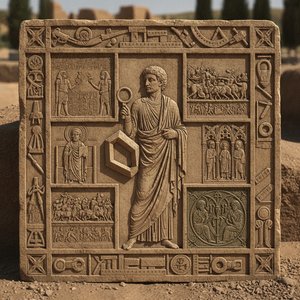
Mastering Dimension: An Art Historian's Guide to the Elegance of Sculptural Relief Art
Explore the profound beauty of sculptural relief art. From classical bas-relief to modern geometric textures, discover how depth and light transform spaces through an expert guide on art history and sophisticated curation for discerning collectors.

Bronze Sculptures That Defined Art History | OriginalUniqueArt
Journey through art history with our Top 10 bronze sculptures! Explore masterpieces by Rodin, Michelangelo & more. Discover stories behind iconic statues and find museum-quality reproductions for your home decor at OriginalUniqueArt.com.

Bronze Age to Modern Masters: 10 Sculptures That Redefined Art | OriginalUniqueArt
Journey through art history with 10 legendary bronze sculptures – from Michelangelo's David to Rodin’s Thinker. Explore the stories, techniques & timeless beauty of these masterpieces. Find museum-quality reproductions & elevate your home decor on OriginalUniqueArt.com.

The Enduring Form: Exploring Themes & Techniques in Sculpture Across Historical Periods
Explore the rich history of sculpture from ancient masterpieces to contemporary innovations. Discover key techniques, influential artists & investment potential for discerning art collectors.