

 실제 크기로 보기
 보내기
보내기 공유하기
공유하기
 상세 보기
상세 보기 가이드 보기

 이미지 다운로드
 유사 작품 더 보기
 X-레이
X-레이 슬라이드 쇼 보기
 통계 정보
통계 정보Hagar and the Angel
 Oil On Canvas
- WallArt
- Baroque Mannerism
 1657
1657- Early Modern
 106.0 x 137.0 cm
 메트로폴리탄 미술관
 상세 보기
상세 보기
지클레 / 아트 프린트
빠른 제작과 다양한 마감 옵션을 선택할 수 있는 박물관 수준의 지클레이 및 캔버스 프린트. ( 수작업 채색 복제본 주문하기 디지털 이미지 판매 채널로 전환)




P118B ₩10

P118H ₩10

P118W ₩10

P438Z ₩10

P508JH ₩12

P508YH ₩12

P805H ₩10

P805Z ₩10

P919BZ ₩10

P919G ₩10

P919XJ ₩10

P959ZH ₩10

P968JZ ₩12

W106C ₩8

W218G ₩10

W218JH ₩8

W218Y ₩10

W307PJ ₩10

W316G ₩10

W316PJ ₩8

W316Y ₩10

W398PJ ₩8

W4111J ₩10

W500HY ₩15

W500JH ₩15

W692G ₩12

W849H ₩8

W940BG ₩15

W953PJ ₩8




작품의 원본 비율을 그대로 유지하는 프리셋 사이즈 중에서 선택해 보세요.

액자나 벽면 크기에 맞춰 필요한 가로와 세로 길이를 입력해 주세요. 프린트는 원본 이미지보다 크게 제작할 수 없으며 오직 자르는 것만 가능하므로, 비율이 다른 사이즈를 선택할 경우 이미지의 일부가 잘려 나갈 수 있습니다. 인쇄 작업에 들어가기 전, 최종 확인을 위해 디지털 목업을 보내드립니다. 이 페이지에 표시된 이미지는 실제 잘리는 영역을 나타내지 않으며, 오직 목업을 통해서만 정확한 확인이 가능합니다.


 유리 옵션은 110cm 미만 크기에서만 선택 가능합니다.

Hagar and the Angel
지클레 / 아트 프린트
복제본 규격
-


총 결제 금액
₩ 108564
A Venetian Vision of Divine Mercy
In the sweeping expanse of Francesco Maffei’s 1657 masterpiece, “Hagar and the Angel,” viewers are transported to the desolate, sun-scorched wilderness of Beersheba. This monumental canvas serves as a profound testament to the enduring spirit of Venetian Mannerism, capturing a moment of raw human vulnerability met by celestial intervention. The scene depicts Hagar, the Egyptian servant of Abraham, caught in a moment of desperate prayer as she seeks sustenance for herself and her son, Ishmael. Maffei does not merely illustrate a biblical passage from Genesis; he orchestrates a spiritual encounter where the boundaries between the earthly and the divine become beautifully blurred through light and motion.
The painting’s emotional resonance is anchored by Hagar’s kneeling posture, her hands clasped in a gesture of profound devotion. Beside her, an angel emerges not as a distant, detached entity, but as a radiant presence that pierces the gloom of her hardship. The composition is masterfully balanced, with secondary figures and a dramatic, mountainous landscape providing depth and a sense of scale to this intimate drama. For the collector or designer, this piece offers more than just a historical window; it provides a focal point of intense spiritual gravity, making it an ideal centerpiece for spaces intended to evoke contemplation, peace, and strength.
Mastery of Light and Venetian Technique
Maffei’s technical execution is a brilliant display of the pittura de tocco e di macchia—a style characterized by a delicate touch and expressive patches of color. Eschewing the rigid, meticulous realism of earlier eras, Maffei employs a loose, fluid brushstroke technique that allows light to dance across the canvas. This approach creates shimmering surfaces and an atmospheric perspective that makes the desert air feel heavy with heat and divinity. The artist’s deliberate use of chiaroscuro—the dramatic interplay between deep shadows and brilliant highlights—serves a dual purpose: it sculpts the figures with a sense of physical weight while simultaneously amplifying the supernatural glow emanating from the angelic messenger.
The color palette is quintessentially Venetian, utilizing luminous tones that seem to vibrate against the darker, more somber elements of the landscape. This interplay of light and shadow does not merely decorate the scene; it directs the eye toward the heart of the narrative, ensuring that the viewer’s gaze is constantly drawn back to the intersection of Hagar's suffering and the angel's grace. Such a sophisticated use of technique ensures that a high-quality reproduction of this work retains its ability to captivate and command attention in any sophisticated interior setting.
Symbolism and Historical Resonance
To understand “Hagar and the Angel” is to grasp the broader artistic currents of the Baroque era. Moving away from the idealized perfection of the Renaissance, Maffei embraced a more emotionally charged and visceral portrayal of sacred subjects. This shift reflected the intellectual and spiritual fervor of the time, as artists sought to inspire piety through movement, emotion, and dramatic tension. Every element within the frame is laden with symbolic meaning: the angel’s outstretched hand acts as a visual conduit for God's benevolent protection, while the parched, desolate landscape serves as a poignant metaphor for the spiritual dryness and vulnerability inherent in the human condition.
For those looking to adorn their homes or galleries with art that tells a story of resilience, this painting offers an unparalleled narrative. It is a celebration of faith overcoming adversity and the belief that even in our most desolate moments, we are not truly alone. Whether viewed as a historical artifact of 17th-century Italian mastery or as a timeless symbol of hope, Maffei’s work remains a breathtaking achievement that continues to inspire awe and devotion in all who behold it.
질의응답
Francesco Maffei의 "Hagar and the Angel"은(는) 회화인가요, 드로잉인가요, 아니면 판화인가요?
카탈로그에서 Francesco Maffei의 "Hagar and the Angel"은(는) WallArt로 분류되어 있습니다. 이 카테고리를 통해 유사한 작품들을 찾아보실 수 있습니다.
"Hagar and the Angel"과(와) 유사한 작품이 더 있을까요?
Francesco Maffei의 "Hagar and the Angel"과(와) 유사한 작품들은 해당 작품의 유사한 작품 페이지에서 확인하실 수 있습니다.
Francesco Maffei의 "Hagar and the Angel"은 어떤 소재와 분위기를 결합하고 있나요?
"Hagar and the Angel"은(는) biblical narrative, angel figure, desert landscape, spirituality, faith, maternal concern, renaissance art, venetian painting을(를) 보여주며, 기록된 분위기는 Elegant입니다.
작가 소개
Johannes Stradanus: A Florentine Master of the Sixteenth Century
Born in Bruges around 1523 and passing away in Florence in 1605, Johannes Stradanus – also known as Jan van der Straet or Giovanni Stradano – stands as a pivotal figure bridging the artistic currents of the Northern Renaissance with the burgeoning dynamism of Italian Mannerism. His life was one of constant movement, a testament to his ambition and intellectual curiosity, ultimately establishing him as a remarkably versatile artist active across Flanders, Italy, and beyond. Stradanus wasn’t merely a painter; he was a designer, printmaker, tapestry weaver, and even a decorator for the Medici court – a true polymath whose influence resonated throughout Europe.
Stradanus's early training occurred within the workshop of his father, a Flemish painter, followed by studies with Pieter Aertsen in Antwerp. This exposure to the established artistic traditions of Flanders instilled in him a solid foundation in composition and technique. However, it was his relocation to Florence that truly ignited his creative spirit and propelled him towards a distinctly Mannerist style. The vibrant atmosphere of the Florentine art scene, coupled with his encounters with leading artists like Rosso Fiorentino and Pontormo, profoundly shaped his artistic vision. He embraced the Italian penchant for elongated figures, complex spatial arrangements, and an emphasis on emotional expression – characteristics that distinguished him from the more restrained Northern Renaissance aesthetic.
A Court Artist and Designer of Grandeur
Stradanus quickly established himself as a sought-after artist within the Florentine court. His talent was recognized by the Medici family, who commissioned him for numerous projects, including elaborate altarpieces for prominent churches like Santa Felicita and San Lorenzo. These monumental works showcased his mastery of fresco painting, employing intricate designs and dramatic narratives to convey religious themes. Beyond painting, Stradanus’s skills extended to tapestry design – a highly valued profession at the time – creating opulent fabrics adorned with mythological scenes and allegorical representations for the Medici palace. His ability to seamlessly blend these diverse artistic disciplines cemented his position as a leading figure in Florentine courtly culture.
His influence wasn't limited to Florence; Stradanus traveled extensively, working on commissions throughout Italy, including Rome and Naples. He became involved with the Accademia e Compagnia delle Arti del Disegno, one of the earliest artistic academies established in Florence, reflecting his commitment to professionalizing art practice. He also played a crucial role in the development of printmaking, collaborating with engravers and publishers to disseminate his designs across Europe. His innovative approach to combining engraving and etching on a single plate became increasingly popular, contributing significantly to the spread of Mannerist imagery.
Style and Technique: A Synthesis of Influences
Stradanus’s artistic style is characterized by a sophisticated synthesis of Northern and Italian influences. He retained elements of Flemish realism – particularly in his rendering of figures and details – while embracing the dynamism, elegance, and psychological depth associated with Mannerism. His compositions are often complex and layered, featuring elongated figures, dramatic gestures, and intricate decorative patterns. He skillfully employed color to create a sense of atmosphere and emotional intensity, utilizing subtle gradations and contrasting hues to heighten visual impact.
His printmaking was equally innovative. Stradanus’s engravings were renowned for their precision, detail, and expressive quality. He demonstrated a remarkable ability to capture the nuances of human emotion and movement in his prints, often drawing inspiration from classical mythology and religious subjects. He wasn't simply reproducing existing images; he was actively shaping artistic trends through his designs.
Legacy and Historical Significance
Johannes Stradanus’s legacy extends far beyond his individual works. He served as a crucial bridge between the Northern and Southern Renaissance, facilitating the exchange of ideas and techniques across Europe. His versatility as an artist – encompassing painting, tapestry design, printmaking, and decorative arts – exemplifies the interconnectedness of artistic practices during the 16th century. Stradanus’s contributions to the development of Mannerism and printmaking are particularly noteworthy, shaping the course of European art history. He remains a testament to the dynamism and intellectual curiosity that defined the era, leaving behind a rich body of work that continues to captivate viewers today.

Francesco Maffei
1605 - 1660 , Italy
작가 정보 요약
- Full Name: Johannes Stradanus
- Nationality: Flemish
- Date Of Birth: 1605
- Date Of Death: 1660
- Place Of Birth: Vicenza, Italy
- Notable Artworks:
- Landscape with fishermen
- Portrait of Cardinal Agucchi
- A Virgin with a Unicorn
- Artistic Movement Or Style: Renaissance, Baroque
- Artists Who Influenced This Artist: ['Pieter Aertsen']
- Artists Or Movements Influenced By This Artist: ['Romanists']
관련 기사

Celestial Messengers: A Comprehensive Exploration of Angelic Representation in Art History
Explore the captivating history of angels in art! Discover symbolism, iconic Renaissance masterpieces & renowned artists. Expert insights for art lovers & collectors at OriginalUniqueArt.

Celestial Messengers: Angels in Painting – A Historical & Artistic Exploration
Explore the captivating history of angels in painting! Discover symbolism, iconic Renaissance & Byzantine masterpieces, and renowned artists. Expert insights for art lovers & collectors at OriginalUniqueArt.

바로크의 드라마: 현대 인테리어에 풍요로움과 감동을 불어넣기
바로크 예술의 풍요로운 세계를 탐험하고, 현대 인테리어에 감동을 불어넣는 방법을 OriginalUniqueArt에서 만나보세요. 카라바조, 렘브란트 등 거장들의 작품과 키아로스쿠로 기법 활용 노하우를 공개합니다.
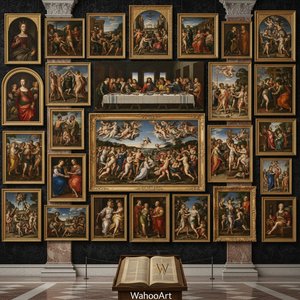
틴토레토의 걸작 25선: 베네치아 회화 거장의 드라마와 빛의 향연 | OriginalUniqueArt
틴토레토의 드라마틱한 빛과 색채가 살아 숨쉬는 걸작 25선을 만나보세요. 베네치아 회화 거장의 명작 속 역사, 기법, 그리고 영감을 느껴보세요. OriginalUniqueArt에서 고품질 유화와 아트 프린트를 감상하고 특별한 인테리어를 완성하세요. 지금 바로 컬렉션을 탐험하세요!

The Dramatic Flourish: Exploring the Baroque Movement's Enduring Legacy in Art History
Explore the dramatic world of Baroque art! Discover iconic artists like Caravaggio & Rubens, defining techniques, and its lasting impact on art history. Expert insights for collectors & enthusiasts at OriginalUniqueArt.
