프린트 판매로 전환
 상세 보기
상세 보기







































 가로 또는 세로 중 어느 한 면이라도 105cm(약 41인치)를 초과하는 작품이나 복제화의 경우, 프레임은 분해된 키트 형태로 배송됩니다. 이는 안전한 배송을 보장하고 운송 중 발생할 수 있는 손상을 방지하기 위함입니다.


The Annunciation
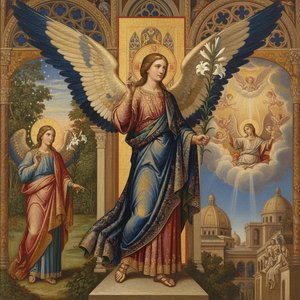
Fra Angelico’s The Annunciation is a panel-painting altarpiece or retable produced for the Convent of San Domenico in Fiesole and now housed in the Prado Museum in Madrid. This painting is a quintessential representation of Early Renaissance art, showcasing the artist’s mastery of composition, color, and religious symbolism.Composition and Symbolism
The painting depicts the Virgin Mary kneeling down in front of an angel who is holding a lily flower. The angel appears to be presenting the flower to the Virgin Mary as a gift. In the background, several other figures are visible, including one person on the left side and two others on the right side of the painting. The scene takes place outdoors with trees visible in the background, creating a serene and peaceful atmosphere. The lily flower held by the angel is a symbol of purity and innocence, emphasizing the Virgin Mary’s role as the mother of Jesus Christ. The bench near the center of the image adds a sense of intimacy to the scene, highlighting the personal nature of the annunciation event. The meticulous arrangement of figures—Mary at the base, Gabriel ascending—creates a visual hierarchy that directs the viewer's gaze upwards towards divine grace. This deliberate positioning underscores the narrative’s central theme: God’s intervention in human affairs and Mary’s acceptance of her sacred vocation. The lily itself embodies spiritual perfection, mirroring Mary’s unwavering faith and foreshadowing the blossoming life of Christ.Artistic Style
Fra Angelico's style in The Annunciation is characterized by delicate lines, soft colors, and a sense of harmony. The use of oil paint allows for rich textures and subtle gradations of tone, enhancing the overall visual impact of the painting. He achieved this remarkable effect through painstaking layering of translucent glazes—a technique perfected during his time—resulting in luminous hues that seem to emanate from within. This masterful blending of pigments contributes significantly to the ethereal quality of the artwork, transporting viewers into a realm of spiritual contemplation. The artist’s attention to detail is evident in every aspect of the composition, from the folds of Mary’s robe to the intricate foliage of the trees lining the cloister wall. These meticulous renderings exemplify the humanist ideals prevalent during the Renaissance—a belief in observation and representation as pathways to understanding God's creation.Historical Context
Fra Angelico was a Dominican friar and a renowned painter of his time. His contemporary monikers included Fra Giovanni da Fiesole and Fra Giovanni Angelico. Posthumously, he became known as Fra Angelico, reflecting his reputation for devout religious paintings. The Museum Convent of San Marco in Florence, Italy, is another significant location associated with Fra Angelico's work. This former convent houses some of the most breathtaking frescoes and religious artifacts from the 15th century, including works by Fra Angelico. Cosimo de’ Medici commissioned him to decorate the cloister walls—a project that cemented his legacy as one of Florence’s greatest artistic figures. The commission itself was a testament to the patronage system of the Renaissance, where wealthy patrons supported artists and fostered cultural flourishing. The fresco's placement within the convent underscores its purpose: to inspire piety and devotion among the monks who resided there. It served as a visual reminder of God’s love and mercy—a message conveyed through serene imagery and harmonious color palettes. The painting stands as an enduring symbol of faith, beauty, and artistic excellence—a masterpiece that continues to captivate audiences centuries after its creation.Relevance to Art Lovers
For art lovers and history buffs, The Annunciation is a must-see painting. It represents the pinnacle of Early Renaissance art and showcases Fra Angelico's unique style and religious devotion. The serene atmosphere and symbolic elements make it a captivating piece that continues to inspire and educate audiences today. Its delicate beauty—a testament to Angelico’s unparalleled skill—remains unsurpassed, inviting viewers to contemplate the profound mysteries of faith and divine grace. Reproductions Available at OriginalUniqueArt.com OriginalUniqueArt.com offers handmade oil painting reproductions of The Annunciation by Fra Angelico, allowing art enthusiasts to own a piece of history. Visit our website for more information on this and other masterpieces: /art/list/?Filter=5ZKCCV-Fra-Angelico-The-Annunciation질의응답
프라 안젤리코의 "수태고지"은(는) 퍼블릭 도메인에 속하나요? 그 이유는 무엇인가요?
"수태고지"의 저작권 상태 - 퍼블릭 도메인 - 저작권 보호 기간이 만료되었습니다 - 는 작가의 1455년 사망에 따라 결정됩니다.
"수태고지"의 작가는 누구이며, 어떤 사조에 속하나요?
"수태고지"은(는) 초기 르네상스 양식으로 프라 안젤리코가 제작하였습니다. 작가와 미술 사조는 해당 작품의 전통을 나타냅니다.
"수태고지"은(는) 어떤 색조에 가깝나요?
프라 안젤리코의 "수태고지"의 주된 색조는 황금빛 노란색 계열입니다. 이 색조는 팔레트의 바탕이 되는 톤을 형성합니다.
More about this painting
 실제 크기로 보기
 보내기
보내기 공유하기
공유하기
 상세 보기
상세 보기 가이드 보기

 이미지 다운로드
 유사 작품 더 보기
 X-레이
X-레이 슬라이드 쇼 보기
 Q&A
Q&A 통계 정보
통계 정보