프린트 판매로 전환
 상세 보기
상세 보기







































 가로 또는 세로 중 어느 한 면이라도 105cm(약 41인치)를 초과하는 작품이나 복제화의 경우, 프레임은 분해된 키트 형태로 배송됩니다. 이는 안전한 배송을 보장하고 운송 중 발생할 수 있는 손상을 방지하기 위함입니다.


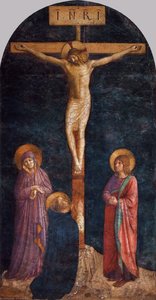
A Vision of Suffering and Redemption: Fra Angelico’s Crucifixion
The painting “Crucifixion,” executed by Fra Angelico in 1435, stands as one of the most poignant expressions of Christian faith during the Early Renaissance. Created for the Chapel of San Marco in Florence Cathedral, it transcends mere depiction; it strives to convey a profound spiritual experience rooted in medieval iconography and infused with humanist sensibilities. The fresco’s impact on viewers remains palpable centuries later, continuing to inspire awe and contemplation.Subject Matter and Composition
At its core lies the central figure of Jesus Christ crucified – an image deeply familiar from countless religious artworks across cultures and eras. Fra Angelico meticulously rendered Jesus' body in exquisite detail, capturing the agony of suffering with remarkable sensitivity. The artist skillfully positioned Jesus on a cross constructed of rough-hewn timber, emphasizing both physicality and vulnerability. Surrounding him are figures representing Mary Magdalene weeping profusely, Saint John the Evangelist gazing compassionately upon Christ’s visage, and Nicodemus and Joseph of Arimathea assisting in the preparations for burial – characters imbued with symbolic significance reflecting the Gospels' narrative. The composition adheres to established conventions of medieval art, prioritizing clarity and emotional resonance over complex perspective—a deliberate choice that reinforces the painting’s spiritual message.Style and Technique: Fresco Painting
Fra Angelico employed the technique of fresco painting, a method perfected in Italy during this period. This demanding process involved applying pigment mixed with lime onto freshly plastered walls, allowing it to harden into stone over time—a testament to artistic permanence and devotion. The artist utilized tempera pigments – finely ground pigments bound together with egg yolk – achieving luminous colors that shimmered against the pale plaster surface. Careful layering of glaze created depth and luminosity, enhancing the visual impact of the scene. Fra Angelico’s meticulous attention to detail is evident in every brushstroke, demonstrating mastery over his craft and unwavering commitment to conveying the sacred narrative accurately.Historical Context: Florentine Renaissance Spirituality
The painting emerged during a period marked by significant intellectual and artistic transformation—the Florentine Renaissance. While humanist scholars championed reason and observation, artists like Fra Angelico retained a deep connection to medieval spiritual traditions. The chapel itself was conceived as a space for prayer and pilgrimage, reflecting the fervent piety of Florence’s elite. The Crucifixion served not merely as an illustration of biblical scripture but also as a vehicle for conveying moral instruction—a reminder of humanity's fallen state and God's boundless mercy. Its placement within the cathedral underscored its importance as a symbol of Christian faith and papal authority.Symbolism: Medieval Iconography Revisited
The Crucifixion is replete with symbolic references drawn from medieval iconography. The cross itself represents salvation, embodying Christ’s sacrifice for humanity’s redemption. Mary Magdalene's weeping symbolizes grief and repentance—a poignant reminder of human vulnerability before divine justice. Saint John’s gaze signifies compassion and spiritual understanding—affirming the universality of faith. The figures assisting in burial symbolize hope and resurrection—affirming the promise of eternal life beyond earthly suffering. These symbols resonate deeply within Christian tradition, communicating complex theological concepts through visual imagery—a testament to the enduring power of art to convey spiritual truths.Emotional Impact: A Moment of Profound Contemplation
“Crucifixion” compels viewers to confront the realities of human suffering and divine compassion. Fra Angelico’s masterful depiction evokes feelings of sorrow, empathy, and reverence—stirring the soul with its solemn beauty. The painting's luminous colors and meticulous detail heighten its emotional impact, transporting observers into the sacred space of San Marco Chapel. It serves as a timeless reminder of humanity’s spiritual yearning for transcendence—affirming the enduring significance of faith and artistic expression across generations. Its legacy continues to inspire artists and collectors alike who recognize in it an unparalleled achievement of Renaissance spirituality.질의응답
"Descent from the cross, ca"은(는) 무엇을 담고 있으며, 어떤 분위기를 자아내나요?
프라 안젤리코의 "Descent from the cross, ca"은(는) crucifixion, religion, spirituality, fresco, angelic figure, tuscan art, medieval art와(과) Ethereal 분위기가 어우러진 작품입니다.
프라 안젤리코의 "Descent from the cross, ca"의 분위기는 어떻게 묘사되나요?
프라 안젤리코의 "Descent from the cross, ca"은(는) 분위기가 Ethereal한 것으로 묘사됩니다. 이러한 분류는 작품을 공간에 맞게 매치하는 데 도움이 될 수 있습니다.
프라 안젤리코의 "Descent from the cross, ca"의 느껴지는 밝기는 어느 정도인가요?
프라 안젤리코의 "Descent from the cross, ca"의 느껴지는 밝기는 shadow입니다. 이는 의도한 공간의 조명과 조화를 이룰 수 있습니다.
More about this painting
 실제 크기로 보기
 보내기
보내기 공유하기
공유하기
 상세 보기
상세 보기 가이드 보기

 이미지 다운로드
 유사 작품 더 보기
 X-레이
X-레이 슬라이드 쇼 보기
 Q&A
Q&A 통계 정보
통계 정보