Cubist Style
Mechanical Elements (페르낭 레제)
페르낭 레제 (1881–1955) 작가의 Mechanical Elements Cubist Style 운동에 속합니다. Oil On Canvas(으)로 제작되었습니다. 뉴욕, 미국에 위치한 메트로폴리탄 미술관에 소장되어 있습니다.
- Oil On Canvas
- 메트로폴리탄 미술관, 뉴욕

 미리보기

 수작업 유화 작품
 공유하기
 공유하기
 학습용 요약본


 다운로드
 유사 작품 더 보기
 X-레이
 슬라이드 쇼 보기
 질의응답

 통계 정보
Mechanical Elements 요약
- 제목
- Mechanical Elements
- 작가
- 페르낭 레제 (1881–1955)
- 작가 출생지
- 아르장탕, 프랑스
- 매체
- Oil On Canvas
- 전시 장소
- 메트로폴리탄 미술관, 뉴욕, 미국
- 운동성
- Cubist Style
- 제작 시기
- Modern
- 주제
- mechanical elements, cubism, geometry, industrial design, abstraction, assemblage
Mechanical Elements은(는) 무엇을 묘사하고 있나요?
A Vision of Industrial Harmony
Fernand Léger’s “Mechanical Elements,” painted in 1924, stands as a striking testament to the burgeoning fascination with technology during the interwar period. More than just a depiction of gears and pipes—though undeniably prominent—the artwork embodies Léger's ambitious goal: to synthesize Cubist fragmentation with the dynamism of the machine age, creating an aesthetic that simultaneously challenged artistic conventions and reflected the transformative realities of modern life.
Born Joseph Fernand Henri Léger in Argentan, Normandy, 1881, Léger embarked on a journey from rural landscapes to the epicenter of Parisian avant-garde. Initially drawn to architecture, his artistic path swiftly pivoted toward painting after arriving in Paris around 1900, fueled by an unwavering conviction that art could engage with the complexities of its time.
Cubism Revisited: Geometric Precision
Léger’s stylistic evolution is inextricably linked to Cubism. Influenced profoundly by Picasso and Braque, he adopted the fractured perspective and simultaneous viewpoints characteristic of this revolutionary movement—a deliberate rejection of traditional representation in favor of exploring spatial relationships through geometric forms. However, Léger didn't simply replicate Cubist principles; he pushed them further, distilling them into a simplified vocabulary of circles, squares, and lines.
“Mechanical Elements” exemplifies this approach brilliantly. The canvas is dominated by interlocking geometric shapes—primarily circles and squares—arranged in a rhythmic pattern that evokes the precision and repetition found in industrial machinery. These forms aren’t merely decorative; they actively contribute to conveying a sense of movement and energy, mirroring the ceaseless pace of urban life.
Symbolism Beyond Mechanism
While the artwork's visual language speaks directly to the influence of technology, Léger imbued “Mechanical Elements” with deeper symbolic resonance. The repetition of geometric shapes isn’t merely a stylistic device; it represents an attempt to capture the impersonal logic and order inherent in industrial processes—a deliberate contrast to the organic forms favored by Impressionism and Post-Impressionism.
Furthermore, Léger's use of color – predominantly shades of gray punctuated by vibrant accents – underscores this thematic preoccupation. Gray symbolizes the materiality of metal and concrete, while bursts of color represent human vitality and creativity—a harmonious blend reflecting Léger’s belief that art could coexist with technological advancement without sacrificing beauty or emotional depth.
A Legacy of Innovation
"Mechanical Elements" cemented Léger's position as a pioneer of Tubism – a variant of Cubism developed by Léger himself—characterized by the use of tubular forms to represent objects and figures. This innovative technique anticipated developments in Pop Art decades later, demonstrating Léger’s enduring influence on subsequent generations of artists.
Today, reproductions of “Mechanical Elements” continue to captivate audiences with their bold aesthetic and intellectual ambition. They serve as a powerful reminder that art can not only reflect the spirit of its time but also actively shape our understanding of it—a timeless masterpiece celebrating both geometric precision and human resilience.
Mechanical Elements은(는) 어느 미술관에 소장되어 있나요?
메트로폴리탄 미술관
뉴욕, 미국
메트로폴리탄 미술관의 기원과 역사 메트로폴리탄 미술관은 기업가와 금융가, 그리고 당대를 대표하는 예술가와 사상가들이 공유한 원대한 비전에서 그 뿌리를 찾을 수 있습니다. 1870년 법인으로 설립된 이후, 이 기관은 점차 늘어가는 소장품들을 품어 안을 영구적인 안식처를 찾아 나섰습니다. 현재의 자리에 정착하기 전, 미술관은 웨스트 14번가에 위치한 더글라스 맨션 저택에서 잠시 머물며 그 첫걸음을 뗐습니다.


Mechanical Elements의 고해상도 이미지

페르낭 레제, Mechanical Elements, 메트로폴리탄 미술관. 퍼블릭 도메인
Mechanical Elements에 관한 질문과 답변
"Mechanical Elements"의 원작은 어느 박물관에 소장되어 있나요?
페르낭 레제의 "Mechanical Elements"의 원작은 메트로폴리탄 미술관, 뉴욕, 미국에 소장되어 있습니다. 복제화를 통해 이 작품을 집에서도 감상하실 수 있습니다.
페르낭 레제의 "Mechanical Elements"의 기법은 무엇인가요?
페르낭 레제의 "Mechanical Elements"의 재료는 Oil On Canvas입니다. 복제화는 이 기법 특유의 질감을 그대로 구현하는 것을 목표로 합니다.
페르낭 레제의 "Mechanical Elements"에는 어떤 소재가 등장하나요?
페르낭 레제의 "Mechanical Elements"에 담긴 주제: mechanical elements, cubism, geometry, industrial design, abstraction, assemblage, modern art
페르낭 레제의 "Mechanical Elements"의 이미지를 자유롭게 복제할 수 있나요?
페르낭 레제의 "Mechanical Elements"의 저작권 정보: 해당 작품은 퍼블릭 도메인 - 저작권 보호 기간이 만료되었습니다 상태입니다. 이는 이미지 복제 가능 여부를 결정하는 기준이 됩니다.
"Mechanical Elements"을(를) 만든 작가는 누구인가요?
"Mechanical Elements"은(는) 페르낭 레제의 작품입니다. 이 페이지의 정보는 페르낭 레제의 원작에 대해 설명합니다.
페르낭 레제의 "Mechanical Elements"은(는) 어떤 미술 사조에 속하나요?
페르낭 레제의 "Mechanical Elements"은(는) Cubist Style 사조에 속하며, 이 사조는 해당 작품의 양식적 배경을 잘 보여줍니다.
Mechanical Elements은(는) 페르낭 레제의 예술적 여정 중 어느 시기의 작품인가요?
"Mechanical Elements"은(는) 페르낭 레제의 예술적 생애 중 Mechanical Period 시기의 작품입니다. 이 분류를 통해 해당 작품을 작가의 예술적 발전 과정과 연결해 볼 수 있습니다.
페르낭 레제의 "Mechanical Elements"의 저작권 상태는 어떻게 되나요?
"Mechanical Elements"의 저작권 상태(퍼블릭 도메인 - 저작권 보호 기간이 만료되었습니다)는 작가의 1955년 사망 시점을 기준으로 결정됩니다.
페르낭 레제의 "Mechanical Elements" 작품은 작가의 본국에 보관되어 있나요?
아니요 - 해당 작품은 해외에 보관되어 있습니다. "Mechanical Elements"은(는) 미국에 소장되어 있는 반면, 페르낭 레제의 출생지는 프랑스입니다.
아티스트 페르낭 레제 소개

1881–1955, 프랑스
페르낭 레제
페르난 레제의 삶 페르난 레제의 이야기는 노르망디 하부 지역의 오른(Orne) 주에 위치한 아쟁탕이라는 작은 마을에서 시작됩니다. 1881년 2월 4일, 외아들로 세상에 태어난 그의 유년 시절은 프랑스 전원 지대의 고요함과 어머니 마리-아델 도누(Marie-Adèle Daunou)의 보살핌 속에서 형성되었습니다. 가축 상인으로 생계를 이어가던 아버지는 페르난이 아주 어린 시절 세상을 떠났고, 아이는 경건하면서도 겸손한 성품을 지닌 어머니의 손에서 자라나게 되었습니다. 노르망디의 농촌 풍경 속에서 보낸 이러한 성장 배경은, 훗날 그가 프랑스 문화의 중심지에서 누리게 될 역동적인 삶과 극명한 대조를 이룹니다.
페르낭 레제의 다른 작품들
 도시1919
 정비공 (Le Mécanicien)1920
 세 여성1921
 숲 속의 누드1910

Mechanical Elements 관련 에세이
 Cubism Unveiled: How Picasso and Braque Redefined Modern Art through Geometric RevolutionExplore the revolutionary world of Cubism. Discover how Pablo Picasso and Georges Braque dismantled perspective to redefine modern art thro…
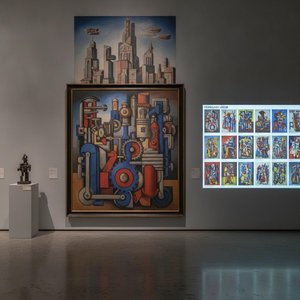 Mastering the Machine Age: The 25 Best Artworks by Fernand LégerImmerse yourself in the vibrant world of Fernand Léger. Explore 25 iconic masterpieces of Cubism and Tubism, from bold geometric forms to m…
 Industrial Revolution on Canvas: 10 Artworks That Define a Modern AestheticExplore 10 iconic artworks capturing the Industrial Revolution’s grit & beauty. From Monet to Manet, discover realism, impressionism & powe…