

 실제 크기로 보기
 보내기
보내기 공유하기
공유하기
 상세 보기
상세 보기 가이드 보기

 이미지 다운로드
 유사 작품 더 보기
 X-레이
X-레이 슬라이드 쇼 보기
 통계 정보
통계 정보Still Life


 상세 보기
상세 보기
핸드메이드 유화 복제화
작가가 직접 캔버스에 손으로 그린 유화 작품으로, 원하는 크기와 액자로 맞춤 제작해 드립니다. ( 프린트 판매로 전환 디지털 이미지 판매 채널로 전환)




P118B ₩10

P118H ₩10

P118W ₩10

P438Z ₩10

P508JH ₩12

P508YH ₩12

P805H ₩10

P805Z ₩10

P919BZ ₩10

P919G ₩10

P919XJ ₩10

P959ZH ₩10

P968JZ ₩12

W106C ₩8

W218G ₩10

W218JH ₩8

W218Y ₩10

W307PJ ₩10

W316G ₩10

W316PJ ₩8

W316Y ₩10

W398PJ ₩8

W4111J ₩10

W500HY ₩15

W500JH ₩15

W692G ₩12

W849H ₩8

W940BG ₩15

W953PJ ₩8




작품의 원본 비율을 그대로 유지하는 프리셋 사이즈 중에서 선택해 보세요.

액자나 벽면 크기에 맞춰 필요한 가로와 세로 길이를 입력해 주세요. 본 작품은 수작업으로 제작되므로, 요청하신 비율에 따라 작가가 그림의 가장자리를 조금 더 넓게 그리거나 일부를 조정하여 작업할 수 있습니다. 작업 시작 전, 최종 확인을 위해 디지털 목업 이미지를 보내드립니다. 이 페이지에 표시된 이미지는 실제 결과물과 다를 수 있으며, 오직 목업 이미지만이 정확한 결과물을 보여줍니다.
주문 완료 후 OriginalUniqueArt.com 팀에서 상세 안내를 위해 고객님께 이메일을 보내드리며, 미리보기 시안을 함께 제공해 드립니다.


 유리 옵션은 110cm 미만 크기에서만 선택 가능합니다.

Still Life
재현 매체
복제본 규격
-


총 결제 금액
₩ 409430
A Moment Frozen in Time: Ferdinand Guillaimin’s “Still Life”
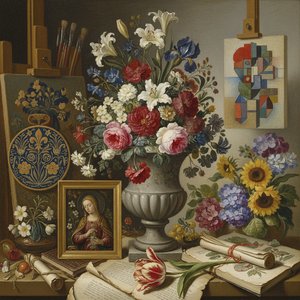
Ferdinand Guillaimin's "Still Life," painted in 1872, isn’t merely a depiction of objects arranged on a table; it’s a carefully constructed tableau brimming with quiet observation and subtle symbolism. This work, rendered in the heart of the Impressionist movement, captures a fleeting moment of domestic tranquility – a scene both familiar and imbued with an understated elegance. The painting immediately draws the eye to the central arrangement: a vase overflowing with vibrant red and yellow flowers, their petals seemingly caught mid-bloom, radiating warmth against the cooler tones that dominate the rest of the composition. Beside them rests a worn book, its pages hinting at untold stories and intellectual pursuits, while a simple bowl holds what appears to be fruit – perhaps apples or pears – adding another layer of earthly abundance.
Guillaimin’s technique is distinctly Impressionistic, prioritizing capturing the *impression* of light and color rather than precise detail. Loose brushstrokes dance across the canvas, creating an atmospheric haze that softens the edges of each object. He masterfully employs broken color – applying small dabs of paint side-by-side to build up hues and create a shimmering effect, particularly noticeable in the reflections on the table’s surface. The dark background serves not as mere backdrop but as a crucial element, intensifying the luminosity of the floral arrangement and lending the scene a sense of intimacy and depth. The artist's focus is less on photographic realism and more on conveying the *feeling* of being present within this quiet space.
The Context of Parisian Impressionism
To fully appreciate “Still Life,” it’s essential to understand the artistic climate in which Guillaimin was working. The 1870s were a period of profound change and experimentation for French art, marked by the rise of Impressionism. Artists like Monet, Renoir, and Pissarro sought to break free from the rigid conventions of academic painting, embracing plein air (outdoor) painting and capturing the ephemeral qualities of light and atmosphere. Guillaimin’s work reflects this spirit of innovation, moving away from traditional subject matter and exploring new ways of representing the world around him.
Guillaimin's connection to Pissarro is particularly noteworthy. The artist spent a significant period painting alongside Pissarro in Pontoise, a suburb of Paris, where he found inspiration in the everyday life of the region. This proximity fostered a collaborative environment, allowing Guillaimin to refine his style and develop his unique approach to capturing light and color. The Impressionists were not simply interested in depicting what they *saw*; they were driven by a desire to express their subjective experience of the world.
Symbolism and the Language of Objects
Beyond its aesthetic qualities, “Still Life” is rich with symbolic meaning. The flowers themselves represent beauty, fragility, and the fleeting nature of life – themes frequently explored in Impressionist art. The book suggests knowledge, contemplation, and a connection to the past. The bowl of fruit symbolizes abundance, nourishment, and the pleasures of earthly existence. Even the dark background can be interpreted as representing mortality or the unknown.
Guillaimin’s use of these objects is deliberate and carefully considered, inviting the viewer to engage in a process of interpretation. He doesn't offer explicit explanations; instead, he presents a series of interconnected symbols that resonate with universal themes of beauty, life, and death. The arrangement feels deliberately balanced, creating a harmonious composition that evokes a sense of peace and serenity.
A Legacy of Delicate Beauty
Ferdinand Guillaimin’s “Still Life” stands as a testament to the power of observation and the enduring appeal of simple subjects rendered with exquisite sensitivity. It's a painting that rewards close attention, revealing layers of meaning and emotional depth with each viewing. Reproductions capture much of the original atmosphere, but nothing quite replicates the subtle nuances of light and color that define Guillaimin’s masterful technique.
Today, this work is celebrated for its evocative beauty and its contribution to the development of Impressionism. It remains a poignant reminder of the quiet moments of everyday life – a timeless meditation on beauty, mortality, and the enduring power of art.
질의응답
"Still Life"에는 어떤 색상들이 사용되었나요?
페르디낭 기요맹의 "Still Life"은(는) Earthy 색조의 팔레트를 사용합니다. 이 팔레트는 작품 전체의 색채적 특징을 집약적으로 보여줍니다.
"Still Life"과(와) 유사한 작품이 더 있을까요?
페르디낭 기요맹의 "Still Life"의 유사한 작품 페이지에서 관련 작품들을 만나보세요.
"Still Life"은(는) 누가, 언제 제작했을까요?
"Still Life"의 작가는 페르디낭 기요맹이며, 제작 연도는 1872년입니다.
작가 소개
초기 생애와 예술적 여정
1841년 2월 16일 프랑스 파리에서 태어난 페르디낭 기요맹은 격동의 시기에 인상주의가 꽃피던 프랑스 미술계에 등장한 화가이자 판화가였습니다. 그의 예술적 여정은 중산층 가정에서 시작되었으며, 어린 시절부터 그림에 대한 깊은 애정을 키워나갔습니다. 초기에는 법률 공부를 병행하며 생계를 유지했지만, 곧 예술가의 길을 선택하고 본격적인 화가의 삶을 살아가기 시작했습니다. 기요맹의 작품 세계는 당시 프랑스 사회의 변화와 함께 발전했으며, 자연과 빛에 대한 끊임없는 탐구를 통해 독특한 스타일을 구축해 나갔습니다.인상주의 운동에 대한 기여
페르디낭 기요맹은 인상주의 운동의 발전에 지대한 공헌을 했습니다. 그는 클로드 모네, 오귀스트 르누아르 등 동시대 화가들과 교류하며 빛과 색채를 포착하려는 새로운 시도를 함께했습니다. 그의 작품들은 순간적인 인상을 표현하기 위해 섬세한 붓질과 밝은 색조를 사용했으며, 이는 인상주의의 핵심 특징을 잘 보여줍니다. 특히 기요맹은 자연 풍경을 통해 꿈결 같은 분위기를 연출하는 데 탁월한 재능을 보였습니다. 그의 그림들은 현실적인 묘사보다는 감각적이고 주관적인 경험에 초점을 맞추어 관람객들에게 깊은 인상을 남겼습니다.주요 작품과 예술적 교류
기요맹의 대표작으로는 잔빌의 정원(Garden in Janville in June), 강변 풍경(River Scene), 퓌 드 돔 전망(View of Puy de Dôme) 등이 있습니다. 이 작품들은 그의 뛰어난 색채 감각과 빛에 대한 이해를 보여주는 대표적인 예시입니다. 그는 클로드 모네와 함께 여러 차례 전시회를 개최하며 인상주의 화가로서의 입지를 확고히 했습니다. 또한, 기요맹은 상징주의 운동에도 영향을 받아 꿈과 신비로운 분위기를 작품 속에 담아내기도 했습니다. 그의 그림들은 단순한 풍경 묘사를 넘어 인간 내면의 감정과 심리를 표현하는 데 중요한 역할을 했습니다. 마운트 홀리오크 미술관은 기요맹의 작품을 소장하고 있으며, 이를 통해 그의 예술적 유산을 보존하고 있습니다.예술적 영향과 역사적 의의
페르디낭 기요맹은 1927년 6월 26일 세상을 떠났지만, 그의 인상주의에 대한 공헌은 오늘날까지도 높이 평가받고 있습니다. 그는 빛과 색채를 통해 자연을 표현하는 새로운 방법을 제시했으며, 이는 후대 화가들에게 큰 영향을 미쳤습니다. 특히 빈센트 반 고흐, 폴 세잔 등 유명 화가들은 기요맹의 작품에서 영감을 받아 자신만의 독특한 스타일을 발전시켰습니다. 기요맹은 인상주의 운동의 중요한 일원으로서 프랑스 미술사에 뚜렷한 발자취를 남겼으며, 그의 작품들은 현재 세계 각지의 미술관과 개인 소장품에 전시되어 있습니다. OriginalUniqueArt에서 페르디낭 기요맹의 더 많은 작품을 감상하고 인상주의 운동의 매력을 느껴보세요: 페르디낭 기요맹 | 3점 인상주의 미술 운동
페르디낭 기요맹
1841 - 1927 , 프랑스
작가 정보 요약
- 국적: 프랑스
- 사망일: 1927년 6월 26일
- 영향을 받은 예술가/사조: ['클로드 모네']
- 영향을 준 예술가:
- 뱅상 반 고흐
- 폴 세잔
- 카미유 피사로
- 예술 사조: 인상주의
- 이름: 장 바티스트 아르망 기요맹
- 주요 작품:
- 장빌레 6월 정원
- 강변 풍경
- 퓌 드 도메 전망
- 출생일: 1841년 2월 16일
- 출생지: 프랑스 파리
관련 기사

Blossoms of Time: A Historical Journey Through Flower Painting
Explore the captivating history of flower painting! Discover Dutch masters, symbolic meanings, & botanical art. Expert insights & high-quality reproductions at OriginalUniqueArt.
Blossoming Symbolism: A Historical Journey Through Flowers in Western Painting
Explore the rich history of flower symbolism in Western painting! Discover how artists from the Renaissance to Modernism used blossoms to convey meaning, emotion & beauty. Learn about iconic artworks and movements.

Impressionism's Masterpieces: 10 Paintings That Defined a Movement | OriginalUniqueArt
Journey through Impressionism's heart with 10 iconic paintings by Monet, Renoir & Degas. Explore light, color & the stories behind these masterpieces. Find museum-quality art reproductions and elevate your home decor on OriginalUniqueArt.com.

Silent Narratives: Exploring the Enduring Appeal of Still Life Painting Across Centuries
Explore the rich history of still life painting with OriginalUniqueArt. Discover Dutch Masters, decode vanitas symbolism & learn about collecting timeless art. Expert insights and museum-quality reproductions.

폴 세잔 명작 25선: 시대를 초월하는 예술과 공간의 미학 | OriginalUniqueArt
폴 세잔의 시대를 초월하는 명작 25점을 만나보세요. 인상주의를 넘어 후기 인상주의를 개척한 화가의 예술 세계와 정물화, 풍경화 속 숨겨진 이야기를 OriginalUniqueArt에서 감상하세요. 고품질 아트 프린트와 캔버스 액자로 공간에 예술을 더해보세요! 지금 바로 컬렉션을 탐험하세요.