
 미리보기
미리보기
 공유하기
공유하기 공유하기
공유하기
 상세 정보
상세 정보

 다운로드
다운로드
 유사 작품
유사 작품 X-레이
X-레이 슬라이드 쇼
Still-Life
 Oil On Panel
- Baroque
 1607
1607- Renaissance
 31.0 x 42.0 cm
 메트로폴리탄 미술관
 더 보기
더 보기
온라인 미리보기보다 훨씬 뛰어난 품질의 고해상도 디지털 이미지를 구매해 보세요.
각 파일은 사내 전문가가 고급 도구와 숙련된 수동 리터칭 기술을 사용하여 세심하게 준비합니다. 우리는 모든 이미지가 탁월한 선명도, 정확한 색상 재현력, 그리고 미세한 디테일까지 완벽하게 갖추도록 보장합니다.
최종 파일은 전문적인 편집 및 인쇄 환경에서 즉시 사용할 수 있도록 최적화되어 72시간 이내에 이메일로 발송됩니다. 이는 세계적인 디자인 스튜디오, 출판사 및 갤러리가 신뢰하는 것과 동일한 품질입니다.
디지털 이미지
개인 소장 및 전시, 인쇄, 창작 프로젝트를 위한 고해상도 파일을 다운로드하세요. ( 프린트 구매 손으로 그린 그림 구매)
모든 디지털 이미지 주문에 포함된 혜택
전문적인 디지털 이미지 전송 보장
OriginalUniqueArt.com를 선택하시면 단순히 이미지를 받는 것을 넘어, 정밀한 보정 과정을 거친 전문적인 디지털 예술 작품을 만나보실 수 있습니다. 모든 작품에는 만족 보장 서비스가 함께 제공되며, 주문 시 다음과 같은 사항들이 자동으로 포함됩니다:

빠른 이메일 전송
주문 후 72시간 이내에 고해상도 디지털 이미지 파일이 이메일로 발송되며, 즉시 사용하실 수 있습니다.

AI 기술로 향상된 디지털 파일
귀하의 작품은 고급 AI 도구와 수동 편집 과정을 거쳐 전문적으로 최적화되며, 이를 통해 디테일과 선명도, 색상의 정확도를 극대화합니다.

평생 무료 재전송 서비스
파일을 실수로 삭제하거나 분실하셨나요? 걱정 마세요. 언제든 무료로 다시 보내드립니다.

추가 수입 비용 없음 - 언제나
관세나 부가세, 배송비 부담 없이 작품을 즉시 감상하세요 - 디지털 다운로드는 언제나 면세 혜택이 적용됩니다.

정확한 색상 보장
전문적인 도구와 색상 관리 시스템을 통해 디지털 이미지가 원본의 색상을 최대한 정확하게 구현하도록 보장합니다.

60일 만족 보장제
구매하신 디지털 이미지에 만족하지 못하실 경우, 60일 이내에 수정 또는 100% 환불을 진행해 드립니다 - 어떠한 문의도 필요 없습니다.

100% 환불 보장
만족하지 못하셨나요? 디지털 파일을 수령하신 후 60일 이내라면 별도의 이유를 밝힐 필요 없이 전액 환불해 드립니다.

대량 주문 할인
이미지 3매 구매 시 10% 할인 - 5매 구매 시 15% 할인 - 10매 이상 구매 시 20% 할인. 크리에이티브 프로젝트, 갤러리, 에이전시에 매우 유용합니다.
수집품 상세 설명
Still-Life by Fede Galizia: A Pioneering Vision of Baroque Beauty
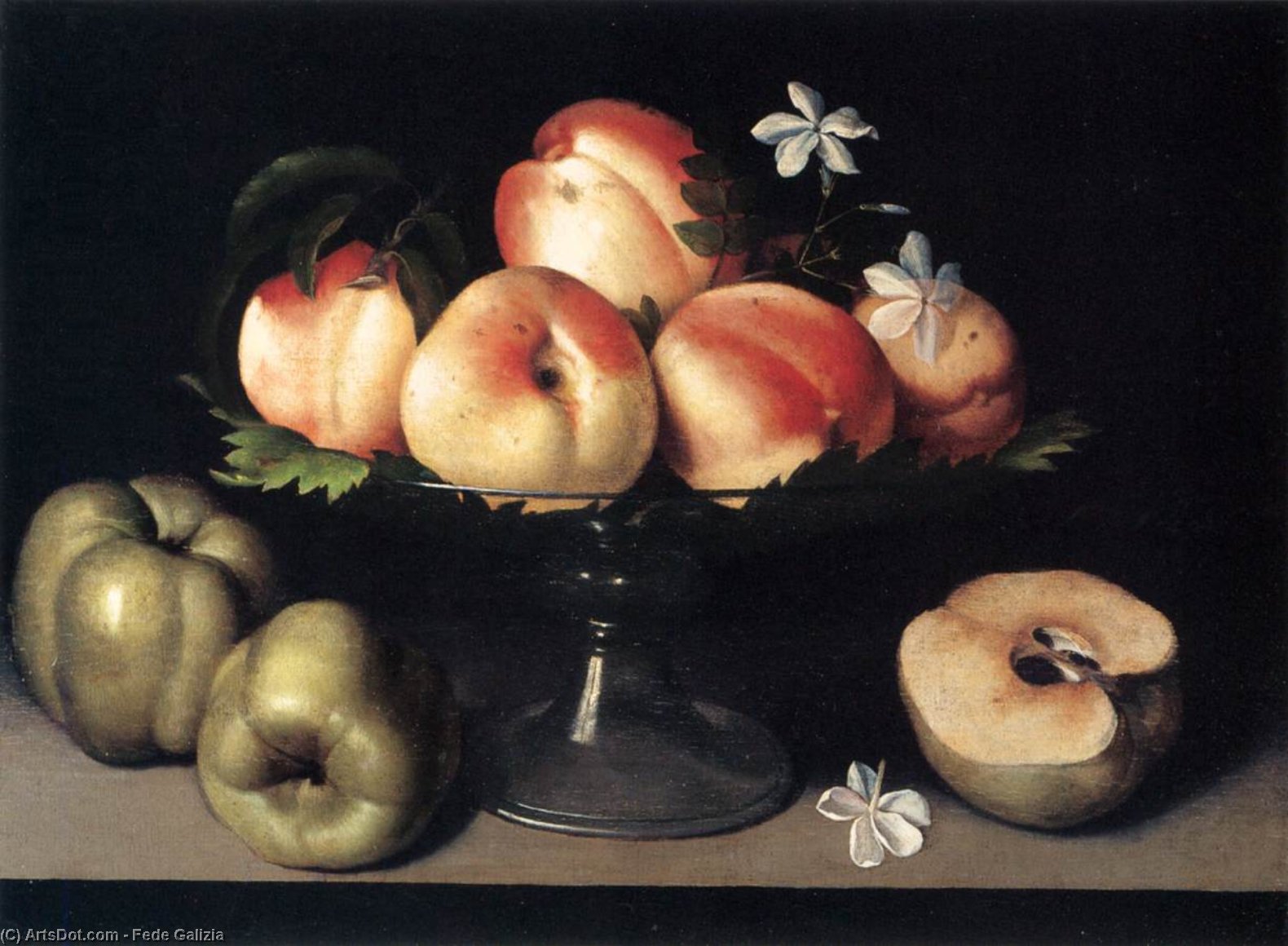
Fede Galizia (c. 1578 – c. 1630) represents a singular achievement in the artistic landscape of the Italian Renaissance—a woman artist who bravely navigated the conventions of her time to establish herself as a masterful practitioner of still life painting. Born in Milan, likely around 1578, Galizia’s artistic journey began under the nurturing guidance of her father, Nunzio Galizia, a distinguished miniaturist whose unwavering dedication instilled within her an unparalleled sensitivity for capturing naturalistic splendor and meticulous attention to detail. Remarkably, even at the tender age of twelve, Galizia demonstrated prodigious talent, earning recognition from Gian Paolo Lomazzo, a celebrated painter and art theorist whose astute observations underscored the transformative potential of familial artistic heritage—a legacy that would profoundly shape her own creative path. Galizia’s formative years were steeped in the rich traditions of Milanese art, where she absorbed influences from both Mannerism and Early Baroque styles. Her father's influence extended beyond mere instruction; it fostered within her an instinctive understanding of how to translate observation into artistic expression—a skill that would prove invaluable as she embarked on her independent artistic endeavors. The burgeoning genre of still life painting was gaining traction during Galizia’s lifetime, largely thanks to artists like Caravaggio and Rembrandt who championed dramatic lighting and realistic depictions of everyday objects. Recognizing the opportunity to explore these innovative techniques, Galizia skillfully blended elements of Mannerist precision with Baroque dynamism, resulting in works that are both aesthetically refined and emotionally resonant.Composition and Technique: Capturing Light and Texture
The painting "Still-Life," created in 1607, exemplifies Galizia’s mastery of technique and compositional strategy. Measuring 31 x 42 cm and executed on panel using oil paint—a medium favored by artists of the era—the artwork showcases Galizia's meticulous approach to rendering textures and capturing subtle nuances of color. The centerpiece is a bowl brimming with peaches, positioned atop a dark cloth that serves as an understated yet crucial element of visual harmony. Surrounding the bowl are strategically arranged apples – ranging from verdant green hues to vibrant crimson reds – some delicately sliced open to reveal their inner flesh and seeds, demonstrating Galizia’s commitment to anatomical accuracy and textural realism. Adding depth and vibrancy to the scene is a scattering of azure blue flowers—a deliberate choice that reflects the prevailing aesthetic sensibilities of the Baroque period and enhances the overall visual impact.- Medium: Oil on Panel
- Dimensions: 31 x 42 cm
- Location: Metropolitan Museum of Art, New York
Historical Context and Symbolism: Reflections of Renaissance Ideals
“Still-Life” stands as a testament to Galizia’s engagement with the intellectual currents of her time—specifically, the humanist preoccupation with observing and representing the natural world. The Baroque era championed dramatic visual effects and emotional intensity, aiming to evoke contemplation and inspire awe in viewers. Galizia skillfully incorporated these stylistic conventions into her work without sacrificing artistic integrity, creating images that convey both beauty and profound psychological depth. The peaches themselves symbolize prosperity and abundance—a motif frequently employed by Renaissance artists to express ideals of virtue and harmony. Similarly, the apples represent knowledge and temptation—themes explored extensively in biblical narratives and philosophical treatises during Galizia’s lifetime.Emotional Impact: A Moment Frozen in Time
Ultimately, “Still-Life” transcends mere visual representation; it invites viewers into a contemplative space where they can appreciate the artistry of Galizia's hand and contemplate the enduring power of art to capture fleeting moments of beauty and convey complex emotions. The painting’s subdued palette—dominated by earthy tones punctuated by splashes of azure blue—creates an atmosphere of serene stillness, encouraging contemplation on themes of mortality and transcendence. Like many Baroque masterpieces, “Still-Life” seeks to elevate the mundane into the sublime—a feat achieved through Galizia's unwavering dedication to meticulous observation and masterful execution. Discover more about Fede Galizia’s artistic legacy at OriginalUniqueArt.com/@/Fede-Galizia. Explore other Italian artists on the List of people from Italy.작가 소개
A Quiet Pioneer of Still Life
Fede Galizia (c. 1578 – c. 1630) stands as a remarkable figure in the Italian Renaissance, particularly celebrated for her contributions to the burgeoning genre of still life painting—a field where she bravely ventured into uncharted artistic territory. Born in Milan, likely around 1578, Galizia’s artistic journey began under the tutelage of her father, Nunzio Galizia, a skilled miniaturist who instilled in her a meticulous attention to detail and an appreciation for capturing naturalistic beauty. Even at the tender age of twelve, Galizia demonstrated considerable talent, earning recognition from Gian Paolo Lomazzo, a prominent painter and art theorist whose observations underscored the importance of familial artistic heritage.
Galizia’s early life was marked by immersion in the artistic traditions of her time. Her father's influence extended beyond mere instruction; it fostered within her an instinctive understanding of how to㜿translate observation into evocative visual representations. This dedication culminated in her ability to depict subjects with remarkable realism, notably incorporating intricate details like jewelry and clothing—a characteristic that quickly established her as a highly sought-after portrait painter amongst Milanese patrons. Frequently commissioned to portray both religious and secular themes, Galizia’s artistic versatility showcased her adaptability to diverse stylistic demands.
Mastery of Light and Form
As her career progressed, Galizia moved beyond the confines of portraiture to become a foundational architect of the still life genre. Her work represents a fascinating bridge between the structured precision of Mannerism and the dramatic, emotive light of the emerging Baroque period. In her celebrated compositions, such as her 1607 and 1610 works, she mastered the art of presenting vibrant fruit and delicate flowers against deep, dark backgrounds. This technique created a profound sense of depth and presence, allowing each element—a glistening grape, a textured peach, or a wilting petal—to emerge from the shadows with startling clarity.
Her ability to manipulate light was not merely a technical feat but a narrative tool. By focusing on the tactile qualities of her subjects, she invited viewers into a sensory experience that celebrated the ephemeral beauty of the natural world. This mastery is particularly evident in her ability to blend Mannerist precision with Baroque luminosity, creating works that feel both mathematically balanced and emotionally resonant.
Legacy and Historical Significance
The historical significance of Fede Galizia lies in her role as a trailblazer for female artists and a pioneer of a new way of seeing. While many of her contemporaries focused on grand historical or religious narratives, Galizia found profound meaning in the quiet, often overlooked details of everyday existence. Her 1596 rendition of Judith with the Head of Holofernes—now housed at the Ringling Museum of Art—serves as a testament to her command over dramatic composition and the intense psychological weight achievable through still life elements.
Through her meticulous craftsmanship, Galizia left an indelible mark on the Milanese art scene and the broader trajectory of European painting. Her contributions can be summarized by several key artistic milestones:
- Pioneering Still Life: She was one of the first Italian artists to elevate the depiction of inanimate objects to a high art form.
- Technical Versatility: Her transition from a skilled miniaturist and portraitist to a master of complex fruit and floral compositions.
- Stylistic Synthesis: The seamless integration of late Renaissance Mannerism with the burgeoning Baroque aesthetic.
- Cultural Impact: Establishing a lasting legacy for female painters within the rigorous artistic hierarchies of the 16th and 17th centuries.
Today, Galizia is remembered not just as a talented daughter of a miniaturist, but as a visionary who found the infinite within the infinitesimal, turning simple botanical subjects into enduring masterpieces of Italian art.

Fede Galizia
1578 - 1630 , Italy
주요 정보
- Artistic Movement Or Style: Renaissance
- Artists Or Movements Influenced By This Artist: ['Angelica']
- Artists Who Influenced This Artist: ['Nunzio Galizia']
- Date Of Birth: Milan, Italy (c. 1578)
- Date Of Death: Milan, Italy (c. 1630)
- Full Name: Fede Galizia
- Nationality: Italian
- Notable Artworks:
- Judith and Holofernes
- Paolo Morigia
- Place Of Birth: Milan

