

 실제 크기로 보기
 보내기
보내기 공유하기
공유하기
 상세 보기
상세 보기 가이드 보기

 이미지 다운로드
 유사 작품 더 보기
 X-레이
X-레이 슬라이드 쇼 보기
 통계 정보
통계 정보Dodrecht
 Oil On Canvas
- WallArt
- Impressionism
 61.0 x 50.0 cm
 Regional Gallery in Liberec
 상세 보기
상세 보기
핸드메이드 유화 복제화
작가가 직접 캔버스에 손으로 그린 유화 작품으로, 원하는 크기와 액자로 맞춤 제작해 드립니다. ( 프린트 판매로 전환 디지털 이미지 판매 채널로 전환)




P118B ₩10

P118H ₩10

P118W ₩10

P438Z ₩10

P508JH ₩12

P508YH ₩12

P805H ₩10

P805Z ₩10

P919BZ ₩10

P919G ₩10

P919XJ ₩10

P959ZH ₩10

P968JZ ₩12

W106C ₩8

W218G ₩10

W218JH ₩8

W218Y ₩10

W307PJ ₩10

W316G ₩10

W316PJ ₩8

W316Y ₩10

W398PJ ₩8

W4111J ₩10

W500HY ₩15

W500JH ₩15

W692G ₩12

W849H ₩8

W940BG ₩15

W953PJ ₩8




작품의 원본 비율을 그대로 유지하는 프리셋 사이즈 중에서 선택해 보세요.

액자나 벽면 크기에 맞춰 필요한 가로와 세로 길이를 입력해 주세요. 본 작품은 수작업으로 제작되므로, 요청하신 비율에 따라 작가가 그림의 가장자리를 조금 더 넓게 그리거나 일부를 조정하여 작업할 수 있습니다. 작업 시작 전, 최종 확인을 위해 디지털 목업 이미지를 보내드립니다. 이 페이지에 표시된 이미지는 실제 결과물과 다를 수 있으며, 오직 목업 이미지만이 정확한 결과물을 보여줍니다.
주문 완료 후 OriginalUniqueArt.com 팀에서 상세 안내를 위해 고객님께 이메일을 보내드리며, 미리보기 시안을 함께 제공해 드립니다.


 유리 옵션은 110cm 미만 크기에서만 선택 가능합니다.

Dodrecht
재현 매체
복제본 규격
-


총 결제 금액
₩ 406326
A Moment in Normandy: Eugène Boudin’s “Dodrecht”
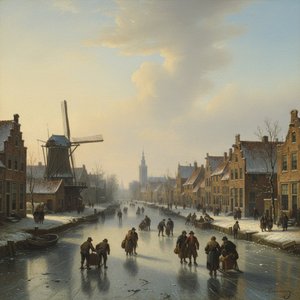
Eugène Louis Boudin's "Dodrecht," painted circa 1874, isn’t merely a depiction of a canal scene; it’s an immersion into the very essence of late 19th-century French Impressionism. This evocative landscape captures a fleeting moment along the waterways of Dordrecht, a city nestled within the Netherlands, and speaks to Boudin's profound connection with light, atmosphere, and the transient beauty of everyday life. The painting immediately draws the viewer in with its soft, hazy palette—muted blues, greens, and ochres dominate, creating an almost dreamlike quality that belies the meticulous observation at play.
Boudin’s approach to capturing this scene is profoundly characteristic of his style. He eschews sharp detail in favor of a loose, broken brushstroke technique, applying paint in short, vibrant dashes that seem to dance across the canvas. This deliberate lack of precision isn't a flaw; rather, it’s the very heart of Impressionism – an attempt to convey not just what is seen, but how it *feels* to be present within that moment. The texture itself becomes a key element, with visible brushwork adding depth and dynamism to the scene. Notice how the reflections shimmer on the water's surface, created by these individual strokes, lending an almost palpable sense of movement.
The Painter’s Philosophy: Plein Air and the Capture of Light
Boudin was a pioneer in the practice of *plein air* painting – working directly outdoors. This commitment to observing nature firsthand profoundly shaped his artistic vision. He wasn't interested in creating photographic reproductions; instead, he sought to capture the ephemeral qualities of light and atmosphere as they shifted with each passing moment. “Dodrecht” exemplifies this philosophy perfectly. The artist meticulously studied how sunlight interacts with water, buildings, and vegetation, translating these observations onto canvas with remarkable sensitivity. His early exposure to Dutch masters like Jongkind, who championed painting outdoors, undoubtedly influenced his approach.
The historical context of the late 19th century is crucial to understanding Boudin’s work. France was undergoing rapid industrialization and urbanization, leading many artists to seek refuge in the countryside and to explore themes of rural life and natural beauty. Boudin's focus on these subjects resonated with a growing public yearning for connection with nature – a sentiment that would become central to the Impressionist movement. The painting subtly evokes the tranquility of a slower pace of life, a stark contrast to the bustling industrial centers of Europe.
Symbolism and Emotional Resonance
Beyond its technical brilliance, “Dodrecht” carries a quiet emotional resonance. The composition—with the canal as the dominant element—creates a sense of enclosure and intimacy, drawing the viewer into the scene. The church steeple rising above the rooftops provides a vertical anchor, grounding the image while simultaneously suggesting a connection to faith and tradition. The boats navigating the waterway hint at human activity and interaction, yet the overall mood remains one of peaceful contemplation.
The painting’s muted color palette contributes significantly to its emotional impact. The soft hues evoke feelings of serenity, nostalgia, and perhaps even melancholy—a subtle reminder of the passage of time. It's a scene that invites reflection on the beauty of the natural world and the simple pleasures of everyday life. “Dodrecht” isn’t just a landscape; it’s an invitation to slow down, observe, and appreciate the fleeting moments of grace that surround us.
A Reproduction Worthy of Display
Reproductions of Boudin's "Dodrecht" offer a remarkable opportunity to bring this evocative masterpiece into your home or office. The delicate balance between light, color, and brushwork is beautifully preserved in high-quality reproductions, allowing you to experience the artist’s vision firsthand. Whether displayed as a focal point on a wall or incorporated into a larger interior design scheme, “Dodrecht” will undoubtedly add a touch of timeless elegance and artistic depth to any space.
질의응답
에른스트 부딘의 "Dodrecht"의 작품 방향(가로/세로)은 어떻게 되나요?
에른스트 부딘의 "Dodrecht"은(는) Landscape 형식입니다. 이 형식은 작품 구성의 비율을 나타냅니다.
에른스트 부딘의 "Dodrecht"을(를) 슬라이드쇼로 어떻게 감상할 수 있나요?
슬라이드쇼를 이용하실 수 있습니다: 에른스트 부딘의 "Dodrecht"의 슬라이드쇼 페이지.
Regional Gallery in Liberec에 소장된 "Dodrecht"의 복제권 범위는 어떻게 되나요?
에른스트 부딘의 "Dodrecht"의 저작권 상태는 명확합니다. 이 작품은 퍼블릭 도메인 - 저작권 보호 기간이 만료되었습니다 상태이며, Regional Gallery in Liberec에 소장되어 있다는 사실이 해당 상태를 변경하지 않습니다.
작가 소개
Eugène Louis Boudin (1824–1898): Pioneer of plein air painting & key influence on Impressionism
Eugène Louis Boudin, born in July 12th, 1824, in Honfleur, France—a town synonymous with the sea and artistic tradition—was destined for a life inextricably intertwined with its rhythms and beauty. His father, a harbor pilot steeped in maritime lore, instilled within him from childhood an unparalleled appreciation for the ever-changing moods of the Atlantic Ocean and the captivating luminescence of coastal landscapes. This formative influence would become the bedrock upon which Boudin’s artistic vision was built—a vision characterized by unwavering fidelity to observation and a profound respect for the ephemeral qualities of natural light. Rather than pursuing the conventional academic routes favored by many artists of his time, Boudin embarked on an unconventional path, beginning his working life aboard a steamboat traversing between Le Havre and Honfleur at the tender age of ten. It was during these voyages—amidst the salty air and shifting skies—that he first felt compelled to capture fleeting impressions of light and water with sketches in the margins of his books—the genesis of a lifelong passion for landscape painting. The family’s subsequent relocation to Le Havre, where his father established a thriving stationery shop and picture framing business, further immersed Boudin in an artistic milieu brimming with talent and innovation. He worked diligently alongside his father, honing his craft and absorbing the lessons imparted by fellow artists like Constant Troyon and Jean-François Millet—artists who championed the depiction of rural life with remarkable realism and sensitivity. These early encounters proved pivotal, steering Boudin away from commercial pursuits and firmly establishing him on the path toward a dedicated vocation as an artist. Notably, Troyon’s influence encouraged Boudin to embrace a more expressive style, departing from strict adherence to academic conventions in favor of conveying emotion through color and brushstroke—a stylistic shift that would characterize his entire oeuvre.Developing a Unique Style: Plein Air Painting and Influences
Boudin’s artistic trajectory was decisively shaped by the revolutionary approach championed by Johan Jongkind—a Dutch painter who advocated for plein air painting—the practice of creating artwork directly from nature. This paradigm shift represented a radical departure from the studio-bound traditions prevalent in academic art circles, allowing Boudin to capture the subtle nuances of sky and sea with unprecedented immediacy and accuracy. He embraced this technique wholeheartedly, mastering the subtleties of pigment mixing and brushwork to render atmospheric effects—such as haze, mist, and diffused sunlight—with breathtaking realism. Jongkind’s unwavering commitment to observing and portraying the natural world served as a powerful catalyst for Boudin's artistic development, inspiring him to prioritize direct observation over idealized representation. Furthermore, Boudin drew inspiration from the luminous canvases of the Dutch Masters of the XVIIth century—artists like Rembrandt and Vermeer—whose meticulous attention to detail and masterful use of chiaroscuro—the interplay between light and shadow—resonated deeply with his own artistic sensibilities. He meticulously studied their techniques, striving to emulate their ability to convey depth and emotion through subtle tonal variations. Boudin’s distinctive pastel drawings—characterized by their delicate textures and luminous hues—became particularly celebrated for their evocative portrayal of coastal scenes bathed in golden sunlight. Critics lauded his ability to capture the essence of a moment with remarkable economy and grace—a hallmark of his artistic style.Impressionism and Recognition
Boudin’s influence extended far beyond his own artistic achievements, profoundly impacting the burgeoning Impressionist movement. He befriended Claude Monet during his formative years in Paris, fostering a collaborative spirit that would propel both artists toward groundbreaking innovations in painting technique. Monet himself acknowledged Boudin's pivotal role in shaping his artistic vision—describing him as “the man who showed me how to paint,” emphasizing Boudin’s insistence on working outdoors and prioritizing the capture of fleeting impressions of light and color. This shared conviction—that art should strive to reflect the immediacy of experience—became a cornerstone of Impressionist aesthetics, distinguishing it from the more formal conventions of academic painting. Boudin's participation in the inaugural Impressionist exhibition of 1874 solidified his position as a pioneer of this revolutionary artistic movement. Throughout his illustrious career, Boudin garnered widespread acclaim for his masterful depictions of Normandy’s coastline—a region that served as an enduring source of inspiration for him. His paintings—often rendered with breathtaking luminosity and textural richness—captured the sublime beauty of the sea and sky—transforming them into canvases imbued with emotion and poetic resonance. He was awarded a third-place medal at the Paris Salon in 1881—a testament to his artistic prowess and unwavering dedication to his craft—and received the Légion d’honneur in 1892—acknowledging his contribution to French culture and art history. Eugène Louis Boudin passed away peacefully in Deauville, overlooking the English Channel on August 8th, 1898—leaving behind a legacy of artistic innovation and unwavering devotion to the pursuit of beauty—a legacy that continues to inspire artists today. His enduring influence is palpable in the works of countless Impressionist painters who followed him—artists who embraced his pioneering spirit and championed the transformative power of plein air painting.
에른스트 부딘
1824 - 1898 , 프랑스
작가 정보 요약
- Artistic Movement Or Style: 인상주의
- Artists Or Movements Influenced By This Artist: ['클로드 모네']
- Artists Who Influenced This Artist:
- 요한 종킨트
- 네덜란드 인상주의 화가들
- Date Of Birth: 1824년 7월 12일
- Date Of Death: 1898년 8월 8일
- Full Name: Eugène Louis Boudin
- Nationality: 프랑스인
- Notable Artworks:
- 해변 풍경
- 노을 풍경
- 호두 삶은 모습
- Place Of Birth: 프랑스 호플루르
관련 기사

Golden Light & Dutch Skies: The Timeless Magic of Dutch Golden Age Landscapes
Discover the breathtaking beauty of Dutch Golden Age landscapes. Explore the mastery of light, chiaroscuro, and 17th-century realism through an expert art history lens, celebrating the enduring legacy of the Dutch Masters for discerning collectors and art lovers.

인상주의 풍경화의 황홀한 순간들: 10대 걸작에 담긴 예술혼
인상주의 풍경화의 정수를 담은 10대 걸작! 모네, 르누아르 등 거장의 작품 비하인드 스토리와 예술혼을 만나보세요. OriginalUniqueArt에서 고품격 미술 복제 및 인테리어 영감을 얻고, 당신의 공간에 예술적 감성을 더하세요. 지금 바로 OriginalUniqueArt.com에서 모든 걸작을 발견해보세요!
Charles Leickert: Capturing the Dutch Golden Age Light – A Comprehensive Study of Technique, Context, and Legacy
Explore the captivating winter landscapes of Charles Leickert, a master of Dutch Golden Age light & atmosphere. Discover his techniques, symbolism, and lasting legacy – a comprehensive study for art enthusiasts and collectors.

Impressionistic Landscapes: 10 Masterpieces That Changed Art & Decor
Journey into the heart of Impressionism! Explore 10 masterpieces by Monet, Renoir & Degas that revolutionized landscape art. Discover their stories, techniques & find museum-quality reproductions to elevate your home decor on OriginalUniqueArt.com.

Capturing the Light of Amsterdam: A Journey Through Impressionist Masterpieces of the Dutch Canals
Embark on a visual journey through the luminous Amsterdam canals. Discover how Impressionist masters captured the fleeting light of the Dutch landscape through evocative brushwork and color. Explore the timeless beauty of these masterpieces for your private art collection.


