프린트 판매로 전환
 더 보기
더 보기







































 가로 또는 세로 중 어느 한 면이라도 105cm(약 41인치)를 초과하는 작품이나 복제화의 경우, 프레임은 분해된 키트 형태로 배송됩니다. 이는 안전한 배송을 보장하고 운송 중 발생할 수 있는 손상을 방지하기 위함입니다.


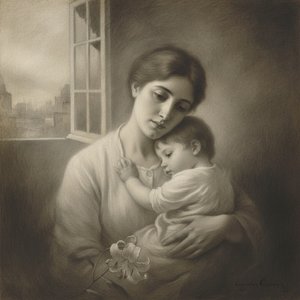
Eugène Carrière’s ‘Child at Table’: A Monochromatic Meditation on Innocence
Eugène Anatole Carrière's Child at Table (1880) is not merely a portrait; it’s an immersion into a world of quiet contemplation, rendered with a startlingly spare palette and imbued with the profound symbolism characteristic of the Symbolist movement. Created during a period of intense artistic experimentation in France – a direct response to the Impressionists' focus on fleeting moments of light – Carrière sought to evoke deeper emotional and spiritual truths through his art. This work, depicting a young boy, likely his son Jean René, captured around 1888, exemplifies this approach with remarkable clarity.
- A Monochromatic Universe: Carrière’s signature style is immediately apparent in the painting's stark contrast. The almost entirely monochrome palette – shades of blue, gray, and brown – creates a sense of detachment from the everyday, elevating the scene to something almost sacred. This deliberate restriction of color wasn’t simply an aesthetic choice; it was rooted in Carrière’s early experience as a lithographer, where he honed his skills in creating dramatic tonal effects.
- The Power of Light and Shadow: Despite the lack of vibrant hues, Carrière masterfully manipulates light and shadow to generate a luminous effect. The creamy-white skin of the child is dramatically highlighted against the enveloping darkness, drawing the viewer’s eye directly to this vulnerable subject. This technique, reminiscent of Rubens' influence, suggests an almost ethereal quality, hinting at a timeless innocence.
Symbolism and Domestic Themes
Child at Table firmly places itself within the Symbolist tradition, which prioritized subjective emotion and spiritual meaning over realistic representation. The scene’s quiet intimacy – the boy seated at a table with a cup – speaks to themes of childhood, vulnerability, and perhaps even religious devotion. Carrière frequently depicted domestic scenes featuring his family, often exploring the complexities of motherhood and familial bonds. This particular work, like The Sick Child (Montargis), reflects this recurring motif, offering a poignant glimpse into the artist’s personal life.
- A Mystical Atmosphere: The dark background isn't merely a backdrop; it actively contributes to the painting's symbolic weight. It creates an atmosphere of mystery and introspection, inviting viewers to contemplate the child’s gaze upwards – a gesture that could be interpreted as prayerful or simply filled with wonder.
- The Artist's Lineage: The fact that Carrière was the grandson of artists further informs our understanding of this work. His artistic lineage undoubtedly influenced his approach, adding another layer of meaning to the scene’s quiet contemplation.
Technique and Historical Context
Carrière’s meticulous technique is evident in the smooth application of paint and the precise rendering of detail. The use of a glazing technique – applying thin layers of translucent color over dried underlayers – would have enhanced the luminosity of the skin tones and created subtle variations within the monochrome palette. Produced around 1880, this painting represents a pivotal moment in Carrière’s career, solidifying his reputation as a leading figure in the Symbolist movement and demonstrating his ability to create emotionally resonant works through masterful control of light, shadow, and tone.
Emotional Impact and Reproduction
Child at Table possesses an undeniable emotional power. The painting's quiet intimacy and the vulnerability of its subject evoke a sense of tenderness and nostalgia. A hand-painted reproduction captures not only the visual details but also the very essence of Carrière’s artistic vision, allowing you to experience this profound work in your own space.
질의응답
외젠 아나톨 카리에르의 "Child at Table"은 미술사에서 어떤 위치를 차지하나요?
외젠 아나톨 카리에르의 "Child at Table"의 미술사적 분류는 19th Century 시대의 Symbolist Art입니다.
"Child at Table"의 작가는 누구인가요?
"Child at Table"의 작가는 외젠 아나톨 카리에르입니다. 이 작품은 외젠 아나톨 카리에르의 이름으로 등록되어 있습니다.
"Child at Table"의 Landscape 형식은 어디에 전시하는 것이 가장 좋을까요?
외젠 아나톨 카리에르의 "Child at Table"의 Landscape 형식은 Dining Room에 추천합니다. 작품의 형식과 공간의 조화는 복제화 배치에 중요한 가이드가 됩니다.
이 작품에 대해 더 알아보기
 미리보기
미리보기
 공유하기
공유하기 공유하기
공유하기
 상세 정보
상세 정보 가이드 보기

 다운로드
다운로드
 유사 작품 더 보기
 X-레이
X-레이 슬라이드 쇼 보기
 질의응답
질의응답 통계 정보
통계 정보