프린트 판매로 전환
 상세 보기
상세 보기







































 가로 또는 세로 중 어느 한 면이라도 105cm(약 41인치)를 초과하는 작품이나 복제화의 경우, 프레임은 분해된 키트 형태로 배송됩니다. 이는 안전한 배송을 보장하고 운송 중 발생할 수 있는 손상을 방지하기 위함입니다.


The Enigmatic Embrace: Unpacking Ernst Ludwig Kirchner’s “Hoffmann and Wife”
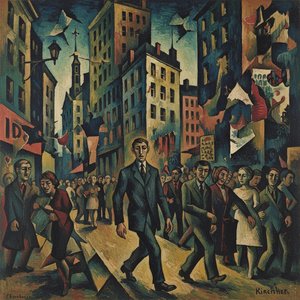
Ernst Ludwig Kirchner's "Hoffmann and Wife," painted in 1913, isn’t merely a depiction of a couple; it’s a carefully constructed tableau brimming with unspoken anxieties and the poignant beauty of shared solitude. The painting immediately draws the eye to the central figures – E.T.A. Hoffmann, the celebrated German Romantic author, and his wife, Pauline Luise Büsching-Hoffmann. They are seated close together in a modestly furnished room, their bodies almost merging within a hazy, amber light. Kirchner masterfully employs a muted palette of ochres, yellows, and greens – colors that evoke both warmth and a subtle sense of decay, mirroring the emotional complexities at play.
Kirchner’s style during this period is distinctly Expressionist, prioritizing subjective experience over objective representation. He abandons traditional perspective, flattening space and distorting forms to heighten the painting's emotional impact. The room itself feels claustrophobic, its details – a simple chair, a potted plant – rendered with an almost unsettling clarity. Notice how Kirchner uses thick, visible brushstrokes, particularly around the figures’ faces and hands, conveying a sense of urgency and vulnerability. This deliberate roughness contrasts sharply with the smooth, idealized forms often found in earlier portraiture, signaling a rejection of academic conventions and a commitment to expressing raw emotion.
A Portrait of Shared Melancholy
The painting’s power lies not just in its visual elements but also in the palpable sense of melancholy that permeates the scene. Hoffmann's gaze is averted, lost in thought, while his wife offers a gentle, almost sorrowful smile. Their proximity suggests intimacy, yet there’s an undeniable distance between them – a quiet acknowledgement of unspoken disappointments or unresolved tensions. The painting isn’t about romantic bliss; it’s about the shared experience of being human, grappling with the complexities of love and loss within the confines of domestic life.
Kirchner's choice to depict Hoffmann in this introspective pose is particularly significant. The author was known for his own struggles with mental illness and a deep-seated sense of isolation, themes that undoubtedly informed his artistic vision. "Hoffmann and Wife" can be interpreted as a self-portrait, reflecting the artist’s own anxieties about connection and the burden of creativity. The painting subtly suggests that even within the most intimate relationships, loneliness can persist – a poignant observation rendered with remarkable sensitivity.
Symbolism and the Weight of Narrative
Beyond the immediate depiction of the couple, “Hoffmann and Wife” is rich in symbolic resonance. The room itself represents the confines of domesticity, while the muted colors evoke a sense of twilight – a time of reflection and uncertainty. The potted plant, a recurring motif in Kirchner’s work, can be seen as a symbol of life and growth, yet its presence within the enclosed space also suggests a feeling of confinement. The painting's title directly references Hoffmann’s most famous literary creation, further layering the narrative with layers of allusion.
The painting’s historical context is equally important to consider. Created in 1913, just before the outbreak of World War I, “Hoffmann and Wife” reflects a broader sense of unease and disillusionment that characterized Europe at the time. The looming shadow of war cast a pall over society, contributing to a feeling of anxiety and uncertainty – emotions powerfully conveyed through Kirchner’s evocative imagery.
A Timeless Exploration of Human Connection
“Hoffmann and Wife” remains a profoundly moving work of art, offering a glimpse into the complexities of human relationships and the enduring power of melancholy. Kirchner's masterful use of color, composition, and brushwork creates an atmosphere of quiet intimacy, inviting viewers to contemplate the unspoken emotions that lie beneath the surface. It’s a painting that speaks to our shared experience of loneliness, longing, and the search for connection in a world often characterized by isolation – a timeless testament to the enduring power of art to capture the essence of the human condition.
질의응답
"Hoffmann and Wife"의 복제 작품은 집 안 어느 공간에 잘 어울릴까요?
"Hoffmann and Wife"의 복제본은 Living Room에 잘 어울립니다.
에른스트 루드비히 키르슈너의 "Hoffmann and Wife"의 전반적인 분위기는 어떠한가요?
"Hoffmann and Wife"은(는) Romantic 분위기를 자아냅니다.
에른스트 루드비히 키르슈너의 "Hoffmann and Wife"은(는) 세로형, 가로형 또는 정사각형 구도인가요?
"Hoffmann and Wife"의 형식은 Landscape입니다. 이는 작품 복제본을 배치할 공간을 계획할 때 유용합니다.
More about this painting
 실제 크기로 보기
 보내기
보내기 공유하기
공유하기
 상세 보기
상세 보기 가이드 보기

 이미지 다운로드
 유사 작품 더 보기
 X-레이
X-레이 슬라이드 쇼 보기
 Q&A
Q&A 통계 정보
통계 정보