

 미리보기
미리보기
 공유하기
공유하기 공유하기
공유하기
 상세 정보
상세 정보

 다운로드
다운로드
 유사 작품
유사 작품 X-레이
X-레이 슬라이드 쇼
Blue and Gold
 Oil On Canvas
- WallArt
 1918
1918- Modern
 26.0 x 36.0 cm
 피츠윌리엄 칼리지
 더 보기
더 보기
지클레 / 아트 프린트
빠른 제작과 다양한 마감 옵션을 제공하는 박물관 품질의 지클레이 또는 캔버스 프린트. ( 손으로 그린 그림 구매 이미지 구매)




P118B $10

P118H $10

P118W $10

P438Z $10

P508JH $12

P508YH $12

P805H $10

P805Z $10

P919BZ $10

P919G $10

P919XJ $10

P959ZH $10

P968JZ $12

W106C $8

W218G $10

W218JH $8

W218Y $10

W307PJ $10

W316G $10

W316PJ $8

W316Y $10

W398PJ $8

W4111J $10

W500HY $15

W500JH $15

W692G $12

W849H $8

W940BG $15

W953PJ $8




작품의 원본 비율을 유지하는 미리 설정된 크기 중에서 선택하세요.

특정 프레임이나 공간에 맞춰 직접 치수를 입력하실 수 있습니다. 선택하신 사이즈가 원본 이미지의 비율과 일치하지 않을 경우, 작품을 크롭(자르기)하거나 이미지를 대칭 또는 단색 채우기로 확장하여 제작합니다. 제작 시작 전, 최종 확인을 위해 디지털 목업이 전송됩니다.
화면상의 미리보기는 실제 크롭이나 확장 상태를 반영하지 않으므로, 최종 구도는 오직 목업을 통해서만 정확하게 확인하실 수 있습니다.
맞춤 사이즈 제작도 가능하지만, 원본 비율을 유지하기 위해서는 사전 정의된 목록에서 치수를 선택하시는 것을 권장합니다.


 유리 옵션은 110cm 미만 크기에서만 선택 가능합니다.

Blue and Gold
지클레 / 아트 프린트
복제본 크기
-


최종 결제 금액
$ 80
작품 상세 설명
A Vision of Elegance: The Luminous World of Blue and Gold
In the quiet corners of art history, certain works possess the rare ability to suspend time, inviting the viewer into a realm where reality and myth softly intertwine. Ernest Board’s 1918 masterpiece, "Blue and Gold," is precisely such a work. This exquisite oil on canvas, measuring a delicate 26 x 36 cm, serves as a window into an era of profound introspection and aesthetic splendor. At first glance, the eye is immediately drawn to the striking interplay of color—the deep, regal blues contrasted against shimmering golds—which establishes an atmosphere of immediate luxury and sophisticated grace. The painting does not merely depict a scene; it evokes a mood of serene, almost sacred, contemplation.
The composition centers on a woman whose presence is both commanding and ethereal. Dressed in attire that suggests a bygone era of grandeur, she stands poised beside two statues of angels, her gaze captured by the reflection within a handheld mirror. This act of looking inward—both literally through the glass and metaphorically through the soul—imbues the piece with a sense of mysticism. The presence of the angelic figures adds a layer of spiritual weight to the scene, suggesting that the woman’s self-reflection is not merely vanity, but a profound moment of existential inquiry. As she gazes at her own image, the viewer is invited to join her in this silent dialogue between the physical self and the divine.
Mastery of Technique and the Artist's Legacy
Ernest Board was an artist of remarkable versatility, a pioneer who bridged the gap between the rigorous precision of scientific illustration and the emotive power of fine art. Having studied at the prestigious Slade School of Fine Art under the influence of Pre-Raphaelite ideals, Board brought an unparalleled attention to detail to his canvases. In "Blue and Gold," this technical mastery is evident in the way light dances across the fabric of the woman's clothing and how the textures of the stone angels are rendered with tactile sensitivity. His ability to manipulate bold colors while maintaining intricate, fine-lined details allows the painting to feel both structurally sound and dreamlike.
The setting, an outdoor space featuring a subtle bench in the background, provides a grounded, tranquil backdrop that prevents the more symbolic elements from feeling untethered. This balance of naturalism and symbolism is what makes Board's work so enduringly captivating for modern collectors. For those looking to integrate such a piece into a curated interior, "Blue and Gold" offers a versatile focal point. Its rich palette can anchor a room with a sense of historical weight, while its themes of reflection and serenity provide a calming influence in contemporary living spaces. Whether viewed as a triumph of early 20th-century technique or as a poetic exploration of the human spirit, this painting remains a breathtaking testament to Board's unique artistic vision.
작가 약력
The Precision of Vision: The Life and Legacy of Ernest Board
In the grand tapestry of late Victorian and Edwardian art, where many masters sought the ethereal light of landscapes or the romanticized grandeur of portraits, Ernest Board (1877–1934) carved a unique and vital niche. He was an artist who found profound beauty in the empirical, a man whose brush served as both a creative instrument and a scientific tool. As a pioneer of scientific illustration, Board possessed the rare ability to marry the meticulous accuracy required by the burgeoning medical sciences with the aesthetic grace of the fine arts. His work does not merely observe; it illuminates, bringing clarity to the complex structures of life and the monumental moments of human discovery.
Board’s artistic foundation was laid in the vibrant intellectual atmosphere of London, where he studied at the prestigious Slade School of Fine Art. It was here that he walked alongside luminaries such as William Holman Hunt and John Ruskin, figures whose devotion to the Pre-Raphaelite ideal of "truth to nature" would deeply inform his professional ethos. From these mentors, Board inherited a reverence for minute detail and an uncompromising commitment to observational accuracy. This influence is evident in his refusal to rely on mere stylistic embellishment, choosing instead to let the inherent complexity of his subjects—be they anatomical or historical—speak through precise tonal subtlety and structural integrity.
Bridging the Gap Between Art and Science
The true brilliance of Board’s career lay in his ability to navigate the intersection of the laboratory and the studio. During the Edwardian era, as scientific understanding expanded at a breathtaking pace, there arose a desperate need for visual communication that could transcend the limitations of early photographic technology. Board rose to this challenge with unparalleled skill, securing prestigious commissions from seminal scientific journals such as Nature and The Lancet. His illustrations were far more than decorative accompaniments; they were essential pedagogical instruments that allowed surgeons and researchers to visualize the unseen.
His mastery of the medium allowed him to transform daunting anatomical diagrams into captivating visual narratives. Whether rendering the intricate layers of human musculature or the precise mechanics of surgical instruments, Board imbued his subjects with a sense of vitality. This period of his work represents a significant achievement in the history of medical illustration, as he helped foster public and professional comprehension of groundbreaking medical advancements through images that were as educationally rigorous as they were visually arresting.
Historical Narratives and Scientific Milestones
Beyond the microscopic and the anatomical, Board’s repertoire extended into the realm of historical and scientific commemoration. He possessed a remarkable talent for capturing the "eureka" moments of history, painting scenes that celebrated the giants of science with a Neoclassical dignity. His work often focused on pivotal discoveries that altered the course of human knowledge, such as:
- Joseph Priestley, the Discoverer of Oxygen: A profound 1912 oil painting that captures the essence of scientific breakthrough through a lens of historical significance and classical beauty.
- The Discovery of Quinine, 1820: An exploration of medical history that highlights his ability to dramatize the moment scientific progress meets human necessity.
- Regional Tributes: His ability to connect science with local heritage, as seen in works documenting those who shaped the identity of cities like Bristol.
Through these works, Board ensured that the triumphs of the intellect were preserved within the canon of fine art. His legacy remains a testament to the idea that science and art are not opposing forces, but rather two different languages describing the same magnificent reality. In an age of rapid industrial and scientific change, Ernest Board provided a visual anchor, documenting the evolution of human understanding with a steady, masterful hand.

ernest board
1877 - 1934
주요 정보
- Artistic Movement Or Style: Victorian Illustration
- Artists Who Influenced This Artist:
- Gustave Dore
- John Ruskin
- Date Of Birth: 1877
- Date Of Death: 1934
- Full Name: Ernest Board
- Nationality: British
- Notable Artworks:
- The Anatomy Lesson
- Portrait of Sir William Osler
- Place Of Birth: London, England
관련 기사 더 보기

Slate Blue Masterpieces: 10 Iconic Paintings & Timeless Home Decor Ideas
Immerse yourself in the captivating world of slate blue! Explore 10 iconic paintings by Monet, Van Gogh & Renoir. Discover their stories, techniques & find museum-quality art reproductions for your home at .

Celestial Messengers: Angels in Painting – A Historical & Artistic Exploration
Explore the captivating history of angels in painting! Discover symbolism, iconic Renaissance & Byzantine masterpieces, and renowned artists. Expert insights for art lovers & collectors at OriginalUniqueArt.

Celestial Messengers: A Comprehensive Exploration of Angelic Representation in Art History
Explore the captivating history of angels in art! Discover symbolism, iconic Renaissance masterpieces & renowned artists. Expert insights for art lovers & collectors at OriginalUniqueArt.
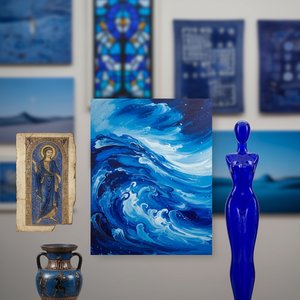
The Allure of Azure: Exploring the Symbolic & Aesthetic Depths of Blue in Art History
Explore the rich history of blue in art! Discover its symbolism, from ancient pigments to modern masterpieces by Kandinsky & Seurat. Uncover the psychological impact and cultural meanings behind this captivating hue.

Golden Glow: How to Use Metallic Gold Artworks to Elevate Your Home Decor with Timeless Luxury
Discover how to elevate your home with the timeless elegance of metallic gold artworks. From sculptural metal pieces to gilded oil paintings, learn expert interior design tips for integrating luxurious gold accents into your space with sophistication and grace.

