 프린트 판매로 전환
 더 보기
더 보기







































 가로 또는 세로 중 어느 한 면이라도 105cm(약 41인치)를 초과하는 작품이나 복제화의 경우, 프레임은 분해된 키트 형태로 배송됩니다. 이는 안전한 배송을 보장하고 운송 중 발생할 수 있는 손상을 방지하기 위함입니다.


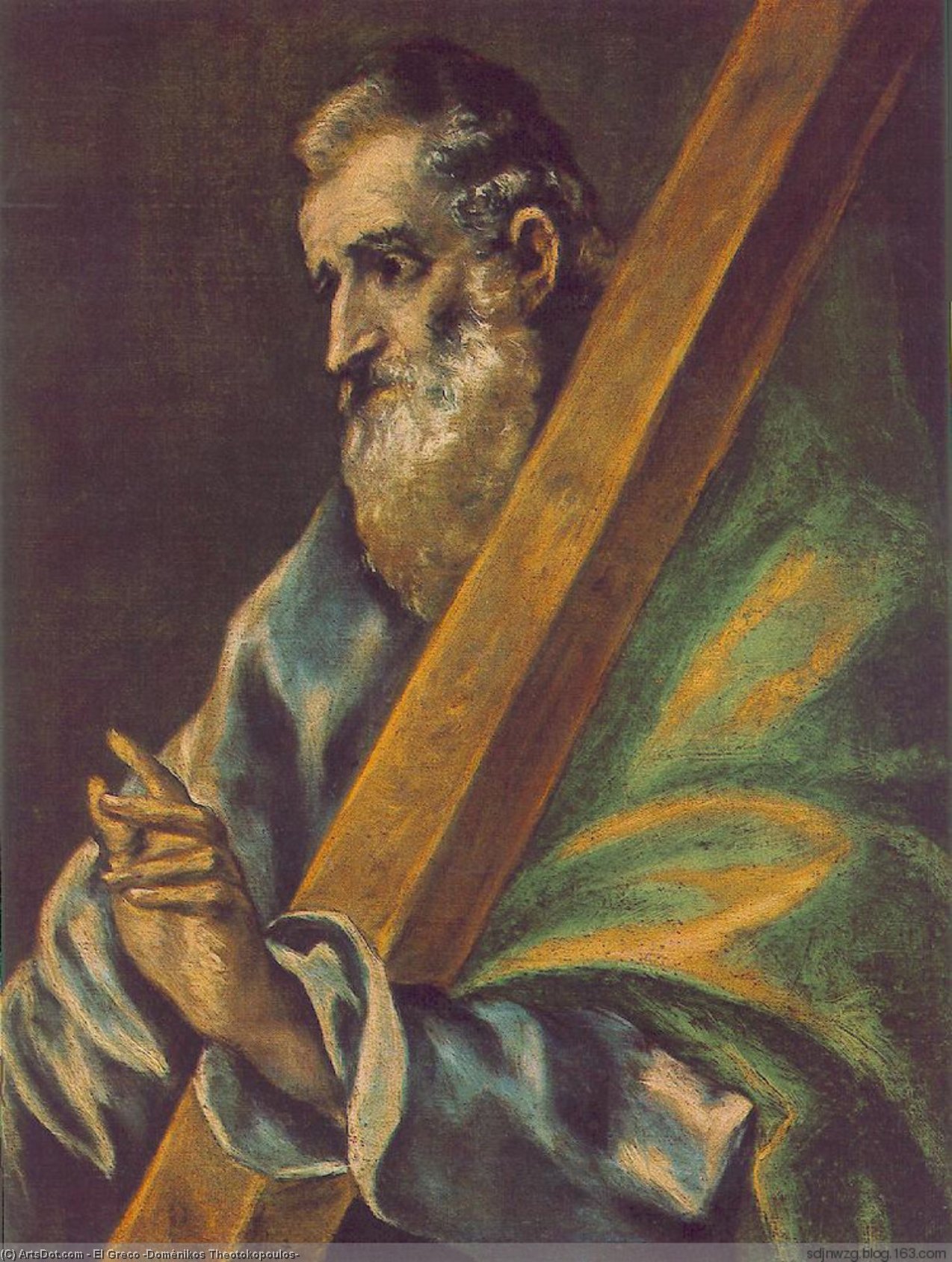
A Deep Dive into El Greco’s “Apostle St Andrew”
Doménikos Theotokópoulos, universally known as El Greco – “the Greek” – stands apart from his contemporaries as a painter whose artistic vision transcended conventional boundaries. Born in Crete in 1541, under Venetian dominion, his journey through Venice and Rome ultimately solidified his indelible mark on the artistic landscape of Spain: Toledo became his spiritual home and the crucible for his revolutionary style. El Greco wasn’t merely absorbing influences; he masterfully synthesized them—Byzantine solemnity blended seamlessly with Western Renaissance dynamism—resulting in an aesthetic that foreshadowed movements like Expressionism and Cubism centuries ahead of their time. His formative years within the Byzantine tradition instilled a meticulous attention to detail and a profound understanding of religious iconography, shaping his approach to portraying sacred subjects. Yet, he refused to be confined by dogma, actively pursuing new artistic horizons. He signed his canvases in Greek – “Krḗs” – proudly asserting his Cretan heritage while simultaneously embracing the stylistic currents circulating throughout Europe. The genesis of El Greco’s distinctive style can be traced back to a pivotal moment: witnessing the devastation wrought by the Lisbon earthquake of 1755, which profoundly impacted him emotionally and spurred him to experiment with innovative compositional strategies.The Artist's Singular Style: Long Lines and Vibrant Color
El Greco’s artistic signature is instantly recognizable—characterized by elongated figures rendered in luminous hues against backgrounds imbued with a palpable sense of mysticism. “Apostle St Andrew” exemplifies this approach perfectly. The artist employs dramatic foreshortening, elongating the saint’s body to convey spiritual intensity and conveying an ethereal quality rarely achieved during his era. His palette explodes with rich blues and golds—a deliberate choice reflecting Venetian artistic traditions but infused with a uniquely El Greco sensibility. These colors aren't merely decorative; they serve as conduits for emotion, amplifying the solemn grandeur of the scene. The artist’s technique is equally noteworthy: he utilizes impasto – thick brushstrokes – to sculpt texture onto the canvas surface, creating palpable depth and enhancing the visual impact of the composition. This textural richness contributes significantly to the painting's expressive power.Symbolism Embodied in Light and Gesture
The central element—the cross held by St. Andrew—is laden with symbolic significance. It represents his martyrdom and underscores his unwavering faith, mirroring the broader Christian narrative of sacrifice and redemption. The saint’s gaze is directed upwards, conveying humility and reverence – a gesture that speaks to the spiritual core of Byzantine art. Furthermore, the drapery surrounding St. Andrew is rendered with meticulous detail, capturing folds and creases that convey movement and dynamism—a stylistic departure from more static depictions prevalent in earlier periods. The subtle interplay of light and shadow further enhances the painting’s dramatic atmosphere, guiding the viewer's eye toward the focal point and amplifying the saint’s solemn presence.Historical Context: Venetian Influence Meets Andalusian Spirit
El Greco’s artistic trajectory was shaped by the cultural currents of his time—particularly the influence of Venice, where he honed his skills during a formative period. However, he wasn't merely imitating Venetian aesthetics; he transformed them into something wholly original, reflecting the spiritual fervor of Andalusia and forging an artistic identity that resonated across Europe. His work stands as testament to the enduring power of tradition blended with innovation—a legacy that continues to inspire artists today. To appreciate El Greco’s genius fully, a visit to The Museum Szépmûvészeti Múzeum (Budapest, Hungary) offers invaluable insight into his oeuvre and its broader artistic context.질의응답
엘 그레코의 "Apostle St Andrew"에서 예술 사조와 시대상은 어떻게 맞닿아 있나요?
"Apostle St Andrew"은(는) Baroque 사조에 속하며, 작가는 르네상스 시대에 활동했습니다.
"Apostle St Andrew"은(는) 저작권으로부터 자유로운가요?
엘 그레코의 "Apostle St Andrew"은(는) 퍼블릭 도메인 - 저작권 보호 기간이 만료되었습니다 상태입니다. 이 상태에 따라 해당 작품 이미지의 복제 가능 여부가 결정됩니다.
"Apostle St Andrew" 프린트의 권장 용도는 무엇인가요?
엘 그레코의 "Apostle St Andrew"은(는) Accent(으)로 활용하시기에 가장 좋습니다. 그 외에도 다양한 용도로 사용하실 수 있습니다.
이 작품에 대해 더 알아보기
 미리보기
미리보기
 공유하기
공유하기 공유하기
공유하기
 상세 정보
상세 정보 가이드 보기

 다운로드
다운로드
 유사 작품 더 보기
 X-레이
X-레이 슬라이드 쇼 보기
 질의응답
질의응답 통계 정보
통계 정보