프린트 판매로 전환
 더 보기
더 보기







































 가로 또는 세로 중 어느 한 면이라도 105cm(약 41인치)를 초과하는 작품이나 복제화의 경우, 프레임은 분해된 키트 형태로 배송됩니다. 이는 안전한 배송을 보장하고 운송 중 발생할 수 있는 손상을 방지하기 위함입니다.


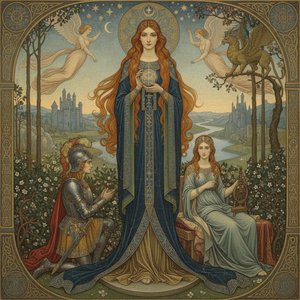
A Portrait Steeped in Mythic Resonance: Exploring Burne-Jones’ “The Baleful Head”
Edward Coley Burne-Jones (1833 – 1898), a luminary of the Pre-Raphaelite Brotherhood and arguably its most commercially successful artist, crafted "The Baleful Head" in 1886—a painting that transcends mere visual representation to delve into profound psychological and symbolic depths. This arresting image depicts a woman cradling a babe while gazing intently at the infant’s head, framed by an ancient oak tree laden with ripe apples. The scene isn't merely picturesque; it’s deliberately positioned within a framework of medieval legend, specifically inspired by Geoffrey Chaucer’s “The Canterbury Tales,” where St. George slays the dragon—a motif Burne-Jones skillfully incorporates into his artistic vision.- Subject Matter & Narrative Context: The composition speaks volumes about themes of motherhood, protection, and confronting darkness. Burne-Jones draws upon Christian iconography to convey a narrative of courage and vigilance against evil forces—a cornerstone of Victorian moral philosophy.
- Style & Technique: Characteristic of Burne-Jones’ oeuvre, “The Baleful Head” exemplifies the Brotherhood's commitment to reviving artistic ideals rooted in medieval art. Employing oil paint on canvas with meticulous detail and glazing techniques, he achieves a luminous surface that captures subtle tonal variations—a hallmark of his masterful craftsmanship.
Symbolism: Apples, Oak Trees & The Dragon’s Shadow
The scattered apples surrounding the figures are laden with symbolic significance. Traditionally associated with immortality and fertility, they represent not only the bounty of nature but also the promise of regeneration—a visual counterpoint to the looming presence of the oak tree. This venerable tree symbolizes strength, endurance, and wisdom, mirroring St. George’s unwavering resolve in battling the dragon. Burne-Jones subtly references Chaucer's tale, suggesting that vigilance and faith are essential for safeguarding innocence and overcoming adversity.Emotional Impact & Aesthetic Considerations
Burne-Jones’ deliberate use of muted colors—primarily ochre, crimson, and emerald green—creates an atmosphere of solemn contemplation. The woman's gaze is unwavering, conveying a palpable sense of determination and sorrowful awareness. This emotive quality aligns perfectly with the Pre-Raphaelite preoccupation with psychological realism—a departure from academic conventions that prioritized idealized beauty. “The Baleful Head” invites viewers to contemplate themes of vulnerability, resilience, and the enduring power of mythic narratives.- Interior Design Inspiration: This artwork’s serene palette and evocative imagery lend themselves beautifully to creating tranquil spaces—particularly nurseries or bedrooms—where comfort and contemplation intertwine.
- Collector's Perspective: Owning a high-quality reproduction of “The Baleful Head” offers an opportunity to appreciate Burne-Jones’ artistic genius and engage with the rich tapestry of Victorian symbolism.
질의응답
에드워드 번 존스의 "The Baleful Head"은(는) Pre-Raphaelite Brotherhood를 작가의 모국과 어떻게 연결하고 있나요?
Pre-Raphaelite Brotherhood 양식의 작품 "The Baleful Head"은 영국 출신의 작가에 의해 탄생했습니다.
"The Baleful Head"은(는) 에드워드 번 존스의 평소 작업 세계를 잘 보여주는 작품인가요?
에드워드 번 존스의 작품 세계를 관통하는 주요 주제에는 medieval symbolism, victorian morality, pre-raphaelite style, mythological narrative, artistic revival가 포함되어 있으며, "The Baleful Head"은 특히 mythology, medieval legend, motherhood, symbolism, victorian morality, christian iconography, decorative arts에 초점을 맞추고 있습니다.
"The Baleful Head"은(는) 에드워드 번 존스의 예술적 발전 단계 중 어느 시기를 나타냅니까?
"The Baleful Head"은(는) 에드워드 번 존스의 예술적 생애 중 Mature Period 시기의 작품입니다. 이 분류를 통해 해당 작품을 작가의 예술적 발전 과정과 연결해 볼 수 있습니다.
이 작품에 대해 더 알아보기
 미리보기
미리보기
 공유하기
공유하기 공유하기
공유하기
 상세 정보
상세 정보 가이드 보기

 다운로드
다운로드
 유사 작품 더 보기
 X-레이
X-레이 슬라이드 쇼 보기
 질의응답
질의응답 통계 정보
통계 정보