

 보내기
보내기 공유하기
공유하기
 상세 보기
상세 보기 가이드 보기

 이미지 다운로드
 유사 작품 더 보기
 슬라이드 쇼 보기
 통계 정보
통계 정보Embrace XI
 Metalwork
- Sculpture
- Abstract Sculpture
 1996
1996- Contemporary
 260.0 x 88.0 cm
 구겐하임 미술관 빌바오
 상세 보기
상세 보기
이 페이지에 표시된 작품은 저작권법의 보호를 받으며, 이에 따라 동일한 복제품을 제작하거나 판매하는 것은 법으로 금지되어 있습니다. 이러한 권리 보호는 다음과 같은 국제 협약에 따라 시행됩니다. 베른 협약 또한 다음에서 명시하는 법률을 포함한 국내법에 의해 보호됩니다. 미국 저작권법 제17조.
저희는 존중을 담은 합법적인 대안으로서, 원작에서 영감을 받은 맞춤형 수제 유화 작품을 제공합니다. 저희의 숙련된 전문 화가들은 원작의 스타일, 분위기, 예술적 정수를 면밀히 연구하여, 그 자체로 독창적인 창작물이면서도 원작과 동일한 감동을 불러일으키는 새로운 작품을 만들어냅니다.
이 방식은 저작권 보호를 받는 예술 작품을 복제하거나 그대로 재현하는 것이 아니기에 저작권 규정을 완벽히 준수합니다. 대신, 이는 창의적인 재해석의 과정을 거칩니다. 즉, 원작에서 영감을 받되 원작과 동일하지 않은 새로운 회화 작품을 의미합니다.
핸드메이드 유화 복제화
작가가 직접 캔버스에 손으로 그린 유화 작품으로, 원하는 크기와 액자로 맞춤 제작해 드립니다. ( 프린트 판매로 전환 디지털 이미지 판매 채널로 전환)




































작품의 원본 비율을 그대로 유지하는 프리셋 사이즈 중에서 선택해 보세요.

액자나 벽면 크기에 맞춰 필요한 가로와 세로 길이를 입력해 주세요. 본 작품은 수작업으로 제작되므로, 요청하신 비율에 따라 작가가 그림의 가장자리를 조금 더 넓게 그리거나 일부를 조정하여 작업할 수 있습니다. 작업 시작 전, 최종 확인을 위해 디지털 목업 이미지를 보내드립니다. 이 페이지에 표시된 이미지는 실제 결과물과 다를 수 있으며, 오직 목업 이미지만이 정확한 결과물을 보여줍니다.
주문 완료 후 OriginalUniqueArt.com 팀에서 상세 안내를 위해 고객님께 이메일을 보내드리며, 미리보기 시안을 함께 제공해 드립니다.


 유리 옵션은 110cm 미만 크기에서만 선택 가능합니다.

Embrace XI
재현 매체
복제본 규격
-


총 결제 금액
₩ 410582
The Poetry of Forged Steel: A Dance of Form and Fire
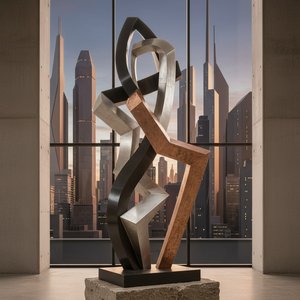
In the realm of modern sculpture, few works command the space with as much visceral intensity as Eduardo Chillida’s Embrace XI. Created in 1996, this monumental steel structure is far more than a mere arrangement of metal; it is a captured moment of elemental struggle. The piece exists in a state of beautiful paradox, presenting itself as both vertical and curved, simultaneously rigid and fluid. To witness Embrace XI is to observe a silent dialogue between the artist’s will and the stubborn resistance of his medium. Unlike the more ethereal explorations found in his other works, this particular sculpture was born from a direct confrontation with fire and force, where sections of forged steel were manipulated through heat and strength to achieve their final, intertwining destiny.
The aesthetic language of the work is deeply rooted in the concept of organic growth. As the eye travels along the dark, heavy ribbons of metal, one does not see industrial coldness, but rather a biological rhythm. The steel sections curve and overlap with the grace of climbing vines or roots that emerge from the earth only to collapse back upon themselves in a tight, protective hold. This sense of "embracing" is central to the piece's identity, suggesting a profound intimacy between separate entities. For the collector or designer, this work offers a sophisticated interplay of shadow and silhouette, making it an extraordinary focal point for spaces that value structural depth and the evocative power of abstract form.
A Legacy of Materiality and Space
The mastery behind Embrace XI lies in Chillida’s unique ability to make heavy, industrial materials appear weightless and alive. His technique involved a deep, almost spiritual connection to the blacksmith's craft. By working alongside local artisans, Chillida mastered the art of coaxing life from iron, treating each curve as a way to "sculpt" the surrounding air. In this piece, the negative space—the gaps between the intertwining steel—is just as vital as the metal itself. The sculpture does not merely occupy space; it defines and contains it, creating a rhythmic tension that draws the viewer into its internal architecture.
Historically, Chillida’s work serves as a bridge between the rugged landscape of his native Basque Country and the universal language of abstraction. While he often rejected the label of "abstract artist," preferring to see himself as a realist capturing the essence of form, Embrace XI embodies this truth perfectly. It is a realistic depiction of tension, gravity, and connection. For those looking to integrate high-quality reproductions into a curated interior, this work provides an unparalleled sense of permanence and intellectual depth. It brings with it the monumental spirit of a master who found the soul within the stone and the heartbeat within the steel.
질의응답
Eduardo Chillida의 "Embrace XI"에 관한 통계 정보는 어디에서 확인할 수 있나요?
Eduardo Chillida의 "Embrace XI"의 통계 페이지에서는 해당 작품의 월간 방문 수, 작가의 가장 많이 조회된 작품과의 비교, 그리고 방문자 유입 경로 등 공개 방문 통계를 제공합니다.
"Embrace XI"을(를) 선물로 전할 때 어떤 느낌을 줄까요?
Eduardo Chillida의 "Embrace XI"의 Powerful한 분위기는 Corporate Gift 선물로 추천하기에 완벽합니다.
Eduardo Chillida의 "Embrace XI"의 색채는 얼마나 조화로운가요?
Eduardo Chillida의 "Embrace XI"은(는) Strong Color Unity 색채 조화를 보여줍니다.
작가 소개
The Monumental Spirit of Eduardo Chillida
To speak of Eduardo Chillida is to speak of the very landscape of modern sculpture—a force of nature rendered in metal, stone, and wood. Born in San Sebastián on January 10, 1924, this Spanish Basque master was destined for a life marked by profound physical struggle and equally profound artistic triumph. Though his early path saw him pursuing architecture at the University of Madrid, it was the raw, undeniable call of art that ultimately redirected his destiny. His formative years were steeped in the cultural atmosphere of the Basque Country, an environment that would forever inform the deep resonance of his work.
His initial forays into sculpture began in Paris, a period where he wrestled with plaster and clay, absorbing influences from the great traditions housed within institutions like the Louvre. Yet, it was upon returning to the nurturing embrace of the Basque Country that Chillida’s artistic voice found its definitive timbre. The physical setbacks of his promising football career served perhaps as an unexpected crucible, channeling a restless energy into his creative pursuits.
Forging Form: Materials and Technique
Chillida's technical evolution is as compelling as the forms he created. Initially drawn to the delicate possibilities of plaster, he soon found his true medium in forged iron. Working alongside local blacksmiths, he mastered the art of transforming raw metal into structures that seemed both impossibly heavy and ethereally light. This mastery was not merely about joining materials; it was about coaxing them into a dialogue with space itself. His exploration expanded to include wood, notably when he began his seminal series, Anvil of Dreams, where wooden bases served as launching pads for metal forms that seemed to erupt in rhythmic, explosive curves.
The material choices were never arbitrary. Whether it was the cold strength of iron or the subtle luminescence of alabaster, Chillida treated each substance with a deep respect, allowing its inherent qualities—its weight, its patina, its resistance—to become integral parts of the sculpture's narrative. He sought not just to depict the human form, often focusing on torsos and busts, but to capture the very essence of existence struggling against constraint.
The Dialogue with Space: Abstract Realism
Despite his monumental scale and highly abstract compositions, Chillida himself resisted easy categorization. He preferred to be known as a "realist sculptor," suggesting that his abstraction was not an escape from reality, but rather a deeper excavation of it. His work is fundamentally concerned with the relationship between matter and void—the space around the sculpture is as vital, if not more so, than the material itself. This preoccupation led him to create public works that did not merely occupy space, but actively engaged with it, forcing the viewer into a physical conversation with the artwork.
His pieces often evoke primal energies and deep human introspection. They feel monumental because they are; they speak of endurance, of history, and of the enduring spirit of humanity rooted deeply in its cultural soil. The very act of viewing a Chillida piece becomes an immersive experience, one where the viewer must navigate the interplay between solid mass and infinite emptiness.
A Legacy Etched in Iron
Eduardo Chillida’s career stands as a towering achievement in 20th-century art. His body of work is a testament to relentless inquiry—an investigation into what it means to be human, contained within the boundaries of physical form and boundless spirit. From his early explorations to his later, massive public installations, he left behind a legacy that continues to challenge perceptions of weight, grace, and permanence. He did not just create sculptures; he forged dialogues between man, material, and the eternal space surrounding us.

Eduardo Chillida
1924 - 2002
작가 정보 요약
- Full Name: Eduardo Chillida Juantegui
- Nationality: Spanish
- Date Of Birth: 1924
- Date Of Death: 2002
- Place Of Birth: San Sebastián, Spain
- Notable Artworks: ['Anvil of Dreams']
- Artistic Movement Or Style: Abstract/Figurative Sculpture
관련 기사
Forged in Fire: The Timeless Strength and Ethereal Beauty of Metal Art
Discover the enduring allure of metal art. Explore how masterfully forged sculptures blend industrial strength with organic elegance to create timeless investment pieces for sophisticated collectors and luxury interiors.

Forging Elegance: The Ultimate Guide to Metal Art as a Modern Masterpiece
Discover the profound elegance of metal art. Our expert guide explores how handcrafted metallic sculptures and industrial-grade ironwork serve as modern masterpieces for discerning collectors seeking to elevate their luxury interiors with strength and grace.

The Enduring Form: Exploring Themes & Techniques in Sculpture Across Historical Periods
Explore the rich history of sculpture from ancient masterpieces to contemporary innovations. Discover key techniques, influential artists & investment potential for discerning art collectors.

Bronze Sculptures That Defined Art History | OriginalUniqueArt
Journey through art history with our Top 10 bronze sculptures! Explore masterpieces by Rodin, Michelangelo & more. Discover stories behind iconic statues and find museum-quality reproductions for your home decor at OriginalUniqueArt.com.

Metal Art for Commercial Spaces: A Procurement Guide to Durable & Modern Large-Scale Decor Solutions
Expert procurement guide for hotel designers and managers. Discover durable, large-scale metal art solutions for commercial spaces. Learn about material selection, maintenance, and efficient bulk ordering for high-traffic hospitality and corporate interiors.