

 실제 크기로 보기
 보내기
보내기 공유하기
공유하기
 상세 보기
상세 보기 가이드 보기

 이미지 다운로드
 유사 작품 더 보기
 X-레이
X-레이 슬라이드 쇼 보기
 통계 정보
통계 정보Le bailarin

 상세 보기
상세 보기
지클레 / 아트 프린트
빠른 제작과 다양한 마감 옵션을 선택할 수 있는 박물관 수준의 지클레이 및 캔버스 프린트. ( 수작업 채색 복제본 주문하기 디지털 이미지 판매 채널로 전환)




P118B ₩10

P118H ₩10

P118W ₩10

P438Z ₩10

P508JH ₩12

P508YH ₩12

P805H ₩10

P805Z ₩10

P919BZ ₩10

P919G ₩10

P919XJ ₩10

P959ZH ₩10

P968JZ ₩12

W106C ₩8

W218G ₩10

W218JH ₩8

W218Y ₩10

W307PJ ₩10

W316G ₩10

W316PJ ₩8

W316Y ₩10

W398PJ ₩8

W4111J ₩10

W500HY ₩15

W500JH ₩15

W692G ₩12

W849H ₩8

W940BG ₩15

W953PJ ₩8




작품의 원본 비율을 그대로 유지하는 프리셋 사이즈 중에서 선택해 보세요.

액자나 벽면 크기에 맞춰 필요한 가로와 세로 길이를 입력해 주세요. 프린트는 원본 이미지보다 크게 제작할 수 없으며 오직 자르는 것만 가능하므로, 비율이 다른 사이즈를 선택할 경우 이미지의 일부가 잘려 나갈 수 있습니다. 인쇄 작업에 들어가기 전, 최종 확인을 위해 디지털 목업을 보내드립니다. 이 페이지에 표시된 이미지는 실제 잘리는 영역을 나타내지 않으며, 오직 목업을 통해서만 정확한 확인이 가능합니다.


 유리 옵션은 110cm 미만 크기에서만 선택 가능합니다.

Le bailarin
지클레 / 아트 프린트
복제본 규격
-


총 결제 금액
₩ 108354
Édouard Manet’s ‘Le Bailarin’: A Parisian Snapshot of Performance and Observation
Édouard Manet's “Le Bailarin” (1862) isn’t merely a black and white drawing; it’s a meticulously observed moment captured in ink, a fleeting glimpse into the vibrant heart of 19th-century Paris. The image presents us with a solitary figure – a dancer, or ‘bailarín’ as he's known here – poised on one leg, his sword held aloft, radiating an aura of contained energy and perhaps even a touch of defiant grace. This work, part of Manet’s broader exploration of modern life, transcends simple portraiture to become a study in posture, gesture, and the subtle drama inherent in everyday observation.
Manet's technique is remarkably precise for an etching, revealing a deep understanding of tonal values and line. The stark contrast between light and shadow sculpts the dancer’s form, emphasizing his muscular physique and the controlled tension in his stance. Notice how Manet uses hatching – closely spaced parallel lines – to create texture on the fabric of his suit and the gleam of his sword. This deliberate attention to detail speaks to a commitment to realism, yet it's tempered by an artist’s eye for composition and expressive form. The loose, almost sketch-like quality of some areas suggests a rapid process, mirroring Manet’s desire to capture the immediacy of the scene rather than meticulously replicating it.
A Parisian Stage: Context and Subject
“Le Bailarin” emerged during a period of immense social and artistic change in Paris. The city was rapidly industrializing, transforming from a provincial town into a bustling metropolis teeming with new experiences and anxieties. Manet, like many artists of his generation, sought to depict this evolving reality, moving away from the idealized subjects and historical narratives favored by the established academic art world. The dancer himself represents a specific segment of Parisian society – performers in theaters and music halls were increasingly popular entertainment, offering both escapism and social commentary.
Interestingly, the subject is identified as “Don Mariano Camprubi,” a real-life dancer who performed at the Royal Theatre of Madrid. Manet’s choice to portray him not just as a performer but as a figure imbued with quiet dignity suggests a deeper interest in capturing the essence of an individual within his profession. The inclusion of details like the sword – a symbol of power and perhaps even danger – adds another layer of complexity, hinting at the potential for both spectacle and vulnerability.
Symbolism and Emotional Resonance
Beyond its straightforward depiction, “Le Bailarin” is rich in symbolic resonance. The dancer’s solitary pose speaks to themes of isolation and self-reliance, while his upright stance conveys a sense of strength and control. The book resting near the bottom left corner – a subtle detail often overlooked – could represent knowledge, aspiration, or perhaps simply the quiet contemplation that might follow a performance. The overall mood is one of restrained intensity; there’s no overt drama, but rather a palpable feeling of contained energy.
Manet's deliberate choice to render the scene in monochrome further amplifies this emotional impact. Black and white forces us to focus on form, line, and texture, stripping away any distractions and intensifying the sense of observation. It’s a technique that allows the viewer to become an active participant in interpreting the image, inviting them to contemplate the dancer's story and his place within the bustling world of 19th-century Paris. “Le Bailarin” remains a powerful testament to Manet’s ability to capture not just a likeness but also the spirit of a moment.
Reproductions & Artistic Inspiration
OriginalUniqueArt offers meticulously crafted, hand-painted reproductions of Édouard Manet's "Le Bailarin," allowing you to bring this iconic work into your home or studio. Our artists replicate Manet’s nuanced technique and evocative atmosphere with the highest level of skill and attention to detail. Whether you are an art collector, interior designer, or simply a lover of fine art, our reproductions provide a beautiful and authentic way to experience this pivotal moment in artistic history. Explore the available options on our website and discover how you can own a piece of Parisian artistry.
질의응답
에두아르 마네의 "Le bailarin" 복제본은 어떤 용도로 사용하기에 좋나요?
에두아르 마네의 "Le bailarin"의 복제본은 Statement에 활용하시기에 좋습니다. 이는 작품의 주제와 분위기, 그리고 색감을 고려한 제안입니다.
에두아르 마네의 "Le bailarin"의 수작업 복제화를 어디에서 구매할 수 있나요?
에두아르 마네의 "Le bailarin"의 수작업 복제화는 본 웹사이트의 수작업 유화 복제화 페이지를 통해 리넨 캔버스 위에 손으로 직접 그린 유화 복제화에서 구매하실 수 있습니다.
에두아르 마네의 "Le bailarin"의 어떤 프린트 사이즈가 추천된 공간에 잘 어울릴까요?
Living Room 공간에는 에두아르 마네의 "Le bailarin" 작품을 Large 크기로 인쇄하시는 것을 추천합니다.
작가 소개
파리 예술의 반항아: 에두아르 마네의 삶과 예술
에두아르 마네는 1832년, 파리의 부유한 시민 가정에서 태어났습니다. 그의 아버지는 존경받는 판사이자, 마네에게 법조계나 해군에서의 안정적인 미래를 꿈꿨지만, 젊은 시절부터 그림에 대한 열정을 품고 있었습니다. 열한 살 때 정식으로 드로잉 수업을 시작했고, 토마스 퀴투르의 제자가 되었으나 그의 엄격하고 전통적인 방식에 곧 좌절감을 느꼈습니다. 이러한 초기 저항은 예술적 관습에 끊임없이 도전하는 평생을 예고했던 것입니다. 마네는 과거를 단순히 복제하는 데 관심이 없었고, 오히려 현대 파리인의 생동감과 때로는 불편한 현실까지 포착하고자 했습니다. 그는 루브르 박물관을 자주 방문하여 고대 거장들의 작품을 모사하기보다는 그들의 기법을 해부하며 빛과 그림자가 형태를 조각하고 감정을 불러일으키는 방식을 연구했습니다. 특히, 쿠르베가 주창한 사실주의의 등장으로 마네의 창작 활동은 더욱 활기를 띠게 되었습니다. 쿠르베의 일상적인 삶에 대한 이상화 없는 묘사는 마네에게 깊이 공감되었고, 역사나 신화적 주제로부터 그를 해방시켜주었습니다.전통과의 단절: 스캔들과 혁신
1860년대는 파리에서 격렬한 예술적 변화가 일어나는 시기였으며, 마네는 그 중심에 있었습니다. 일본 판화인 *우키요에*의 등장으로 그의 미학적 감성은 크게 영향을 받았습니다. 그는 평면적인 원근법, 대담한 구도, 그리고 뚜렷한 색상 사용과 같은 요소들에 매료되었고, 이러한 요소들은 곧 그의 작품 스타일의 특징이 되었습니다. 이러한 영향과 함께 학문적 완벽함을 거부하는 경향은 파리 예술계를 충격과 스캔들을 일으키는 작품들을 탄생시켰습니다. 1863년 ‘거부당한 화가들의 살롱’에서 전시된 <풀밭 위의 점심>(Le Déjeuner sur l'herbe)은 논란의 중심에 섰습니다. 두 명의 옷을 입은 남성과 함께 피크닉을 즐기는 여성 누드의 모습은 당시 사회의 도덕적 관념과 충돌하며 큰 파장을 일으켰습니다. 마네는 전통적인 누드화에서처럼 이상화된 형태나 신화적 맥락이 아닌, 현대인의 모습을 그대로 묘사했기 때문입니다. <올림피아>(Olympia) 역시 1865년 살롱에서 전시되면서 엄청난 논쟁을 불러일으켰습니다. 티치아노의 *우르비노의 비너스*를 재해석한 이 작품은 현대의 매춘부가 대담하게 시선을 응시하는 모습을 담고 있었으며, 이는 당시 관객들에게 충격과 혐오감을 안겨주었습니다. 비평가들은 마네에게 무례함과 예술적 무능함을 비난했지만, 그 속에는 그의 그림 언어가 근본적으로 변화하고 있다는 인식이 숨어 있었습니다.인상주의를 향한 다리: 빛, 붓놀림 그리고 현대의 삶
마네는 스스로를 ‘인상주의자’로 규정하지 않았지만, 그의 영향력은 이 운동에 지대한 영향을 미쳤습니다. 그는 학문적 관습을 거부하고 빛과 대기의 일시적인 효과를 포착하려는 인상주의자들의 노력과 공통점을 공유했습니다. 모네, 르누아르, 드가 등과 함께 독립 전시회에 참여하며 아방가르드 예술계의 핵심 인물로서 그의 위치를 확고히 했습니다. 마네는 점차 더 자유로운 붓놀림을 추구하여 정확한 디테일보다 형태의 인상을 우선시했습니다. 그는 색채를 실험적으로 사용하며 극적인 효과를 내기 위해 강렬한 대비를 활용했습니다. 누드화 외에도, 그의 작품은 다양한 주제를 다루었습니다. 아내 수잔과 동료 예술가 에밀 졸라의 초상, 폴리-베르제르의 밤 문화 풍경인 <폴리-베르제르의 술집>, 그리고 현대 도시 생활의 고독과 광경을 묘사한 작품들이 있습니다. 그는 단순히 이러한 주제를 기록하는 것이 아니라, 사회적 규범에 도전하고 아름다움에 대한 기존의 개념을 질문했습니다.유산과 지속적인 영향
1883년 매독으로 인한 조기 사망은 이미 미술사의 흐름을 바꿔놓았던 그의 경력을 짧게 만들었지만, 그의 영향력은 젊은 예술가들에게 즉각적으로 느껴졌습니다. 그는 전통적인 주제, 기법 및 예술적 목적에 대한 장벽을 허물며 해방감을 선사했습니다.- 현대 생활의 포착에 대한 그의 강조는 인상주의와 후기 인상주의를 위한 길을 열었습니다.
- 그의 혁신적인 붓놀림과 색채 사용은 수많은 화가 세대에 영향을 미쳤습니다.
- 불편한 진실에 맞서 싸우려는 그의 의지는 관객들에게 자신의 가정에 대해 질문하도록 강요했습니다.
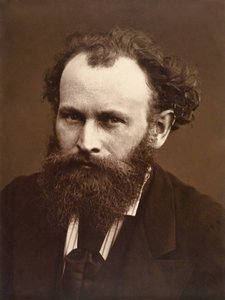
에두아르 마네
1832 - 1883 , 프랑스
작가 정보 요약
- 국적: 프랑스인
- 대표작:
- déjeuner sur l'herbe
- Olympia
- A Bar at the Folies-Bergère
- 사망일: 1883년 4월 30일
- 영향을 받은 예술가:
- 클로드 모네
- 피에르 오귀스트 르누아르
- 드가
- 영향을 준 예술가:
- 카라바지오
- 벨라스케스
- 구스타브 쿠르베
- 예술 사조: 사실주의, 인상주의
- 전체 이름: 에두아르 마네
- 출생일: 1832년 1월 23일
- 출생지: 파리, 프랑스
관련 기사
Édouard Manet: Pioneering Modernism & Challenging Artistic Conventions
Explore the life & art of Édouard Manet, a pivotal figure bridging Realism and Impressionism. Discover his revolutionary techniques, controversial masterpieces like 'Olympia,' and lasting impact on modern art history.
에두아르 마네 최고 걸작 25선: 현대 미술의 선구자 | OriginalUniqueArt
에두아르 마네 최고 걸작 25선을 만나보세요. 인상주의 화가 마네의 혁신적인 기법과 파격적인 작품 세계를 탐험하고, OriginalUniqueArt에서 고품질 명화 복제본으로 예술을 경험하세요. 지금 바로 컬렉션을 확인하세요!

The Intricate World of Etching: A Historical Survey of Technique, Aesthetic Evolution, and Enduring Artistic Impact
Explore the rich history of etching, from its origins to modern practice. Discover techniques, key artists like Rembrandt, and insights for collectors. A comprehensive guide by OriginalUniqueArt.
Etching Masters: 10 Legendary Prints That Revolutionized Art | OriginalUniqueArt
Journey through 10 legendary etching masterpieces by Rembrandt, Dürer & Goya. Explore the history of printmaking and discover timeless art for your home. Find museum-quality reproductions at OriginalUniqueArt.com.

Etching: A Historical Survey of Technique, Aesthetic Qualities & Enduring Artistic Significance
Explore the rich history of etching, from its origins to Rembrandt's masterful innovations. Discover the technique, aesthetic qualities & enduring legacy of this captivating art form. Expert insights for collectors and enthusiasts.


