

 미리보기
미리보기
 프린트 구매
 공유하기
공유하기 공유하기
공유하기
 상세 정보
상세 정보

 다운로드
다운로드
 유사 작품
유사 작품 X-레이
X-레이 슬라이드 쇼
Starting Prices at the Alexandra Palace


 더 보기
더 보기




P118B $10

P118H $10

P118W $10

P438Z $10

P508JH $12

P508YH $12

P805H $10

P805Z $10

P919BZ $10

P919G $10

P919XJ $10

P959ZH $10

P968JZ $12

W106C $8

W218G $10

W218JH $8

W218Y $10

W307PJ $10

W316G $10

W316PJ $8

W316Y $10

W398PJ $8

W4111J $10

W500HY $15

W500JH $15

W692G $12

W849H $8

W940BG $15

W953PJ $8




작품의 원본 비율을 유지하는 미리 설정된 크기 중에서 선택하세요.

특정 프레임이나 공간에 맞도록 직접 크기를 입력할 수 있습니다. 선택하신 크기가 원본 이미지의 비율과 일치하지 않는 경우, 작품을 자르거나 추가적인 손으로 그린 요소를 사용하여 그림을 확장합니다. 제작 시작 전 승인을 위해 디지털 목업을 보내드립니다.
화면 미리 보기는 실제 자르기 또는 확장을 반영하지 않습니다. 최종 구성은 목업을 통해서만 정확하게 확인하실 수 있습니다.
맞춤 크기 제작도 가능하지만, 원본 비율을 유지하기 위해 사전 정의된 목록에서 크기를 선택하시는 것을 권장합니다.
주문 후 OriginalUniqueArt.com 팀에서 상세 안내를 위해 고객님께 이메일을 보내드리며, 미리보기 시안을 제공해 드립니다.


 유리 옵션은 110cm 미만 크기에서만 선택 가능합니다.

Starting Prices at the Alexandra Palace
재현 기법
복제본 크기
-


최종 결제 금액
$ 450
작가 약력
Jean-Michel Basquiat: A Voice of the Streets and a Revolutionary Artist
Born in Brooklyn, New York City, on December 22, 1960, Jean-Michel Basquiat emerged from the vibrant, chaotic crucible of the late 1970s and early 1980s art scene. His life was tragically cut short at the age of 27 in August 1988 due to a heroin overdose, but during his brief career, he left an indelible mark on the world of art, becoming one of the most iconic figures of neo-expressionism and a powerful voice for social commentary.
Basquiat’s early life was deeply intertwined with the cultural landscape of New York City. Raised in a diverse neighborhood, he absorbed influences from hip-hop culture, graffiti art, and the burgeoning black arts movement. This environment profoundly shaped his artistic vision, informing his use of language, imagery, and social critique. Initially, Basquiat collaborated with Al Diaz under the pseudonym SAMO, creating enigmatic epigrams that appeared on subway cars throughout Manhattan. These early works established a unique visual vocabulary characterized by bold lettering, fragmented images, and cryptic messages – a precursor to his later, more fully realized paintings.
The Rise of Neo-Expressionism and Basquiat’s Unique Style
By the early 1980s, Basquiat transitioned from graffiti to painting, quickly gaining recognition for his distinctive style. He embraced neo-expressionism, a movement that rejected the cool detachment of minimalism and returned to subjective expression, often employing raw emotion and gestural brushstrokes. However, Basquiat’s work transcended simple categorization; he blended elements of street art, pop culture references, historical imagery, and personal reflections into a complex and layered visual language.
His paintings frequently featured skulls, crowns (a symbol of royalty and power), musical instruments, and portraits – often depicting black figures. He incorporated text extensively, using words, phrases, and names to create narratives that addressed issues of race, poverty, inequality, and the American Dream. Basquiat’s method was remarkably unconventional; he would often sketch directly onto the canvas with charcoal, creating a foundation for his subsequent layers of paint. His works were characterized by a frenetic energy, a sense of urgency, and a deliberate juxtaposition of seemingly disparate elements.
Themes of Power, Identity, and Social Critique
At the heart of Basquiat’s art lay a deep engagement with social and political issues. He confronted themes of racism, police brutality, economic disparity, and the commodification of art – often exposing the hypocrisy and contradictions inherent in American society. His work served as both a personal reflection on his own experiences as a black artist navigating a predominantly white art world and a broader critique of power structures and systemic inequalities.
Works like *Irony of Negro Policeman* (1981) and *Defacement* (1983), depicting a skull with a police badge, powerfully addressed issues of racial injustice. Similarly, paintings such as *Hollywood Africans* (1983) satirized the appropriation of black culture by Hollywood, highlighting the exploitation and misrepresentation that often occurred within the entertainment industry. His art wasn’t simply decorative; it was an active engagement with the world around him.
Legacy and Historical Significance
Despite his tragically short life, Jean-Michel Basquiat achieved remarkable success during his lifetime. He exhibited in prestigious galleries and museums worldwide, including the Whitney Museum of American Art in New York City, and his work quickly gained significant value. His influence on subsequent generations of artists is undeniable, shaping the trajectory of neo-expressionism and inspiring countless creatives to explore themes of social justice and personal identity through their art.
Today, Basquiat’s paintings are among the most valuable in the world, commanding prices that reflect both his artistic genius and the enduring relevance of his message. He remains a potent symbol of creativity, rebellion, and the power of art to challenge the status quo – a true revolutionary artist who dared to speak truth to power through his unique visual language.

daniel james higgins
1980 - , United States of America
주요 정보
- Artistic Movement Or Style: Neo-expressionism
- Artists Or Movements Influenced By This Artist:
- Graffiti art
- Hip-hop culture
- Artists Who Influenced This Artist:
- Andy Warhol
- Keith Haring
- Date Of Birth: December 22, 1960
- Date Of Death: August 12, 1988
- Full Name: Jean-Michel Basquiat
- Nationality: American
- Notable Artworks:
- Irony of Negro Policeman
- Skull of Doom
- Untitled
- Boy and Dog in a Johnnypump
- Defacement
- Place Of Birth: New York City, U.S.
관련 기사 더 보기

Etching: A Historical Survey of Technique, Aesthetic Qualities & Enduring Artistic Significance
Explore the rich history of etching, from its origins to Rembrandt's masterful innovations. Discover the technique, aesthetic qualities & enduring legacy of this captivating art form. Expert insights for collectors and enthusiasts.

제임스 애벗 맥닐 휘슬러 최고 걸작 25선: 예술의 정수, 공간에 스며드는 아름다움
제임스 애벗 맥닐 휘슬러의 최고 걸작 25선을 만나보세요. 야간 풍경부터 아랑미술관 소장품까지, 예술가의 삶과 작품 세계를 탐험합니다. 색채와 분위기가 완벽한 조화를 이루는 그림들을 OriginalUniqueArt.com에서 감상하고 특별한 공간을 완성하세요.
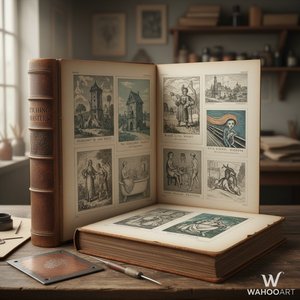
Etching Masters: 10 Legendary Prints That Revolutionized Art | OriginalUniqueArt
Journey through 10 legendary etching masterpieces by Rembrandt, Dürer & Goya. Explore the history of printmaking and discover timeless art for your home. Find museum-quality reproductions at OriginalUniqueArt.com.

The Intricate World of Etching: A Historical Survey of Technique, Aesthetic Evolution, and Enduring Artistic Impact
Explore the rich history of etching, from its origins to modern practice. Discover techniques, key artists like Rembrandt, and insights for collectors. A comprehensive guide by OriginalUniqueArt.

Sir Alfred Munnings' Masterpieces: 25 Paintings That Define Equine Art | OriginalUniqueArt
Explore 25 iconic Sir Alfred Munnings paintings! Discover the beauty of British Impressionism, equine art & rural England. Find museum-quality reproductions and elevate your home decor with OriginalUniqueArt. Explore the full collection online.

