프린트 판매로 전환
 상세 보기
상세 보기







































 가로 또는 세로 중 어느 한 면이라도 105cm(약 41인치)를 초과하는 작품이나 복제화의 경우, 프레임은 분해된 키트 형태로 배송됩니다. 이는 안전한 배송을 보장하고 운송 중 발생할 수 있는 손상을 방지하기 위함입니다.


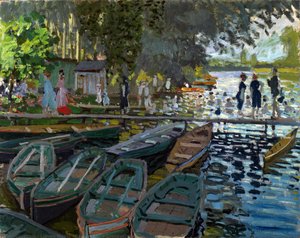
The Shimmering Embrace of Trouville Harbor – A Monet Masterpiece
Claude Monet’s “Untitled (6551),” a captivating depiction of the harbor at Trouville, France, isn't merely a landscape; it’s an immersive experience. Painted around 1874, during the nascent stages of Impressionism, this work embodies the movement’s revolutionary approach to capturing fleeting moments and subjective perceptions of light and color. It represents a pivotal shift away from the rigid academic traditions that dominated art at the time, embracing instead the artist's immediate sensory response to the world around him.
The scene unfolds with remarkable immediacy. Monet masterfully utilizes loose, broken brushstrokes—a hallmark of his technique—to render the boats and their reflections on the water’s surface. These aren’t sharply defined forms but rather a vibrant dance of color and texture, suggesting movement and fluidity. Notice how he doesn't meticulously detail every hull or sail; instead, he focuses on the *impression* of these elements, prioritizing the overall atmosphere and the play of light upon them. The sky, rendered in soft blues and grays, contributes to the painting’s slightly melancholic yet serene mood – a characteristic often found in Monet’s works reflecting his personal reflections.
Impressionism: A Revolution in Perception
To truly appreciate “Untitled (6551),” one must understand the context of Impressionism. Emerging in late 19th-century France, this movement sought to break free from the constraints of traditional art academies and their emphasis on precise representation. Artists like Monet were driven by a desire to capture not just what they *saw*, but how they *felt* – the ephemeral qualities of light, color, and atmosphere. Monet’s approach was profoundly influenced by Eugène Boudin, who instilled in him the crucial practice of plein air painting—working directly outdoors to observe and record nature's immediate effects.
The painting exemplifies this philosophy perfectly. Monet wasn’t interested in creating a photographic likeness; he aimed to convey the *feeling* of being present at Trouville, experiencing the warmth of the sun on his skin, the scent of the sea air, and the gentle lapping of waves against the shore. This focus on subjective experience is what distinguishes Impressionism from earlier artistic styles.
Monet’s Technique: Light, Color, and Broken Brushstrokes
Monet's technique in “Untitled (6551)” is a testament to his innovative approach. He employed a layering of thin washes of paint—often applied directly onto the canvas—allowing the underlying surface to peek through. This creates a sense of transparency and luminosity, as if the colors themselves are radiating light. The broken brushstrokes aren’t haphazard; they're carefully considered, designed to capture the shimmering reflections on the water and the subtle shifts in color caused by changing light conditions.
Observe how he uses complementary colors—such as blues and oranges—to intensify the visual impact of the scene. These juxtapositions create a vibrant energy that draws the eye across the canvas, inviting the viewer to lose themselves in the details of the harbor. The subtle variations in tone and hue contribute to the painting’s overall sense of depth and atmosphere.
Symbolism and Emotional Resonance
Beyond its technical brilliance, “Untitled (6551)” resonates with a quiet emotional depth. The scene evokes a feeling of peaceful contemplation—a moment of respite from the bustle of everyday life. The boats themselves can be interpreted as symbols of movement, connection, and perhaps even nostalgia. The cloudy sky adds to this sense of introspection, suggesting a subtle melancholy that underlies the painting’s beauty.
Monet's ability to capture such nuanced emotions through his masterful use of color and light is what makes “Untitled (6551)” – and much of his work – so enduringly captivating. It remains a powerful reminder of the transformative potential of art to transport us beyond our immediate surroundings and into the realm of pure sensory experience.
질의응답
"untitled (6551)"의 작가인 클로드 모네는 다른 이름으로도 알려져 있나요?
클로드 모네은(는) 오스카-클로드 모네, 클로드 오스카르 모네, 클로드 오스카 모네라는 다른 이름으로도 알려져 있습니다.
클로드 모네의 "untitled (6551)"을(를) 다른 조명 아래에서 볼 수 있을까요?
클로드 모네의 "untitled (6551)"의 X선 분석 페이지는 엑스레이 스타일의 뷰를 포함하여 작품 이미지의 11개 광학 레이어를 슬라이드하며 살펴볼 수 있는 인터랙티브 뷰어를 제공합니다.
클로드 모네의 "untitled (6551)"의 색감은 얼마나 강렬한가요?
"untitled (6551)"의 색채 강도는 강렬한입니다. 강도는 색상이 얼마나 선명하게 보이는지를 나타냅니다.
More about this painting
 실제 크기로 보기
 보내기
보내기 공유하기
공유하기
 상세 보기
상세 보기 가이드 보기

 이미지 다운로드
 유사 작품 더 보기
 X-레이
X-레이 슬라이드 쇼 보기
 Q&A
Q&A 통계 정보
통계 정보