유화 원작 구매
 untitled (113)에 관한 모든 것







































 가로 또는 세로 중 어느 한 면이라도 105cm(약 41인치)를 초과하는 작품이나 복제화의 경우, 프레임은 분해된 키트 형태로 배송됩니다. 이는 안전한 배송을 보장하고 운송 중 발생할 수 있는 손상을 방지하기 위함입니다.


A Fragment of Impressionistic Reverie: Unpacking Claude Monet’s Untitled (113)
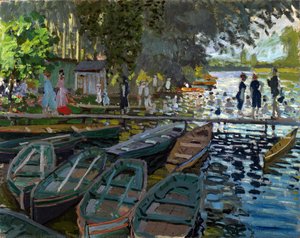
Claude Monet's “Untitled (113),” painted in 1907, embodies the very essence of Impressionism—a deliberate rejection of academic conventions in favor of capturing the immediacy and subjective experience of a particular moment. This seemingly simple monochrome depiction holds profound artistic significance, reflecting not only Monet’s masterful technique but also the broader intellectual currents shaping European art at the turn of the century.
- Subject Matter: The painting presents a woman reclining in bed, enveloped by drapery and partially obscured by a sheet. This deliberate ambiguity invites contemplation about privacy, vulnerability, and perhaps even hidden emotions—themes prevalent in Impressionist explorations of human psychology.
- Style & Technique: Monet’s signature style is evident in the loose brushstrokes characteristic of plein air painting. The artist eschewed meticulous detail, prioritizing instead the transmission of light and color onto canvas. Thick impasto creates textural surfaces that capture the subtle nuances of illumination, mirroring the fleeting beauty of natural landscapes.
- Historical Context: Painted during Monet’s prolific period at Giverny—his garden transformed into a haven for experimentation—the artwork speaks to the broader artistic movement concerned with documenting sensory perceptions. Impressionism arose as a reaction against Romantic idealism, asserting that art should strive to represent reality as it is perceived by the eye rather than imposing preconceived notions of beauty.
Symbolic Layers Beneath Surface Calm
Beyond its visual aesthetic, “Untitled (113)” possesses symbolic resonance. The woman’s veiled posture suggests concealment—perhaps representing secrets unspoken or emotions suppressed. Simultaneously, the presence of a knife nearby introduces an unsettling element, hinting at potential danger or disruption within this tranquil scene. This juxtaposition underscores Monet's ability to convey complex psychological states through deceptively understated imagery.
- The Veil: Traditionally associated with modesty and concealment, the veil symbolizes privacy and introspection—elements central to Impressionist interest in portraying inner life alongside external observation.
- The Knife: Often interpreted as representing violence or disruption, the knife’s placement disrupts the serene composition, prompting viewers to consider darker interpretations of human experience. It serves as a counterpoint to the woman's repose, suggesting an underlying tension.
Light and Texture: Monet’s Pursuit of Impressionistic Ideal
Monet’s meticulous attention to light—a cornerstone of Impressionism—is palpable in “Untitled (113).” The artist skillfully captures the diffused glow emanating from unseen sources, creating a luminous atmosphere that envelops the figure. Furthermore, the textured surface achieved through thick impasto enhances the visual impact, conveying the materiality of the canvas and mirroring the tactile qualities of natural surfaces.
- Impasto Technique: Monet’s deliberate layering of paint—creating ridges and peaks on the canvas—was revolutionary for its time. It prioritized capturing the physicality of light and color rather than achieving photographic realism.
- Color Palette: The predominantly monochrome palette contributes to the painting's contemplative mood, emphasizing tonal variations and subtle gradations of gray—a technique favored by Monet in his later works.
Emotional Resonance & Artistic Legacy
"Untitled (113)" transcends mere visual representation; it invites viewers into a realm of emotion and psychological exploration. Like many of Monet’s masterpieces, it captures the elusive beauty of fleeting moments—a testament to his unwavering commitment to portraying subjective experience. Its enduring appeal lies in its ability to provoke contemplation about identity, vulnerability, and the complexities of human consciousness—themes that continue to resonate with audiences today.
질의응답
untitled (113)은(는) 수작업으로 그린 작품인가요, 아니면 프린트된 작품인가요?
수작업 제작: 숙련된 화가가 untitled (113)을(를) 리넨 캔버스 위에 유화로 재현합니다.
untitled (113)의 사이즈는 어떤 것을 선택해야 하나요?
사이즈는 37.7 x 26.5 cm (₩271335)부터 240.6 x 169.1 cm (₩2062147)까지 있으며, 이 페이지의 표에 주요 단계별 가격이 안내되어 있습니다.
배송은 얼마나 걸리나요?
배송은 전 세계 무료 특송으로 4~5주가 소요되며, 본 페이지에서 긴급 제작 옵션을 선택하실 수 있습니다. 제품은 조건 없이 100일 이내에 반품하여 전액 환불받으실 수 있습니다.
클로드 모네 작가는 untitled (113) 작품에 어떤 재료를 사용했나요?
Oil On Canvas
 미리보기

 공유하기
 공유하기
 상세 정보
 학습용 요약본


 다운로드
 유사 작품 더 보기
 X-레이
 슬라이드 쇼 보기
 질의응답

 통계 정보