프린트 판매로 전환
 더 보기
더 보기







































 가로 또는 세로 중 어느 한 면이라도 105cm(약 41인치)를 초과하는 작품이나 복제화의 경우, 프레임은 분해된 키트 형태로 배송됩니다. 이는 안전한 배송을 보장하고 운송 중 발생할 수 있는 손상을 방지하기 위함입니다.


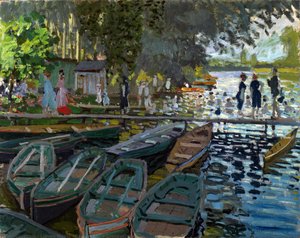
Riverbank at Argenteuil – A Dawn of Impressionism
Claude Monet’s “Riverbank at Argenteuil,” painted in 1877, isn't merely a depiction of a riverside scene; it’s arguably the genesis point of Impressionism itself. This unassuming canvas holds within it the very essence of what would revolutionize artistic perception and forever alter the landscape of European art.
Painted during Monet’s formative years alongside fellow artists like Renoir and Sisley, “Riverbank at Argenteuil” embodies Boudin's influence—the crucial introduction to plein air painting. Boudin championed capturing light and atmosphere directly from nature, a radical departure from the studio traditions of academic art. Monet embraced this philosophy wholeheartedly, prioritizing observation over meticulous detail.
- Subject Matter: The scene portrays Argenteuil, a charming village nestled along the Seine River near Paris, frequented by artists and intellectuals. It captures a tranquil morning bathed in soft sunlight.
- Style: Impressionism—characterized by loose brushstrokes and vibrant color palettes—is evident throughout. Monet eschewed blending colors on the palette, opting instead for juxtaposing complementary hues to create shimmering effects of light.
- Technique: Monet employed oil paints applied in rapid succession, layering thin glazes to build up tonal variations and capturing fleeting moments of illumination. The brushstrokes are visible, conveying a sense of immediacy and spontaneity.
Beyond its aesthetic beauty, “Riverbank at Argenteuil” carries profound symbolic weight. It represents not just a picturesque landscape but also the burgeoning spirit of modern life—the pursuit of leisure, camaraderie, and engagement with the natural world. The sailboats drifting across the water symbolize aspiration and movement, mirroring Monet’s own artistic journey.
The painting's emotional impact is palpable: serenity, peace, and a celebration of beauty. It invites viewers to contemplate the ephemeral nature of experience and to appreciate the transformative power of light. “Riverbank at Argenteuil” remains an enduring testament to Monet’s genius—a cornerstone of Impressionism and a masterpiece that continues to inspire awe and admiration.
The Artist and His Legacy
Claude Monet (1840-1926) stands as one of the titans of modern art, revered for his unwavering dedication to capturing the subtleties of light and color. He wasn’t just painting what he saw; he was striving to convey how it *felt*. His prolific output—over 2,300 paintings—established him as a pioneer of Impressionism and cemented his place in artistic history.
- Notable Works: Alongside “Riverbank at Argenteuil,” Monet’s oeuvre includes iconic landscapes like Vetheuil and “A Corner of the Garden at Montgeron,” which can be found on /art/list/?Filter=8XXRDL-Claude-Monet-Vetheuil and /art/list/?Filter=8XXRC7-Claude-Monet-A-Corner-of-the-Garden-at-Montgeron respectively.
- Influence: Monet’s approach profoundly impacted subsequent generations of artists, shaping movements like Neoimpressionism and Post-Impressionism. His insistence on subjective perception continues to resonate with contemporary art practitioners.
Exploring Impressionist Technique
Monet's revolutionary technique—the cornerstone of Impressionism—involved applying paint in short, broken strokes that blended optically rather than physically on the canvas. This method allowed him to capture the fleeting effects of light and atmosphere with unprecedented accuracy.
- Color Theory: Monet understood color theory deeply, utilizing complementary colors (like blue and orange) to intensify hues and create vibrant contrasts.
- Layering Glazes: He built up tonal variations through multiple thin layers of translucent glaze—a technique that enhanced luminosity and depth without obscuring the underlying brushstrokes.
Reproductions of “Riverbank at Argenteuil” offer a remarkable opportunity to experience Monet’s vision firsthand, transporting viewers back to a pivotal moment in artistic innovation.
Beyond Monet: Fellow Impressionists and Artistic Context
Claude Monet wasn't alone on his artistic quest. Artists like Pierre-Auguste Renoir, Edgar Degas, Camille Pissarro, and Alfred Sisley collaborated closely with him, sharing a commitment to capturing the beauty of everyday life and experimenting with new visual languages.
- Staatliche Museen zu Berlin: The Staatliche Museen zu Berlin houses an impressive collection of European paintings from the 13th to the 18th centuries, alongside ancient Egyptian artefacts. Discover more about this museum on /art/list/?Filter=A@D3BCSB-Discover-the-Staatliche Museen-zu-Berlin-Germany
“Riverbank at Argenteuil” emerged during a period of significant artistic ferment—the Impressionist movement challenged the conventions of academic painting and ushered in an era of unprecedented creative freedom.
질의응답
"Riverbank at Argenteuil"은(는) 클로드 모네의 다른 작품들과 어떤 공통점을 지니고 있나요?
"Riverbank at Argenteuil"은(는) 클로드 모네의 다른 작품들과 마찬가지로 Impressionism 양식과 더불어 작가의 반복되는 주제인 inspired by boudin’s plein air technique., reflects romanticism's focus on nature., a cornerstone of impressionist aesthetics., represents giverny's serene landscape.를 공유합니다.
클로드 모네의 "Riverbank at Argenteuil"의 방문객 분포는 어떻게 되나요?
클로드 모네의 "Riverbank at Argenteuil"의 방문 통계 페이지에서는 해당 작품의 월간 방문 수, 작가의 최고 조회 작품과의 비교, 그리고 방문자 유입 경로 등 공개된 방문 통계를 제공합니다.
클로드 모네의 "Riverbank at Argenteuil"에서 어떤 감정이 느껴지나요?
클로드 모네의 "Riverbank at Argenteuil"은(는) 전반적인 Serene 분위기 속에서 Tranquil한 느낌을 전달합니다.
이 작품에 대해 더 알아보기
 미리보기
미리보기
 공유하기
공유하기 공유하기
공유하기
 상세 정보
상세 정보 가이드 보기

 다운로드
다운로드
 유사 작품 더 보기
 X-레이
X-레이 슬라이드 쇼 보기
 질의응답
질의응답 통계 정보
통계 정보