 상세 보기
상세 보기


 가로 또는 세로 중 어느 한 면이라도 105cm(약 41인치)를 초과하는 작품이나 복제화의 경우, 프레임은 분해된 키트 형태로 배송됩니다. 이는 안전한 배송을 보장하고 운송 중 발생할 수 있는 손상을 방지하기 위함입니다.


More about this painting
Text size

() ·
A painting made for you, by hand
핸드메이드 유화 복제화
작가가 직접 캔버스에 손으로 그린 유화 작품으로, 원하는 크기와 액자로 맞춤 제작해 드립니다. ( 프린트 판매로 전환 디지털 이미지 판매 채널로 전환)
컬렉션 상세 정보
Discover Charles Negre’s captivating ‘Leda’ lithograph – a Romantic masterpiece of sensuality & nature. Explore this 1850 artwork's dramatic style & symbolic beauty.
작가 소개
Explore the pioneering photography of Charles Negre! Capturing movement & architectural detail in 19th-century France. Discover his innovative works on OriginalUniqueArt.
from ·
Chapter 1
How large should it be?
Slide to change the size; the picture on the left shows the frame at its real width. The proportions of the original are kept.
표준 규격
맞춤 제작
CM
INCH
작품의 원본 비율을 그대로 유지하는 프리셋 사이즈 중에서 선택해 보세요.
Loading sizes...

가로 너비
높이
액자나 벽면 크기에 맞춰 필요한 가로와 세로 길이를 입력해 주세요. 본 작품은 수작업으로 제작되므로, 요청하신 비율에 따라 작가가 그림의 가장자리를 조금 더 넓게 그리거나 일부를 조정하여 작업할 수 있습니다. 작업 시작 전, 최종 확인을 위해 디지털 목업 이미지를 보내드립니다. 이 페이지에 표시된 이미지는 실제 결과물과 다를 수 있으며, 오직 목업 이미지만이 정확한 결과물을 보여줍니다.
Chapter 2
How should it arrive?
Choose the edges of the stretched canvas
Choose your frame

White ₩1

Blurside ₩1

Extended ₩1

P118B ₩10

P118H ₩10

P118W ₩10

P438Z ₩10

P508JH ₩12

P508YH ₩12

P805H ₩10

P805Z ₩10

P919BZ ₩10

P919G ₩10

P919XJ ₩10

P959ZH ₩10

P968JZ ₩12

W106C ₩8

W218G ₩10

W218JH ₩8

W218Y ₩10

W307PJ ₩10

W316G ₩10

W316PJ ₩8

W316Y ₩10

W398PJ ₩8

W4111J ₩10

W500HY ₩15

W500JH ₩15

W692G ₩12

W849H ₩8

W940BG ₩15

W953PJ ₩8

H24-GOLD ₩30

H24-SILVER ₩30

H36-GOLD ₩45

H36-SILVER ₩45
액자형
Moulding: . Overall size with the frame: .
Chapter 3
Who paints it, and should anything change?
Examples of what can be changed: Replace face with customer photo; Add pet (e.g., replace cat with dog); Include hidden message in background; Change background landscape or elements.
After order, OriginalUniqueArt.com team will email client for instructions and provide a mockup preview
After order, OriginalUniqueArt.com team will email client for instructions and provide a mockup preview
전 세계 배송()은 표준 5주 대신 3~4주 내에 완료됩니다. (30 10월). 품질에는 어떠한 타협도 하지 않습니다.
Chapter 4
The finishing touches
A nameplate, as in a museum?
동판 각인 상세 정보
This elegant plaque features the artist's name and the title of the artwork, finely engraved for a timeless presentation.
It is made from bronze with a refined, elegant finish. The text is precisely laser-engraved for a sharp and permanent result. Measuring 9x2 cm, the plaque is compact yet easy to read. It's built to be durable and scratch-resistant, offering a professional, museum-quality look. Mounting is simple thanks to the included adhesive backing.
투명 아크릴 명판 상세 정보
The plaque includes essential engraved details such as the artist's name, the title of the artwork, the date it was created, the type of media used-like oil on canvas or watercolor-a brief description of the piece, and a QR code that links to the complete artwork information.
It is crafted from clear acrylic, offering a sleek, modern appearance. The text is UV-engraved in black to ensure strong visual contrast. With a size of 10x15 cm, it ensures optimal readability. It comes equipped with two metal hooks for secure wall mounting. The plaque is designed to be weather-resistant, making it suitable for various environments, and it includes interactive features that work seamlessly with smartphone scanning.
블랙 아크릴 명판 상세 정보
This elegant plaque includes engraved information such as the artist's name, the title of the artwork, the date it was created, the type of media used (like oil on canvas or watercolor), a short description of the artwork, and a QR code for quick access to more information.
The plaque itself is made from refined black acrylic with a premium finish. The text is laser-engraved in white for high contrast and readability. Its size is 10x15 cm, designed to be easy to read. It comes with two metal hooks for professional mounting. The design is sleek and fits any interior style. It is also weather-resistant and durable, with built-in digital integration for mobile compatibility.
A protective varnish?
When do you need it?
Chapter 5
Your painting, as you ordered it
Leda
재현 매체
복제본 규격
-
최정상급 시니어 아티스트
더욱 세밀한 묘사와 정교함, 그리고 충분한 제작 시간
-
복제화 액자 옵션
-
-
가로 또는 세로 중 어느 한 면이라도 105cm(약 41인치)를 초과하는 작품이나 복제화의 경우, 프레임은 분해된 키트 형태로 배송됩니다. 이는 안전한 배송을 보장하고 운송 중 발생할 수 있는 손상을 방지하기 위함입니다.
전문가 조립 권장 - 본 제품은 DIY용이 아닙니다.
해당 키트는 숙련된 전문 프레임 제작자가 목공용 풀(별도 구매), 캔버스 스트레칭 플라이어 및 풀이 마르는 동안 나무 틀의 수평을 유지할 클램프를 사용하여 캔버스를 팽팽하게 고정하고 조립해야 합니다. 잘못된 조립이나 불균형한 캔버스 장력은 작품에 영구적인 손상을 입힐 수 있으며, 이로 인한 손상은 보증 범위에 포함되지 않습니다.
모든 고형목재 부재가 포함되어 있으며, 정확한 크기로 정밀하게 재단되었습니다.
제공된 나사를 사용하여 조립하며, 모서리 접합부용 목공용 풀은 포함되어 있지 않으므로 제작자께서 별도로 준비해 주셔야 합니다.
전문가용 도구가 필요하며 키트에 포함되어 있지 않습니다: 캔버스 스트레칭 플라이어(텐셔너)와 접착제가 마르는 동안 나무 틀의 수평을 유지하기 위한 클램프가 필요합니다.
주의사항:
모서리 접합부에는 목공용 풀이 필요하며, 풀이 완전히 마를 때까지 클램프로 바(bar)를 고정해야 합니다. 또한 조립된 프레임에 캔버스를 팽팽하게 당기려면 캔버스 스트레칭 플라이어가 필요합니다. 이 제품들 중 어느 것도 키트에 포함되어 있지 않습니다. 이 사이즈를 주문하시기 전에 숙련된 전문 액자 제작업체를 미리 섭외하시기 바랍니다.
캡션
-
-
보호용 바니시
유광 바니시(색감을 선명하게 하며 빛과 습기로부터 보호함)
-
내 작품 맞춤 설정
변경 가능한 예시: 얼굴을 고객의 사진으로 교체, 반려동물 추가(예: 고양이를 강아지로 변경), 배경에 숨겨진 메시지 삽입, 배경 풍경 또는 요소 변경.
-
긴급 배송
전 세계 배송()은 기존 5주의 표준 기간 대신 3~4주 내에 완료됩니다. (30 10월). 품질에는 어떠한 타협도 하지 않습니다.
-
빠른 배송
지역 일반 배송: 약 5주 소요 (6 11월).
기본 배송비 포함
총 결제 금액
₩ 406673
유리 옵션은 110cm 미만 크기에서만 선택 가능합니다.
Included with every order
- 전 세계 무료 특급 배송
- 고품질 린넨 캔버스
- 배송 전 과정 보험 적용
- 관세 환급 보장 서비스
- 원본 색상 일치 보장
- 제조 결함 발견 시 100일 이내 반품 가능
- 100% 환불 보장
- 다량 구매 할인 혜택
 실제 크기로 보기
 보내기
보내기 공유하기
공유하기
 상세 보기
상세 보기 가이드 보기

 이미지 다운로드
 유사 작품 더 보기
 X-레이
X-레이 슬라이드 쇼 보기
 Q&A
Q&A 통계 정보
통계 정보In numbers
- 1850the year it was painted
- 29frames to choose from
- standard sizes, in its own proportions
- 5weeks to paint and deliver it
About the original
 Romanticism
 1850
1850 13.0 x 20.0 cm

Charles Nègre
1820 - 1880
Quick facts about Charles Nègre
- Full Name: Charles Nègre
- Nationality: French
- Date Of Birth: 1820
- Date Of Death: 1880
- Place Of Birth: Grasse, France
- Notable Artworks:
- Chimney-Sweeps Walking
- Porte Royale Chartres
- Le Midi de la France
- The Stone Breakers
- Artistic Movement Or Style: Photography pioneer
- Artists Who Influenced This Artist:
- Paul Delaroche
- Ingres
- Drolling
- Gustave Le Gray
- Artists Or Movements Influenced By This Artist:
- Andre Jammes
- Eugenia Parry Janis
작가 소개
Charles Nègre: A Pioneer of French Photography
Born in Grasse, France, in 1820, Charles Nègre’s life was a fascinating confluence of artistic pursuits and technological innovation. His early years were steeped in the traditions of painting, nurtured under the tutelage of renowned artists like Paul Delaroche, Ingres, and Drolling – masters who shaped his initial understanding of composition, light, and form. Yet, as the nascent field of photography emerged in the 1830s, Nègre’s keen eye recognized its potential not merely as a mechanical reproduction, but as a powerful tool for artistic exploration and documentation. This dual commitment—a foundation in painting combined with an unwavering fascination with the new medium—would define his unique contribution to the history of photography.
Nègre established his photographic studio at 21 Quai Bourbon on the Île Saint-Louis, Paris, a strategic location that placed him within the heart of artistic and intellectual life. Initially experimenting with the daguerreotype process – known for its exquisite detail but limited reproducibility – he soon transitioned to calotypes, a technique pioneered by William Henry Fox Talbot that utilized paper negatives, allowing for multiple prints. This shift marked a crucial turning point, opening up possibilities for experimentation and artistic manipulation previously unavailable. It’s believed that Delaroche encouraged Nègre to explore photography as a means of research for his paintings, a suggestion that profoundly influenced the artist's approach.
Early Photographic Innovations
Nègre’s early work is characterized by a remarkable sensitivity to movement and an innovative use of perspective. His 1851 photograph, “Chimney-Sweeps Walking,” exemplifies this talent. Often interpreted as a staged study for a painting – a theory supported by the composition's deliberate arrangement – it nonetheless stands as a landmark achievement in capturing fleeting moments with unprecedented realism. The image’s dynamic energy and detailed depiction of everyday life were revolutionary for their time, demonstrating Nègre’s ability to translate the visual experience into a photographic record.
Beyond his technical prowess, Nègre possessed an acute eye for architectural detail and a deep appreciation for the beauty of the French landscape. His 1861 gravure of “La Porte Royale de la Cathédrale de Chartres” showcases this skill with remarkable precision, capturing the cathedral’s intricate façade in stunning clarity. Similarly, his commission to photograph the Imperial Asylum in Bois de Vincennes for Empress Eugénie highlighted his ability to document significant institutions and convey their grandeur through a photographic lens. These commissions weren't merely exercises in documentation; they were opportunities for Nègre to refine his artistic vision and explore new techniques.
A Photographic Survey of Provence
Perhaps the most ambitious undertaking of Nègre’s career was his independent photographic survey of the Midi region of France, undertaken between 1852 and 1854. Driven by a desire to capture the essence of his native land – its landscapes, architecture, and people – he produced nearly two hundred negatives, documenting everything from bustling marketplaces to serene countryside scenes. This project, largely self-funded, stands as a testament to Nègre’s dedication and artistic vision. The resulting images, particularly those depicting the buildings of Grasse, are considered precursors to art photography, demonstrating his innovative approach to composition, lighting, and subject matter.
The series “Le Midi de la France” (over 100 views) became a significant publication, offering a visual record of the region’s diverse landscapes and architectural heritage. Nègre's meticulous attention to detail and his ability to capture the nuances of light and shadow were particularly noteworthy. His work wasn’t simply about recording reality; it was about interpreting it through the lens of an artist.
Technological Advancement and Legacy
Nègre’s photographic journey extended beyond mere documentation, encompassing a relentless pursuit of technical refinement. He mastered both albumen and salt print processes, experimenting with techniques like photogravure – a method he developed independently – to achieve greater tonal range and detail in his prints. His innovations were not merely aesthetic; they represented a significant advancement in the field of photographic printing.
Charles Nègre’s legacy is profound. He was a pioneer who bridged the gap between painting and photography, demonstrating that both mediums could be used to explore similar artistic concerns. His work influenced generations of photographers, and his images continue to captivate viewers with their beauty, detail, and evocative power. Today, his photographs are housed in museums across France and beyond, ensuring that his contributions to the history of art photography will be remembered for centuries to come. He died in Grasse in 1880, leaving behind a remarkable body of work that continues to inspire and challenge us.
관련 기사

Romantic Realism's Finest: 10 Masterpieces for Your Home | OriginalUniqueArt
Explore 10 defining masterpieces of Romantic Realism! Discover Courbet, Millet & Daumier's powerful paintings—capturing emotion and social realities. Find museum-quality reproductions for your home at OriginalUniqueArt.com.
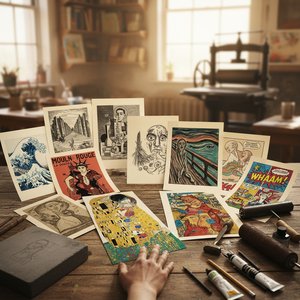
Top 10 Lithographs That Revolutionized Art | OriginalUniqueArt
Explore 10 legendary lithographs by Toulouse-Lautrec, Munch & Picasso that redefined art! Discover the stories behind these iconic prints and find museum-quality reproductions for your home decor at OriginalUniqueArt.com. Explore the full collection online.

19th Century Masterpieces: 10 Paintings That Defined an Era | OriginalUniqueArt
Journey through 19th century art with OriginalUniqueArt! Explore 10 iconic paintings – from Monet & Renoir to Courbet – and discover the stories behind Romanticism, Realism & Impressionism. Find museum-quality reproductions for your home decor. Explore the full collection online!

The Evocative Embrace of Reality: Exploring Romantic Realism in 19th-Century Painting
Explore the captivating world of Romantic Realism! Discover key artists like Courbet & Millet, masterpieces, and the social context behind this influential art movement. Expert insights for collectors at OriginalUniqueArt.