Baroque · 1747
Erigone (샤를앙드레 반 루, 1747)
샤를앙드레 반 루 (1705–1765) 작가의 Erigone 1747년에 제작되었습니다. Baroque 운동에 속합니다. Oil On Canvas(으)로 제작되었습니다. Laon, France에 위치한 Musée d'art et d'archéologie de Laon에 소장되어 있습니다.
- 1747
- Oil On Canvas
- Musée d'art et d'archéologie de Laon

 미리보기

 수작업 유화 작품
 공유하기
 공유하기
 학습용 요약본


 다운로드
 유사 작품 더 보기
 X-레이
 슬라이드 쇼 보기
 질의응답

 통계 정보
Erigone 요약
- 제목
- Erigone
- 작가
- 샤를앙드레 반 루 (1705–1765)
- 작가 출생지
- 니스, 프랑스
- 제작 연도
- 1747
- 매체
- Oil On Canvas
- 전시 장소
- Musée d'art et d'archéologie de Laon, Laon, France
- 운동성
- Baroque
- 제작 시기
- Early Modern
- 주제
- nude figure, mythology, baroque, landscape, fertility, abundance
Erigone은(는) 무엇을 묘사하고 있나요?
Identification of Erigone by Charles-André van Loo
The scene unfolds around Erigone, a work painted by Charles-André van Loo. This oil on canvas captures a moment of quiet power within a lush, natural setting. The subject is a nude female figure, her form central to the composition. She exists amidst a landscape of heavy vines and ripening fruit, embodying themes of abundance and fertility. One wonders at the connection between her graceful presence and the overflowing life surrounding her.
Created about 1747, this piece reflects the artist's ability to breathe life into mythological subjects. Charles-André van Loo places the figure within a world where the organic shapes of foliage and grapes seem to pulse with growth. The soft light catches the contours of her skin, grounding the mythological figure in a tangible, breathing reality. It is a vision of nature's bounty, held in a delicate balance between the human form and the wild, spreading vines.
Composition and Visual Elements
The figure rests at the very heart of the scene, a central presence held in balance against a landscape that stretches out in a richly detailed backdrop. Curvilinear lines guide the eye, tracing the soft contours of the woman’s body and following the winding, natural paths of the vines and trees. Every shape feels organic; rounded forms dominate the scene, from the heavy clusters of fruit to the flowing folds of the drapery and the lushness of the surrounding foliage. There is a sense of life in these curves, as if the very plants are reaching toward the light.
A soft, diffused light bathes the entire composition, creating a gentle glow that settles upon the subject’s features and skin. This light does not strike harshly but seems to emanate from within the atmosphere itself. The perspective feels somewhat flattened, a characteristic that keeps the viewer close to the subject, even as the landscape recedes slightly into the distance. Depth emerges through the careful layering of elements in the background, where atmospheric perspective causes the distant trees to appear paler and less distinct, pulling the eye deeper into the greenery.
Technique and Artistic Style
The scene unfolds through a Baroque sensibility, where dramatic lighting casts a soft, diffused glow across the subject. This light dances over the figure, highlighting the contours of the skin and the delicate features of the face. Every curve of the woman’s body and the organic forms of the surrounding foliage are rendered with a sense of grace. The composition relies on curvilinear lines that guide the eye through the lush, detailed landscape. It feels as though the air itself is heavy with the scent of grapes and the stillness of the natural world.
Oil paints on canvas allow for a meticulous application of color. The artist employs seamless blending to transition between tones, creating a smooth texture on the draped fabric and the skin. There is a profound sense of realism achieved through the careful observation of anatomy and the intricate details of the vines. The brushwork is precise, capturing the weight of the fruit and the textured bark of the trees. While the figure remains central and idealized, the background recedes through atmospheric perspective, where distant trees appear paler and less distinct, adding a quiet depth to the setting.
Related Works by Charles-André van Loo
The artist's hand moves through various realms of myth and devotion. In 1729, he captures the weight of Trojan heroism in Aeneas Carrying Anchises. This work carries a different gravity than the intimate scenes found in his religious commissions. The Marriage of the Virgin remains preserved within the walls of the Louvre, while his 1738 painting Virgin and Child offers a moment of serene contemplation. These pieces reveal a capacity for both grand narrative and quiet, tender interaction.
The artist also explores the allure of the exotic through his 1747 work Sultane, housed in the Musée des Arts Décoratifs in Paris. Here, the focus shifts toward the luxurious textures of Ottoman-inspired attire. Such subjects highlight a fascination with the decorative splendor of the mid-18th century. Each piece reflects a specific facet of his ability to navigate between the heavy requirements of historical painting and the lighter, more playful sensibilities of the French court.
Erigone은(는) 어느 미술관에 소장되어 있나요?
Musée d'art et d'archéologie de Laon
Laon, France
The Architecture of the Templar Commandery The Musée d'art et d'archéologie de Laon occupies the former Templar commandery, a site integrated into the medieval fabric of Laon. Since 1891, the institution has been housed within these stone walls, which include the Chapel Saint-Jean-Baptiste. This chapel, constructed around 1140, features an octagonal structure and a choir that represent the oldest portions of the site.


Erigone의 고해상도 이미지
샤를앙드레 반 루, Erigone (1747), Musée d'art et d'archéologie de Laon. 퍼블릭 도메인
Erigone에 관한 질문과 답변
"Erigone"의 원작은 어느 박물관에 소장되어 있나요?
샤를앙드레 반 루의 "Erigone"은(는) Musée d'art et d'archéologie de Laon, Laon, France에 전시되어 있습니다. 박물관 목록은 복제품이 아닌 원작을 기준으로 합니다.
샤를앙드레 반 루의 "Erigone"에는 어떤 기법이 사용되었나요?
샤를앙드레 반 루의 "Erigone"에는 어떤 소재가 등장하나요?
"Erigone"에 담긴 소재는 nude figure, mythology, baroque, landscape, fertility, abundance, classical art, grapevines입니다.
샤를앙드레 반 루의 "Erigone"은(는) 퍼블릭 도메인인가요?
저작권과 관련하여, "Erigone"은(는) 퍼블릭 도메인 - 저작권 보호 기간이 만료되었습니다 상태입니다.
Erigone은(는) 샤를앙드레 반 루의 예술적 여정 중 어느 시기의 작품인가요?
아티스트 샤를앙드레 반 루 소개
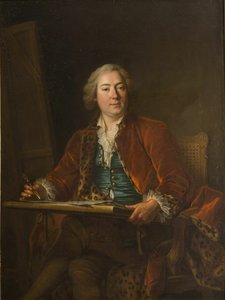
1705–1765, 프랑스
샤를앙드레 반 루
초기 생애와 훈련 출생: 1705년 2월 15일, 프랑스 니스에서 태어났습니다. 가풍: 루이-아브라함 반 루(Louis-Abraham van Loo)의 아들이자 장-바티스트 반 루(Jean-Baptiste van Loo)의 남동생입니다. 성공적인 네덜란드 화가 가문의 일원이었습니다. 초기 교육: 토리노에서 기초 훈련을 받았으며, 이후 로마(1712년)에서 베네데토 루티와 피에르 레그로스 밑에서 공부했습니다.
샤를앙드레 반 루의 다른 작품들
 Spanish Concert (Spanish Сonversation)1754
 Aeneas Carrying Anchises1729
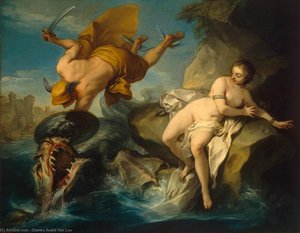 Perseus and Andromeda1735
 The sultana1747
Erigone 관련 에세이
 Charles-André van Loo: A Study in Rococo Portraiture & the French Court's Artistic DynamicsExplore the elegant world of Charles-André van Loo, a master of Rococo portraiture at the French court. Discover his life, techniques, and …
 Masterpieces of Edward Burne-Jones: The Top 25 Essential ArtworksExplore the top 25 Pre-Raphaelite masterpieces by Edward Burne-Jones. Discover his iconic works and curated art on OriginalUniqueArt.com.
 25 Masterpieces by Jean-Antoine Watteau: The Essence of Rococo EleganceExperience the Rococo elegance of Jean-Antoine Watteau's finest works. Explore the full collection online at OriginalUniqueArt.com.