프린트 판매로 전환
 더 보기
더 보기







































 가로 또는 세로 중 어느 한 면이라도 105cm(약 41인치)를 초과하는 작품이나 복제화의 경우, 프레임은 분해된 키트 형태로 배송됩니다. 이는 안전한 배송을 보장하고 운송 중 발생할 수 있는 손상을 방지하기 위함입니다.


Morning in the Mountains: A Romantic Vision of Nature
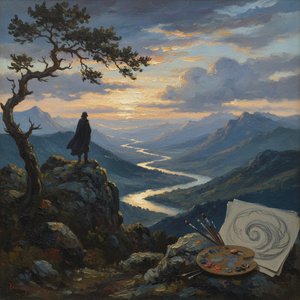
Caspar David Friedrich's Morning in the Mountains is a breathtaking oil on canvas painting that captures the serene beauty of nature. Created in 1822, this masterpiece measures 135 x 170 cm and is currently housed at The Hermitage Museum in St. Petersburg, Russia.
Aesthetic Value and Symbolism
The painting depicts a majestic mountain landscape with a valley in the foreground. Two figures stand atop a hill, gazing out at the breathtaking view below. The scene exudes peacefulness and tranquility, inviting the viewer to immerse themselves in the natural splendor. Light plays a crucial role in this painting, as it often does in Friedrich's works. The soft morning light casts a warm glow over the landscape, emphasizing the beauty of nature. This use of light is reminiscent of the artistic movement known as Luminism, which emphasizes the expression of light in painting.
Technical Representation and Composition
Friedrich's technical skill is evident in his use of chiaroscuro, a technique that employs strong contrasts between light and dark to create a sense of volume. The interplay of light and shadow adds depth and dimensionality to the painting, drawing the viewer's eye through the composition. The artist's attention to detail is also noteworthy. The smaller figures scattered throughout the landscape add a sense of human presence without detracting from the natural beauty of the scene. This balance between nature and humanity is a hallmark of Friedrich's style.
Artistic Context & Friedrich’s Life
Morning in the Mountains is part of a larger body of work by Caspar David Friedrich, who was known for his landscapes that often featured symbolic elements. His paintings frequently included figures contemplating or appreciating nature, reflecting his belief in the spiritual significance of the natural world. Born on September 5, 1774, in Greifswald, Sweden (present-day Germany), Friedrich’s early life was marked by personal loss; the death of his mother and siblings profoundly impacted him and likely influenced the melancholic tone often found in his art. He studied at the University of Leipzig and later in Copenhagen, where he was influenced by landscape painting. Friedrich's artistic development moved away from direct imitation towards a more subjective and emotional representation of nature, solidifying his place as a key figure in the Romantic movement.
Conclusion
Morning in the Mountains by Caspar David Friedrich is a masterpiece of landscape painting that showcases the artist's technical skill and aesthetic vision. The painting's use of light, composition, and symbolism create a captivating work that invites contemplation and appreciation of nature's beauty. For those interested in exploring more of Friedrich's works or learning about other artists who have contributed to the world of art, Mikhail Vasilyevich Lukin is another artist worth discovering. His portrait of Sherbachkova, a leading woman reindeer-breeder, is a notable example of his skill. The significance of light in painting, as seen in Friedrich's work, is further discussed in the article Light in Painting on Wikipedia.
질의응답
카스파르 다비트 프리드리히의 "산속의 아침"의 휘도는 어느 정도인가요?
"산속의 아침"의 색상은 밝은 명도 정도의 휘도를 나타냅니다.
"산속의 아침"은(는) 어떤 화풍에 속하나요?
"산속의 아침"은(는) 낭만주의 양식의 작품입니다. 이 사조는 해당 작품이 속한 예술적 전통을 나타냅니다.
카스파르 다비트 프리드리히의 "산속의 아침"을(를) 어떤 용도로 활용하기에 좋을까요?
카스파르 다비트 프리드리히의 "산속의 아침"은(는) 분위기 조성(으)로 활용하시기에 가장 좋습니다. 그 외에도 다양한 용도로 사용하실 수 있습니다.
이 작품에 대해 더 알아보기
 미리보기
미리보기
 공유하기
공유하기 공유하기
공유하기
 상세 정보
상세 정보 가이드 보기

 다운로드
다운로드
 유사 작품 더 보기
 X-레이
X-레이 슬라이드 쇼 보기
 질의응답
질의응답 통계 정보
통계 정보