

 미리보기
미리보기
 공유하기
공유하기 공유하기
공유하기
 상세 정보
상세 정보

 다운로드
다운로드
 유사 작품
유사 작품 X-레이
X-레이 슬라이드 쇼
Translokation II

 더 보기
더 보기
지클레 / 아트 프린트
빠른 제작과 다양한 마감 옵션을 제공하는 박물관 품질의 지클레이 또는 캔버스 프린트. ( 손으로 그린 그림 구매 이미지 구매)




P118B $10

P118H $10

P118W $10

P438Z $10

P508JH $12

P508YH $12

P805H $10

P805Z $10

P919BZ $10

P919G $10

P919XJ $10

P959ZH $10

P968JZ $12

W106C $8

W218G $10

W218JH $8

W218Y $10

W307PJ $10

W316G $10

W316PJ $8

W316Y $10

W398PJ $8

W4111J $10

W500HY $15

W500JH $15

W692G $12

W849H $8

W940BG $15

W953PJ $8




작품의 원본 비율을 유지하는 미리 설정된 크기 중에서 선택하세요.

특정 프레임이나 공간에 맞춰 직접 치수를 입력하실 수 있습니다. 선택하신 사이즈가 원본 이미지의 비율과 일치하지 않을 경우, 작품을 크롭(자르기)하거나 이미지를 대칭 또는 단색 채우기로 확장하여 제작합니다. 제작 시작 전, 최종 확인을 위해 디지털 목업이 전송됩니다.
화면상의 미리보기는 실제 크롭이나 확장 상태를 반영하지 않으므로, 최종 구도는 오직 목업을 통해서만 정확하게 확인하실 수 있습니다.
맞춤 사이즈 제작도 가능하지만, 원본 비율을 유지하기 위해서는 사전 정의된 목록에서 치수를 선택하시는 것을 권장합니다.


 유리 옵션은 110cm 미만 크기에서만 선택 가능합니다.

Translokation II
지클레 / 아트 프린트
복제본 크기
-


최종 결제 금액
$ 80
작가 약력
The Architect of Abstraction: The Life and Legacy of Camille Graeser
To encounter the work of Camille Graeser is to step into a world where geometry meets emotion, and where the rigid lines of structure dissolve into the profound textures of memory. Born on February 27, 1892, in Carouge, Switzerland, Graeser’s journey was one of constant movement—not just across borders, but through the very evolution of modern visual language. His early years were shaped by the artistic fervor of Stuttgart, Germany, where he first honed his sensibilities as a furniture designer. This foundational period in design instilled in him a lifelong respect for materiality and the structural integrity of form, a discipline that would later become the backbone of his most celebrated abstract compositions.
Graeser’s career was profoundly shaped by the turbulent winds of the twentieth century. As a member of the Deutsche Werkbund, he stood at the intersection of art and industry, participating in major exhibitions that championed the marriage of craftsmanship and modern utility. His talent caught the eye of the legendary architect Mies van der Rohe, who commissioned Graeser to design furniture for his groundbreaking architectural projects. However, the ascent of Nazism in 1933 forced a pivotal shift in his life; fleeing Germany, he sought refuge in Switzerland. This period of exile was not merely a geographical relocation but an artistic rebirth. In the quietude of Switzerland, Graeser turned his full attention toward the exploration of Concrete Art, finding a new voice within the Zurich avant-garde.
A Symphony of Form and Texture
As Graeser integrated into the Swiss art scene, becoming a prominent member of the Allianz group, his work underwent a remarkable transformation. He moved away from the functional constraints of design toward a more systematic, yet deeply expressive, form of geometric abstraction. His canvases became playgrounds for Concrete Art, where he utilized carefully manipulated geometric elements and strikingly bright colors to create a sense of rhythmic balance. Alongside luminaries such as Max Bill and Richard Paul Lohse, Graeser emerged as a leading figure in the Swiss movement, known for his ability to distill visual language into its purest, most essential essence.
What distinguishes Graeser’s oeuvre from the purely mathematical approach of some of his contemporaries is his profound engagement with texture and depth. His technique often involved layered textures—sometimes achieved through the use of encaustic—which imbued his works with a palpable physicality. These layers served as more than mere surface decoration; they acted as conduits for emotional resonance, capturing fleeting impressions of experience and the weight of history. In his hands, a simple geometric shape could carry the gravity of a landscape or the ephemeral quality of a memory, bridging the gap between the cerebral precision of constructivism and the visceral impact of abstract expressionism.
Historical Significance and Enduring Influence
The legacy of Camille Graeser is preserved not only in the museums that house his masterpieces but also through the dedicated stewardship of the Camille Graeser Foundation, established in 1981. His contribution to the trajectory of Swiss art remains immeasurable, particularly in how he bridged the gap between the decorative arts and high abstraction. His ability to navigate the transition from a designer of physical objects to a creator of purely visual experiences offers a profound lesson in artistic resilience and evolution.
Today, Graeser’s work continues to resonate with modern audiences who find beauty in the intersection of order and chaos. His achievements can be summarized through several key pillars of his career:
- Versatility of Medium: From furniture design for Mies van der Rohe to complex abstract paintings and reliefs.
- Pioneering Abstraction: A central figure in the development of Concrete Art in Switzerland.
- Material Mastery: The use of layered textures and encaustic to provide emotional depth to geometric forms.
- Cultural Resilience: Maintaining artistic integrity and contributing to the Swiss avant-garde despite the upheaval of political exile.
Ultimately, Graeser’s art remains a testament to the power of distillation—the ability to strip away the superfluous until only the most potent symbols of color, shape, and texture remain, speaking directly to the human spirit.

주요 정보
- Artistic Movement Or Style: Zurich Concrete artists
- Date Of Birth: February 27, 1892
- Full Name: Camille Graeser
- Nationality: Swiss
- Notable Artworks:
- Translokation II
- AUS DER REIHE GELÖSTES GELB YELLOW DETACHED FROM THE ROW
- Komplementär Relation I
- Place Of Birth: Carouge, Switzerland
관련 기사 더 보기

기하학적 추상 미술을 정의한 명작 10가지 | OriginalUniqueArt.com
몬드리안, 말레비치 등 거장들의 기하학적 추상 미술 명작 10선을 만나보세요. 각 작품의 예술사적 의미와 색채, 구성을 탐구하고 OriginalUniqueArt.com에서 고품질 아트 프린트를 소장하세요. 지금 바로 온라인 컬렉션을 확인하세요!

Kandinsky's Masterpieces: 25 Paintings That Define Abstract Art | OriginalUniqueArt
Journey through Wassily Kandinsky's 25 most iconic abstract paintings. Explore his revolutionary use of color, form & spiritual expressionism. Find museum-quality Kandinsky reproductions and elevate your home decor with OriginalUniqueArt.com. Discover all masterpieces on OriginalUniqueArt.com!

Slate Blue Masterpieces: 10 Iconic Paintings & Timeless Home Decor Ideas
Immerse yourself in the captivating world of slate blue! Explore 10 iconic paintings by Monet, Van Gogh & Renoir. Discover their stories, techniques & find museum-quality art reproductions for your home at .

추상표현주의를 정의한 10대 걸작: 예술과 인테리어의 새로운 영감
추상표현주의의 심장을 뛰게 한 10대 걸작을 만나보세요. 폴록, 로스코 등 거장의 작품 비하인드 스토리와 예술적 영감을 OriginalUniqueArt에서! 지금 바로 미술품 컬렉션을 탐험하고, 당신의 공간에 특별한 예술적 감성을 더하세요. OriginalUniqueArt.com
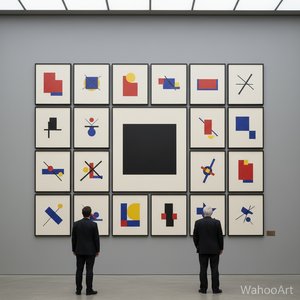
카지미르 말레비치 최고작 25선: 추상 미술의 혁신과 영감을 만나다 | OriginalUniqueArt
카지미르 말레비치의 최고작 25선을 만나보세요. 추상 미술의 혁신적인 세계, 슈프레마티즘의 정수를 담은 작품들의 이야기와 영감을 OriginalUniqueArt에서 경험하세요. 고품질 아트 프린트와 인테리어 데코 아이디어를 지금 바로 확인하세요! OriginalUniqueArt.com

