- 홈

- 캔버스 프린트
- bob brighton
- Turquoise Squares

 Preview
 작품 구매하기
 공유하기
공유하기 공유하기
공유하기
 상세 정보
상세 정보

 다운로드
다운로드
 유사 작품
유사 작품 X-레이
X-레이 슬라이드 쇼
Turquoise Squares
 Painting
- Abstract Art
 2009
2009- Contemporary
 46.0 x 46.0 cm
 Sheffield Central Library
 더 보기
더 보기




































작품의 원본 비율을 유지하는 미리 설정된 크기 중에서 선택하세요.

특정 프레임이나 공간에 맞춰 직접 치수를 입력하실 수 있습니다. 선택하신 사이즈가 원본 이미지의 비율과 일치하지 않을 경우, 작품을 크롭(자르기)하거나 이미지를 대칭 또는 단색 채우기로 확장하여 제작합니다. 제작 시작 전, 최종 확인을 위해 디지털 목업이 전송됩니다.
화면상의 미리보기는 실제 크롭이나 확장 상태를 반영하지 않으므로, 최종 구도는 오직 목업을 통해서만 정확하게 확인하실 수 있습니다.
맞춤 사이즈 제작도 가능하지만, 원본 비율을 유지하기 위해서는 사전 정의된 목록에서 치수를 선택하시는 것을 권장합니다.


 유리 옵션은 110cm 미만 크기에서만 선택 가능합니다.

Turquoise Squares
지클레 / 아트 프린트
복제본 크기
-


최종 결제 금액
-
작품 상세 설명
The Rhythmic Dance of Geometry
In the captivating realm of abstract expressionism, few works achieve the hypnotic clarity found in Bob Brighton’s Turquoise Squares. Created in 2009, this piece serves as a masterclass in visual rhythm, inviting the viewer into a meticulously structured world where color and form exist in perfect equilibrium. The painting presents a mesmerizing checkerboard of blue squares set against a lush, verdant background. Each square is delicately framed by a crisp white border, a technique that creates an illusion of depth and architectural precision. This interplay of light and boundary transforms a flat surface into a vibrant, pulsating mosaic, drawing the eye into a continuous loop of discovery across its 46 x 46 cm canvas.
The brilliance of this work lies in its sophisticated use of color theory. Brighton does not merely use blue; he orchestrates a symphony of cerulean, cyan, and deep turquoise, each shade layered to provide a sense of movement and vitality. The contrasting green backdrop acts as a grounding force, providing a rich, organic counterpoint to the cool, geometric precision of the squares. This tension between the structured, man-made appearance of the grid and the fluid, natural essence of the colors evokes a profound emotional response—one of calm stability intertwined with unexpected energy. For the collector or interior designer, this piece offers a unique ability to anchor a room, providing a focal point that is both intellectually stimulating and aesthetically soothing.
A Legacy of Structure and Soul
To truly appreciate Turquoise Squares, one must understand the hands that guided the brush. Bob Brighton’s artistic journey was deeply informed by his early years as a carpenter in Hastings, East Sussex. This background in craftsmanship instilled in him a profound respect for structure, balance, and the inherent beauty of geometric order. His transition from working with wood to working with pigment allowed him to translate the tactile precision of carpentry into the ethereal language of abstraction. In this painting, we see the "geometric soul" of an artist who sought to impose a beautiful, rhythmic order upon the chaos of the world.
For those seeking to adorn a contemporary living space or a professional gallery, a high-quality reproduction of this work brings with it a sense of timelessness. The painting transcends mere decoration; it is an exploration of how simple shapes can evoke complex emotions. Whether placed in a minimalist modern setting or a more eclectic, textured interior, Turquoise Squares acts as a window into a world of organized beauty. It remains a testament to Brighton’s ability to find the profound within the simple, making it an essential acquisition for anyone moved by the power of color and the elegance of the square.
작가 약력
The Geometric Soul of Bob Brighton
Bob Brighton, a name now synonymous with the captivating world of geometric squares and abstract color fields, wasn’t initially destined for the art world. Born in 1936 in Hastings, East Sussex, his early life was rooted in the practicalities of carpentry – a trade he learned from his father, a skilled craftsman. This foundational experience, working with wood and understanding its inherent structure, would profoundly influence his later artistic explorations. Brighton’s journey into art began somewhat unexpectedly, driven by a desire to create order out of chaos, a need to impose visual rhythm on the seemingly random. He initially experimented with collage techniques, but it wasn't until he discovered the power of simple geometric forms – primarily squares – that his unique style truly emerged. This shift represents a deliberate move away from representational art and towards an intensely focused exploration of color, shape, and composition.Early Influences and Artistic Evolution
Brighton’s artistic development wasn't entirely solitary; he drew inspiration from a diverse range of sources. The reductive aesthetic of Piet Mondrian, with its emphasis on primary colors and orthogonal lines, undoubtedly played a significant role in shaping his approach to composition. However, Brighton’s work transcends mere mimicry. He developed a distinctly personal vocabulary within this framework, prioritizing the interplay of color and the dynamic tension between positive and negative space. The influence of Josef Albers' "Homage to the Square" is also evident – Albers’ exploration of how colors interact when placed adjacent to each other served as a crucial guide for Brighton, demonstrating that the meaning of a color isn’t inherent but rather emerges from its relationship with others. Furthermore, his background in carpentry instilled an appreciation for structure and precision, which he translated into the deliberate arrangement of his squares. Early works often featured muted palettes and subtle variations in tone, gradually evolving towards bolder, more saturated colors as his style matured.The Rise of the Squares: Technique and Process
Brighton’s technique was remarkably consistent yet subtly nuanced. He typically began with a large sheet of paper – often watercolor paper – and would meticulously draw a grid of squares using a ruler and pencil. The size, spacing, and orientation of these squares were determined intuitively, reflecting his subconscious state at the time. He then applied acrylic paint directly to the surface, building up layers of color through a process of controlled layering and blending. Crucially, he avoided brushes, preferring instead to use sponges, rags, and other tools to manipulate the paint and create textures and variations in tone. This hands-on approach resulted in a tactile quality to his work – a sense that the paintings are not merely flat surfaces but rather three-dimensional entities. The repetition of squares creates a mesmerizing visual rhythm, while the subtle shifts in color and value maintain a dynamic tension within each composition. His process was deeply meditative; he often worked for extended periods, losing himself in the act of creation.Themes and Interpretations
While Brighton resisted offering definitive interpretations of his work, it’s clear that his paintings explore fundamental concepts such as order, chaos, balance, and harmony. The squares themselves can be seen as symbols of stability and structure, while the vibrant colors evoke a sense of energy and vitality. Critics have noted parallels between his work and Zen Buddhist philosophy, suggesting that he sought to capture the essence of emptiness – the space between things – through the repetition of simple forms. The paintings are not about depicting anything specific but rather about creating an experience—a visual meditation for the viewer. The seemingly random arrangement of squares can be interpreted as a reflection of the complexities and uncertainties of life, while the bold colors represent the potential for joy and beauty.Legacy and Recognition
Bob Brighton’s work gained significant recognition in the late 1980s and early 1990s, establishing him as a leading figure in British abstract art. His paintings have been exhibited widely throughout the UK and internationally, and are held in numerous public collections, including those of the Tate Gallery, Sheffield City Council, and Brighton & Hove Museums. He continued to paint until his death in 2017, consistently refining his style and exploring new approaches to color and composition. Despite eschewing overt self-promotion, Brighton’s influence on contemporary abstract artists is undeniable. His dedication to simplicity, his masterful control of color, and his profound understanding of visual rhythm have left an enduring legacy—a testament to the power of geometric abstraction to evoke emotion and stimulate contemplation. His work remains a vibrant reminder that beauty can be found in the most unexpected places, even within the repetition of squares.
bob brighton
1936 - 2017
주요 정보
- Artistic Movement Or Style: Geometric squares
- Artists Or Movements Influenced By This Artist: ['None known']
- Artists Who Influenced This Artist:
- Minimalist Art
- Color Field Painting
- Date Of Birth: 1936
- Date Of Death: 2017
- Full Name: Bob Brighton
- Nationality: British
- Notable Artworks:
- Four
- Purple Squares
- Yellow Blue 1
- Small Squares 1
- Place Of Birth: WahooArt, UK
관련 기사 더 보기

기하학적 추상 미술을 정의한 명작 10가지 | OriginalUniqueArt.com
몬드리안, 말레비치 등 거장들의 기하학적 추상 미술 명작 10선을 만나보세요. 각 작품의 예술사적 의미와 색채, 구성을 탐구하고 OriginalUniqueArt.com에서 고품질 아트 프린트를 소장하세요. 지금 바로 온라인 컬렉션을 확인하세요!

Kandinsky's Masterpieces: 25 Paintings That Define Abstract Art | OriginalUniqueArt
Journey through Wassily Kandinsky's 25 most iconic abstract paintings. Explore his revolutionary use of color, form & spiritual expressionism. Find museum-quality Kandinsky reproductions and elevate your home decor with OriginalUniqueArt.com. Discover all masterpieces on OriginalUniqueArt.com!

Slate Blue Masterpieces: 10 Iconic Paintings & Timeless Home Decor Ideas
Immerse yourself in the captivating world of slate blue! Explore 10 iconic paintings by Monet, Van Gogh & Renoir. Discover their stories, techniques & find museum-quality art reproductions for your home at .

Beyond Form & Color: Geometric Abstraction's Evolution in 20th/21st Century Art
Explore the evolution of geometric abstraction from Cubism to contemporary art. Discover key artists like Malevich & Mondrian, investment insights, and expert collecting advice at OriginalUniqueArt.
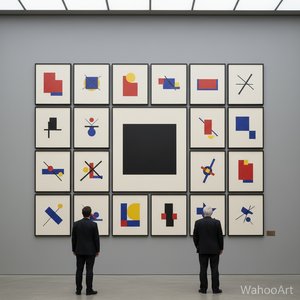
카지미르 말레비치 최고작 25선: 추상 미술의 혁신과 영감을 만나다 | OriginalUniqueArt
카지미르 말레비치의 최고작 25선을 만나보세요. 추상 미술의 혁신적인 세계, 슈프레마티즘의 정수를 담은 작품들의 이야기와 영감을 OriginalUniqueArt에서 경험하세요. 고품질 아트 프린트와 인테리어 데코 아이디어를 지금 바로 확인하세요! OriginalUniqueArt.com

