

 미리보기
미리보기
 공유하기
공유하기 공유하기
공유하기
 상세 정보
상세 정보 Guide
Guide

 다운로드
다운로드
 유사 작품
유사 작품 X-레이
X-레이 슬라이드 쇼
 통계 정보
통계 정보William Henry Hastie


 더 보기
더 보기
수제 유화 복제품
원하는 크기와 액자로 주문 제작되는, 작가들이 직접 캔버스에 손으로 그린 유화 작품입니다. ( 프린트 판매로 전환 디지털 이미지로 전환)




P118B $10

P118H $10

P118W $10

P438Z $10

P508JH $12

P508YH $12

P805H $10

P805Z $10

P919BZ $10

P919G $10

P919XJ $10

P959ZH $10

P968JZ $12

W106C $8

W218G $10

W218JH $8

W218Y $10

W307PJ $10

W316G $10

W316PJ $8

W316Y $10

W398PJ $8

W4111J $10

W500HY $15

W500JH $15

W692G $12

W849H $8

W940BG $15

W953PJ $8




작품의 원본 비율을 유지하는 미리 설정된 크기 중에서 선택하세요.

특정 프레임이나 공간에 맞도록 직접 크기를 입력할 수 있습니다. 선택하신 크기가 원본 이미지의 비율과 일치하지 않는 경우, 작품을 자르거나 추가적인 손으로 그린 요소를 사용하여 그림을 확장합니다. 제작 시작 전 승인을 위해 디지털 목업을 보내드립니다.
화면 미리 보기는 실제 자르기 또는 확장을 반영하지 않습니다. 최종 구성은 목업을 통해서만 정확하게 확인하실 수 있습니다.
맞춤 크기 제작도 가능하지만, 원본 비율을 유지하기 위해 사전 정의된 목록에서 크기를 선택하시는 것을 권장합니다.
주문 후 OriginalUniqueArt.com 팀에서 상세 안내를 위해 고객님께 이메일을 보내드리며, 미리보기 시안을 제공해 드립니다.


 유리 옵션은 110cm 미만 크기에서만 선택 가능합니다.

William Henry Hastie
재현 기법
복제본 크기
-


최종 결제 금액
$ 300
William Henry Hastie: A Portrait of Dignity and Progress
The William Henry Hastie portrait, painted by Betsy Graves Reyneau in 1944, stands as a powerful testament to both artistic skill and historical significance. This oil on canvas artwork, currently residing within the esteemed collection of the Hirshhorn Museum and Sculpture Garden in the United States, captures a pivotal moment in American history and celebrates the achievements of an extraordinary individual. As an art expert for OriginalUniqueArt.com, I am delighted to share insights into this remarkable piece.
The Artist and Her Vision
Betsy Graves Reyneau (1880-1964) was a dedicated American painter recognized for her compelling series of portraits depicting prominent African Americans. Her work gained prominence through the exhibition "Portraits of Outstanding Americans of Negro Origin," a project that aimed to showcase the contributions and achievements of Black individuals in America. Reyneau's artistic vision centered on capturing not just likeness, but also the essence and character of her subjects with grace and poise. She faced personal adversity, defying societal expectations to pursue her passion for art, and later became an active participant in civil rights causes. Her grandfather was Michigan Supreme Court Justice Benjamin F. Graves, a connection that subtly influenced her artistic journey.
A Detailed Examination of the Painting
The portrait depicts William Henry Hastie seated comfortably in a chair, his hands crossed with an air of quiet confidence and sophistication. The composition is carefully balanced, drawing attention to Hastie's dignified presence. The background features a wall adorned with classic wood paneling, adding a touch of timeless elegance to the scene. Reyneau’s masterful use of oil on canvas creates a rich, textured surface that invites close inspection. The lighting is dramatic and deliberate, highlighting Hastie’s facial features and casting subtle shadows that enhance the sense of depth and realism. The inclusion of a cigarette held delicately in his hand adds a layer of complexity – perhaps symbolizing sophistication or a contemplative nature.
Historical Context and Significance
This portrait transcends mere representation; it is an important historical document. William Henry Hastie was a trailblazer, the first African American to serve as a federal judge and Governor of the United States Virgin Islands. His career exemplified dedication to justice and equality during a period of significant racial discrimination. The painting's inclusion in the "Portraits of Outstanding Americans of Negro Origin" exhibition played a crucial role in raising awareness and fostering appreciation for African American accomplishments, challenging prevailing prejudices and celebrating Black excellence. It stands as a visual representation of progress and resilience within the context of mid-20th century America.
Emotional Impact and Artistic Merit
Beyond its historical importance, the William Henry Hastie portrait evokes a profound sense of dignity, authority, and quiet contemplation. Reyneau’s skill in capturing Hastie's character shines through – conveying not only his professional stature but also an underlying strength and intelligence. The painting’s realism, combined with the subtle theatrical lighting, creates a captivating visual experience that resonates deeply with viewers. It is a testament to the power of art to both document history and inspire admiration for individuals who have made significant contributions to society.
- View more paintings by Betsy Graves Reyneau on https://OriginalUniqueArt.com.
- Learn about the Hirshhorn Museum and Sculpture Garden and its collection: /art/list/?Filter=AQSDFX-Betsy-Graves-Reyneau-Charles-Hamilton-Houston.
작가 약력
A Legacy of Dignity: The Life and Art of Betsy Graves Reyneau
In the tapestry of American art history, few threads are as poignant or as purposeful as those woven by Betsy Graves Reyneau. Born in 1888 in Battle Creek, Michigan, Reyneau was a woman whose life was defined by a profound defiance of the status quo. Growing up under the intellectual influence of her father’s legal profession and the prestigious lineage of her grandfather, Michigan Supreme Court Justice Benjamin F. Graves, she possessed an early inclination toward justice and formal excellence. Yet, her path was not one of easy conformity; she famously navigated societal expectations and familial disapproval to claim her place in the world of fine art. Her journey took her from the rigorous studios of the School of the Museum of Fine Arts in Boston to the culturally rich landscapes of France, where she immersed herself in European traditions, eventually returning to the United States with a refined mastery of realism and an eye for the subtle nuances of the human spirit.
Reyneau’s artistry was never merely about the replication of form; it was an act of profound social witness. During an era when the narratives of African Americans were often marginalized or distorted, she utilized her brush to assert their undeniable dignity. Her most significant contribution to the American canon emerged through her collaboration with the Harmon Foundation during the monumental “Portraits of Outstanding Americans of Negro Origin” exhibition series, which toured from 1944 to 1954. Alongside fellow artist Laura Wheeler Waring, Reyneau undertook a sacred task: capturing the essence of Black excellence. Through her meticulous attention to detail and her ability to convey character through light and shadow, she transformed portraiture into a tool for civil rights advocacy, ensuring that the faces of leadership and intellect were etched permanently into the national consciousness.
Mastery of the Portrait and Historical Significance
The technical brilliance of Reyneau’s work lies in her ability to blend photorealism with an emotive depth that transcends simple likeness. Her portraits are characterized by a sense of quiet strength and poise, achieved through a masterful command of oil on canvas. When one examines her depictions of historical titans, the texture of the paint and the deliberate use of lighting serve to elevate the subject beyond the temporal. Her work does not merely document a face; it documents a legacy. This is perhaps most evident in her iconic portrait of George Washington Carver. This piece was not only a triumph of her realist technique but also a landmark moment in American curation, as it represented the first portrait of an African American to enter a national American collection, signaling a seismic shift in the recognition of Black contributions to the nation's cultural fabric.
Her oeuvre serves as a gallery of the most influential figures of her time, creating a visual pantheon of progress. Her subjects included:
- Mary McLeod Bethune: Captured with the grace and authority of a foundational leader in education and civil rights.
- Joe Louis: Rendered with a strength that mirrored his status as a global icon of resilience.
- Thurgood Marshall: Portrayed with the intellectual gravity that would later define his role in the Supreme Court.
- William Henry Hastie: A study in dignity and sophistication, currently preserved in the esteemed Hirshhorn Museum.
Beyond the canvas, Reyneau’s life was an extension of her art. As a suffragette and a dedicated advocate for equality, she lived the principles of justice that she painted. Her work remains a vital bridge between the struggle for civil rights and the evolution of American portraiture. To look upon a Reyneau portrait is to witness a moment of historical reclamation—a time when the brush was used to demand that the world see, recognize, and respect the profound humanity of all its citizens.
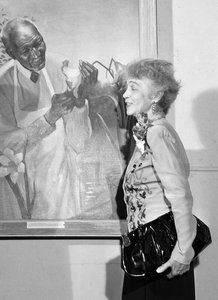
Betsy Graves Reyneau
1880 - 1964 , United States of America
주요 정보
- Artistic Movement Or Style: Realism
- Date Of Birth: 1880
- Date Of Death: 1964
- Full Name: Betsy Graves Reyneau
- Nationality: American
- Notable Artworks: ['Portraits of Outstanding Americans of Negro Origin']
- Place Of Birth: Battle Creek, United States
관련 기사 더 보기
William Henry Hunt: Luminosity & Detail in Early 19th-Century Watercolour Painting
Explore the captivating watercolour paintings of William Henry Hunt (1790-1864). Discover his mastery of naturalistic detail, luminous technique & influence on 19th-century art. Learn about collecting Hunt's work and its enduring value.
William Henry Pyne: A Topographical Vision of Early 19th-Century England – Art, Society & Watercolour's Rise
Explore the captivating world of William Henry Pyne (1769-1843), a key figure in early 19th-century English art. Discover his stunning watercolours, architectural studies & contribution to the rise of watercolour painting. Learn about this fascinating artist's life and legacy.
Henry Ossawa Tanner: Pioneering African American Representation in 19th-Century Art
Explore the life and groundbreaking work of Henry Ossawa Tanner, a pioneering African American artist who achieved international acclaim with his deeply spiritual and realistic paintings. Discover his legacy at OriginalUniqueArt.
William Henry Hope: Illuminating American Genre Painting Through Luminosity & Narrative
Explore the captivating landscapes & genre scenes of William Henry Hope, a pivotal Canadian artist. Discover his mastery of light, realism, and narrative in this insightful guide. Learn about collecting his work & its place in art history.
앙리 마티스의 걸작 25선: 색채와 감각의 혁신을 만나다 | OriginalUniqueArt
앙리 마티스의 시대를 초월하는 걸작 25선을 만나보세요. 색채주의, 야수파를 대표하는 그의 삶과 예술 세계를 탐험하고, OriginalUniqueArt에서 명화 복제본으로 거실 인테리어에 감동을 더하세요. 지금 바로 컬렉션을 확인하세요!