 프린트 판매로 전환
 더 보기
더 보기







































 가로 또는 세로 중 어느 한 면이라도 105cm(약 41인치)를 초과하는 작품이나 복제화의 경우, 프레임은 분해된 키트 형태로 배송됩니다. 이는 안전한 배송을 보장하고 운송 중 발생할 수 있는 손상을 방지하기 위함입니다.


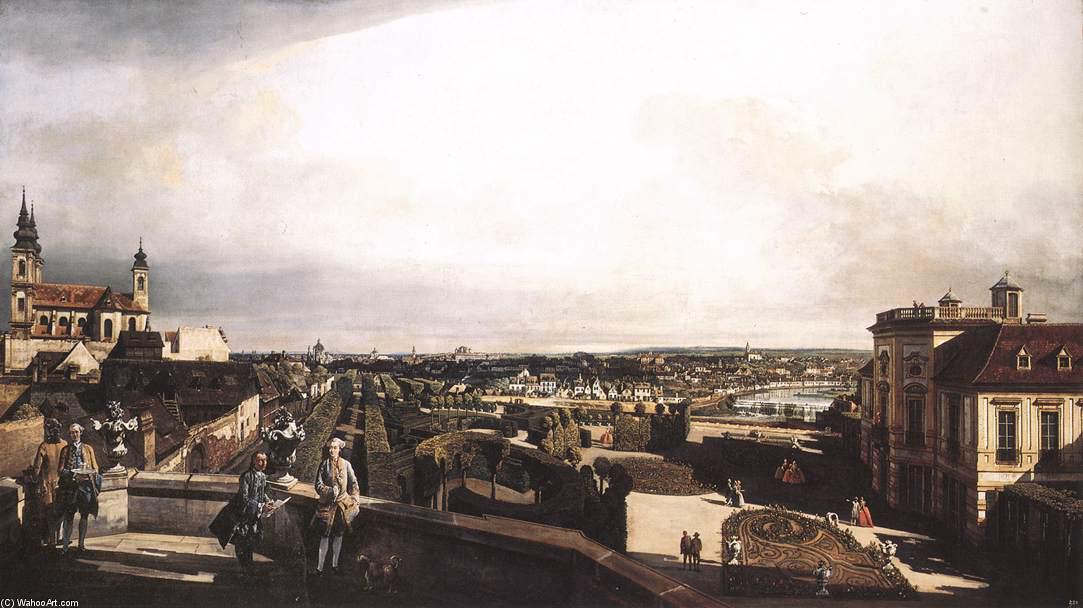
Vienna, Panorama from Palais Kaunitz – A Symphony of Light and Observation
Bernardo Bellotto’s “Vienna, Panorama from Palais Kaunitz,” completed in 1759, stands as a testament to the Enlightenment fascination with accurately depicting the world around us. Commissioned by Empress Maria Theresa, this monumental painting isn't merely a topographical record; it’s an immersive experience designed to capture the grandeur and vibrancy of Vienna at the cusp of its imperial reign.
The Artist’s Vision: Canaletto’s Legacy
Bellotto, nephew and protégé of Giovanni Antonio Canaletto – arguably Venice’s most celebrated painter of urban landscapes – inherited a profound artistic sensibility. Like his mentor, Bellotto prioritized capturing atmospheric perspective, meticulously rendering the subtle gradations of light and shadow to convey depth and realism. This technique—developed during Canaletto's travels across Europe—became Bellotto’s signature style, distinguishing him from many of his contemporaries.
A Detailed Examination: Technique and Composition
Executed in oil on canvas, “Vienna” employs a panoramic format – approximately 134 x 237 cm – allowing for an unparalleled breadth of visual information. Bellotto’s brushstrokes are deliberate and controlled, layering pigments to achieve luminous surfaces and conveying the texture of stone buildings and foliage. The composition is carefully balanced, guiding the viewer's eye across the cityscape from left to right, emphasizing key architectural landmarks like St Stephen’s Cathedral and the Hofburg Palace.
Historical Context: Vienna Under Maria Theresa
Vienna in 1759 was undergoing significant transformation under Maria Theresa’s rule. The Habsburg monarchy sought to solidify its position as a dominant force in Europe through cultural patronage, exemplified by this ambitious project. Bellotto's depiction reflects the optimism and grandeur of the era—a celebration of imperial power and artistic achievement. Furthermore, it serves as an invaluable historical document, offering insights into Viennese life and architecture during a pivotal moment in European history.
Symbolism and Emotional Resonance
"Vienna" transcends mere visual representation; it communicates a profound emotional resonance. The inclusion of figures—representing both nobility and everyday citizens—adds human scale to the monumental cityscape, inviting contemplation about the complexities of urban society. The careful rendering of light—particularly the golden glow illuminating St Stephen’s Cathedral—evokes feelings of reverence and majesty. Ultimately, Bellotto's masterpiece inspires awe and admiration for the beauty and power of observation.
Conclusion: An Enduring Masterpiece
Bernardo Bellotto’s “Vienna, Panorama from Palais Kaunitz” remains an extraordinary achievement in panoramic painting—a captivating blend of artistic skill, historical awareness, and emotional depth. Its enduring appeal lies in its ability to transport viewers back to a bygone era while simultaneously reaffirming the timeless fascination with capturing the splendor of the natural world.
질의응답
베르나르도 벨로토의 "Vienna, Panorama from Palais Kaunitz"의 대비(contrast)는 어느 정도인가요?
베르나르도 벨로토의 "Vienna, Panorama from Palais Kaunitz"은(는) 밝은 부분과 어두운 부분 사이의 Statement 대비를 보여줍니다.
베르나르도 벨로토의 "Vienna, Panorama from Palais Kaunitz"은 어떤 분위기와 감정을 담고 있나요?
베르나르도 벨로토의 "Vienna, Panorama from Palais Kaunitz"에 담긴 분위기는 Elegant이며, 정서적 어조는 Calm입니다.
베르나르도 벨로토의 "Vienna, Panorama from Palais Kaunitz"에는 어떤 기법이 사용되었나요?
베르나르도 벨로토의 "Vienna, Panorama from Palais Kaunitz"의 재료는 Acrylic On Canvas입니다. 복제화는 이 기법 특유의 질감을 그대로 구현하는 것을 목표로 합니다.
이 작품에 대해 더 알아보기
 미리보기
미리보기
 공유하기
공유하기 공유하기
공유하기
 상세 정보
상세 정보 가이드 보기

 다운로드
다운로드
 유사 작품 더 보기
 X-레이
X-레이 슬라이드 쇼 보기
 질의응답
질의응답 통계 정보
통계 정보