Abstraction-Création Surrealism · 1962
Prototype for (바바라 헤프워스, 1962)
바바라 헤프워스 (1903–1975) 작가의 Prototype for 1962년에 제작되었습니다. Abstraction-Création Surrealism 운동에 속합니다. Sculpture Bronze(으)로 제작되었습니다. 웨이크필드, 영국에 위치한 더 헤프워스 웨이크필드에 소장되어 있습니다.
- 1962
- Sculpture Bronze
- 더 헤프워스 웨이크필드

 수작업 유화 작품
 공유하기
 공유하기
 학습용 요약본


 다운로드
 유사 작품 더 보기
 슬라이드 쇼 보기
 질의응답

 통계 정보
Prototype for 요약
- 제목
- Prototype for
- 작가
- 바바라 헤프워스 (1903–1975)
- 작가 출생지
- 웨이크필드, 영국
- 제작 연도
- 1962
- 매체
- Sculpture Bronze
- 전시 장소
- 더 헤프워스 웨이크필드, 웨이크필드, 영국
- 주제
- sculpture, abstraction, organic form, british art, modernism, geometric holes
Prototype for 은(는) 무엇을 묘사하고 있나요?
A Pioneer's Vision: Examining Barbara Hepworth’s Prototype for ‘Winged Figure’
Barbara Hepworth (1903–1975), a transformative figure in British sculpture and art history, stands as an emblem of modernist innovation. Born in Wakefield, Yorkshire, her journey began with formative studies at Leeds School of Art before culminating in a prestigious scholarship to the Royal College of Art, where she honed her craft alongside contemporaries like Ben Nicholson and Paul Nash – artists united by a fervent desire to forge a new path for British art amidst the burgeoning Surrealist movement. Hepworth’s artistic trajectory wasn't merely about replicating reality; it was about distilling emotion and concept into tangible form, prioritizing abstraction as a vehicle for conveying profound ideas.The Birth of Form: Conceptual Sculpture and Early Experimentation
Hepworth’s groundbreaking approach to sculpture emerged from the Unit One Art Movement she co-founded in 1933. This collective sought to synthesize Surrealist principles with abstract expressionism, rejecting representational art altogether in favor of exploring the subconscious and conveying inner states through geometric shapes and textures. The “Prototype for ‘Winged Figure’” exemplifies this ethos perfectly—a testament to Hepworth’s unwavering commitment to conceptual exploration before translating it into physical sculpture. Created between 1961 and 1962, this piece represents a crucial step in Hepworth's artistic evolution, demonstrating her meticulous process of refining ideas through preliminary models.Technique and Materiality: Exploring Texture and Negative Space
Hepworth’s distinctive technique involved carving wood – primarily elm – using pneumatic chisels to create hollow forms that emphasized negative space as much as positive mass. This method allowed her to sculpt shapes that seemed to defy gravity, capturing the essence of movement and dynamism while simultaneously conveying a sense of stillness and contemplation. The resulting sculptures possessed an extraordinary tactile quality—smooth surfaces juxtaposed with rough-hewn textures—creating visual and sensory experiences that resonated deeply with viewers. Examining the “Prototype” reveals the precision required to achieve this remarkable effect, highlighting Hepworth’s mastery of material manipulation.Symbolism and Emotion: Representing Flight and Spiritual Resonance
The "Winged Figure" sculpture isn't merely an aesthetically pleasing form; it carries significant symbolic weight. Hepworth herself described her work as “a way of trying to express the feeling of being alive,” reflecting a broader preoccupation with capturing the spiritual dimension of existence within abstract art. The wing-like protrusions—characteristic of Hepworth’s oeuvre—suggest upward movement, aspiration, and liberation from earthly constraints. Moreover, the hollow interior embodies emptiness and openness, inviting contemplation on themes of transcendence and inner harmony. This piece speaks to an enduring fascination with exploring profound emotional truths through visual language.Legacy and Influence: Shaping Modern Sculpture
Barbara Hepworth’s influence extends far beyond her own lifetime, shaping the course of modern sculpture and inspiring generations of artists. Her pioneering exploration of abstraction—coupled with her unwavering dedication to conceptual rigor—established a paradigm for sculptural practice in the mid-20th century. The “Prototype for ‘Winged Figure’” stands as an enduring reminder of Hepworth’s visionary spirit and her profound contribution to artistic innovation, securing her place among the most celebrated sculptors of her era. Its continued presence within collections like The Hepworth Wakefield ensures that Hepworth's groundbreaking aesthetic continues to captivate audiences worldwide.Prototype for 은(는) 어느 미술관에 소장되어 있나요?
더 헤프워스 웨이크필드
웨이크필드, 영국
더 헤퍼웨이크 hepworth wakefield: 조각과 빛의 안식처 웨스트요크셔 웨이크필드의 칼더 강 남안에 자리 잡은 더 헤퍼웨이크는 단순한 미술관 그 이상의 의미를 지닙니다. 이곳은 하나의 건축적 선언이자 바바라 헤퍼윅의 위대한 유산을 증명하는 공간이며, 오늘날까지도 방문객들에게 깊은 영감을 주는 영국 모더니즘 예술의 찬가입니다. 데이비드 치퍼필드 아키텍렉츠가 설계하여 2011년 문을 연 이 건축물은 그 이름이 상징하는 정신, 즉 단순함과 우아함, 그리고 주변 풍경과의 깊은 교감을 완벽하게 구현해 냈습니다.


Prototype for 의 고해상도 이미지

Protected by copyright: these files are for personal reference, not a licence to republish.
바바라 헤프워스, Prototype for (1962), 더 헤프워스 웨이크필드.
Prototype for 에 관한 질문과 답변
바바라 헤프워스의 "Prototype for"의 원화는 어디에서 감상할 수 있나요?
바바라 헤프워스의 "Prototype for"은(는) 더 헤프워스 웨이크필드, 웨이크필드, 영국에 전시되어 있습니다. 박물관 목록은 복제품이 아닌 원작을 기준으로 합니다.
바바라 헤프워스의 "Prototype for"은(는) 언제 제작되었나요?
바바라 헤프워스의 "Prototype for"은(는) 1962년에 제작되었습니다.
바바라 헤프워스의 "Prototype for"의 기법은 무엇인가요?
바바라 헤프워스은(는) "Prototype for" 작품에 Sculpture Bronze 기법을 사용했습니다. 이 기법은 원작의 재료적 특성을 잘 보여줍니다.
바바라 헤프워스의 "Prototype for"에는 어떤 소재가 등장하나요?
바바라 헤프워스의 "Prototype for"에 나타난 주제로는 sculpture, abstraction, organic form, british art, modernism, geometric holes, hepworth 등이 있습니다. 이들은 모여 작품의 소재를 요약해 보여줍니다.
"Prototype for"은(는) 저작권으로부터 자유로운가요?
저작권과 관련하여, "Prototype for"은(는) 저작권 보호 대상입니다 상태입니다.
"Prototype for"의 작가는 누구인가요?
"Prototype for"의 작가는 바바라 헤프워스입니다.
바바라 헤프워스의 "Prototype for"은(는) 어떤 미술 사조에 속하나요?
바바라 헤프워스의 "Prototype for"은(는) Abstraction-Création Surrealism 사조에 속하며, 이 사조는 해당 작품의 양식적 배경을 잘 보여줍니다.
Prototype for은(는) 바바라 헤프워스의 예술적 여정 중 어느 시기의 작품인가요?
바바라 헤프워스의 작품 세계에서 "Prototype for"은(는) Mature Period 시기의 작품입니다. 이 시기는 작가의 다른 작품들과 비교해 보는 데 유용한 지표가 됩니다.
"Prototype for"이(가) 제작될 당시 바바라 헤프워스의 나이는 몇 세였나요?
1962년에 "Prototype for"이(가) 제작되었을 당시, 1903년에 태어난 바바라 헤프워스의 나이는 59세였습니다.
아티스트 바바라 헤프워스 소개

1903–1975, 영국
바바라 헤프워스
초기 생애, 가족 그리고 예술적 훈련 바바라 헤퍼워스는 1903년 1월 10일, 영국 요크셔 웨스트 라이딩의 웨이크필드에서 거트루드와 허버트 헤퍼워스 사이의 첫째 아이로 태어났습니다. 웨스트 라이딩 카운티 의회의 토목 공학자로 일했던 그녀의 아버지는 그녀의 성장 과정에 실용적이고 구조적인 토대를 제공했습니다. 요크셔에서의 이러한 초기 환경은 훗날 그녀의 예술 세계를 정의하게 될 3차원적 형태에 대한 공간적 인지 능력을 형성하는 밑거름이 되었습니다. 그녀의 정규 교육은 웨이크필드 여고에서 시작되었습니다.
바바라 헤프워스의 다른 작품들
 Barbara Hepworth with the plaster of Figure for Landscape and a bronze cast of Figure (Archaean), November 1964.1964
 Spring (Arts Council Collection)1966
 Hollow Form with White Interior1963
 Prototype for Mrs A.R.T. Richards (Quita)1924
Prototype for 관련 에세이
 기하학적 추상 미술을 정의한 명작 10가지 | OriginalUniqueArt.com몬드리안, 말레비치 등 거장들의 기하학적 추상 미술 명작 10선을 만나보세요. 각 작품의 예술사적 의미와 색채, 구성을 탐구하고 OriginalUniqueArt.com에서 고품질 아트 프린트를 소장하세요. 지금 바로 온라인 컬렉션을 확인하세요!
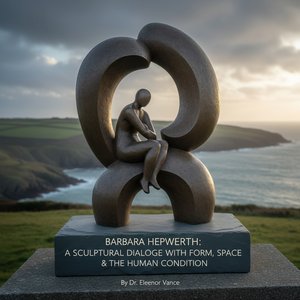 Barbara Hepworth: A Sculptural Dialogue with Form, Space & the Human ConditionExplore the profound world of Barbara Hepworth's sculpture. Discover her artistic evolution, iconic forms, and lasting influence on modern …
 Geometry with Purpose: Distinguishing Suprematism from ConstructivismMaster the differences between Suprematism and Constructivism with our expert guide. Discover the soul of the Russian avant-garde now.