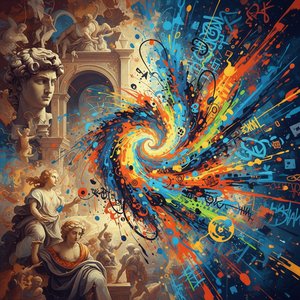
프린트 판매로 전환
 더 보기
더 보기







































 가로 또는 세로 중 어느 한 면이라도 105cm(약 41인치)를 초과하는 작품이나 복제화의 경우, 프레임은 분해된 키트 형태로 배송됩니다. 이는 안전한 배송을 보장하고 운송 중 발생할 수 있는 손상을 방지하기 위함입니다.


A Visionary Blend: Exploring Arthur Bowen Davies’ ‘Dances’
Arthur Bowen Davies (1862-1928), a figure often overshadowed yet undeniably influential, stands as a testament to the transformative power of artistic vision. Born in Utica, New York, he embarked on an extraordinary journey—one that propelled him from initial landscapes rooted in Hudson River School aesthetics toward a bold embrace of Symbolism and ultimately, into the orbit of Expressionist innovation. Davies’ oeuvre isn't merely aesthetically pleasing; it embodies a profound engagement with philosophical currents shaping the early 20th century, reflecting both European intellectual ferment and an emerging American sensibility.
- The Painting: ‘Dances,’ completed in 1914, resides prominently at the Detroit Institute of Art. This oil on canvas depicts three dancers engaged in independent movements—a left dancer, a central figure, and one positioned to the right—creating a dynamic tableau that captures the essence of performance.
- Composition & Technique: Davies’ masterful execution is evident in his loose brushstrokes and fragmented perspective. Thick impasto application lends textural richness to the surface, emphasizing the physicality of movement and conveying an energetic spirit. The color palette – dominated by yellows, blues, whites, and browns against a dark background – contributes significantly to the painting's mood and visual impact.
Symbolism’s Embrace: Beyond Representation
Davies’ artistic trajectory reveals a deliberate departure from purely representational art. Influenced by Symbolist principles—a movement prioritizing subjective experience and exploring realms beyond the visible—he sought to communicate ideas rather than simply mirroring reality. The dreamlike quality of the dancers' postures and movements aligns perfectly with Symbolism’s fascination for the subconscious and mystical dimensions of existence.
- Recurring Motifs: Recurring motifs like swirling lines and fragmented shapes reinforce this symbolic intent, inviting viewers to contemplate themes of movement, transformation, and perhaps even spiritual aspiration.
- Ashcan Influence: Simultaneously, Davies’ work retains echoes of the Ashcan School—a movement dedicated to portraying urban life with unflinching honesty—grounding his vision in a distinctly American context.
A Legacy Shaping Modern Art
Davies' artistic explorations resonated deeply within subsequent movements like Expressionism and Post-Impressionism. Artists such as Edvard Munch, captivated by Davies’ emotive approach to color and form, recognized the potential for conveying psychological depth through abstraction. ‘Dances,’ therefore, serves as a pivotal point in art history—a bridge between traditional landscapes and the burgeoning expressive language of modern art.
- Davies' Impact: His pioneering use of impasto technique and his willingness to delve into subjective experience paved the way for future generations of artists seeking to communicate emotion and explore inner worlds.
- Contemporary Relevance: Today, ‘Dances’ continues to inspire designers and collectors alike—a reminder that art can transcend time, communicating universal themes of movement, beauty, and contemplation.
질의응답
"Dances"은 어떤 종류의 작품인가요?
카탈로그에서 아서 B. 데이비스의 "Dances"은(는) WallArt로 분류되어 있습니다. 이 카테고리를 통해 유사한 작품들을 찾아보실 수 있습니다.
아서 B. 데이비스의 "Dances"의 전반적인 분위기는 어떠한가요?
아서 B. 데이비스의 "Dances"의 전반적인 분위기는 Mystical입니다. 이 분위기는 작품이 자아내는 전반적인 공기를 잘 나타냅니다.
"Dances"의 고해상도 다운로드 버전을 구매할 수 있나요?
아서 B. 데이비스의 "Dances"의 디지털 파일을 소장하시려면, 디지털 이미지 파일 페이지에서 고해상도 디지털 이미지 다운로드을(를) 주문해 주세요.
이 작품에 대해 더 알아보기
 미리보기
미리보기
 공유하기
공유하기 공유하기
공유하기
 상세 정보
상세 정보 가이드 보기

 다운로드
다운로드
 유사 작품 더 보기
 X-레이
X-레이 슬라이드 쇼 보기
 질의응답
질의응답 통계 정보
통계 정보