

 실제 크기로 보기
 보내기
보내기 공유하기
공유하기
 상세 보기
상세 보기 가이드 보기

 이미지 다운로드
 유사 작품 더 보기
 X-레이
X-레이 슬라이드 쇼 보기
 통계 정보
통계 정보Italian, approx. agentileschi)


 상세 보기
상세 보기
지클레 / 아트 프린트
빠른 제작과 다양한 마감 옵션을 선택할 수 있는 박물관 수준의 지클레이 및 캔버스 프린트. ( 수작업 채색 복제본 주문하기 디지털 이미지 판매 채널로 전환)




P118B $10

P118H $10

P118W $10

P438Z $10

P508JH $12

P508YH $12

P805H $10

P805Z $10

P919BZ $10

P919G $10

P919XJ $10

P959ZH $10

P968JZ $12

W106C $8

W218G $10

W218JH $8

W218Y $10

W307PJ $10

W316G $10

W316PJ $8

W316Y $10

W398PJ $8

W4111J $10

W500HY $15

W500JH $15

W692G $12

W849H $8

W940BG $15

W953PJ $8




작품의 원본 비율을 그대로 유지하는 프리셋 사이즈 중에서 선택해 보세요.

특정 프레임이나 공간에 맞춰 직접 치수를 입력하실 수 있습니다. 선택하신 사이즈가 원본 이미지의 비율과 일치하지 않을 경우, 작품을 크롭(자르기)하거나 이미지를 대칭 또는 단색 채우기로 확장하여 제작합니다. 제작 시작 전, 최종 확인을 위해 디지털 목업이 전송됩니다.
화면상의 미리보기는 실제 크롭이나 확장 상태를 반영하지 않으므로, 최종 구도는 오직 목업을 통해서만 정확하게 확인하실 수 있습니다.
맞춤 사이즈 제작도 가능하지만, 원본 비율을 유지하기 위해서는 사전 정의된 목록에서 치수를 선택하시는 것을 권장합니다.


 유리 옵션은 110cm 미만 크기에서만 선택 가능합니다.

Italian, approx. agentileschi)
지클레 / 아트 프린트
복제본 규격
-


총 결제 금액
$ 80
A Baroque Embrace: Unveiling Artemisia Gentileschi’s ‘Italian’
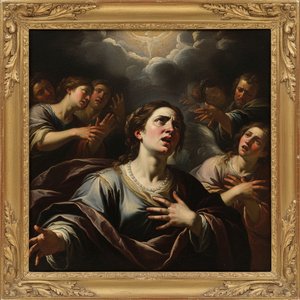
Artemisia Gentileschi's “Italian,” painted circa 1593, is more than just a depiction of a gathering; it’s a potent distillation of the Baroque era’s dramatic intensity and a testament to the burgeoning artistic voice of a woman challenging convention. Executed in the heart of Rome, this painting captures a moment of profound intimacy – a group surrounding a baby, radiating warmth and support within a richly appointed room. The scene, likely commissioned for a private patron, speaks volumes about the social dynamics and familial values prevalent during the late 16th century.
- Subject Matter: The central focus is undeniably the infant, presented with an almost devotional reverence. This wasn’t merely a portrait of a child; it was a symbol of hope, lineage, and the continuation of life – themes frequently explored in religious art of the period.
- Composition & Technique: Gentileschi masterfully employs Caravaggio's signature tenebrism—a dramatic contrast between light and dark—to heighten the emotional impact. The strong directional lighting illuminates the faces of the figures, drawing the viewer’s eye to their expressions of concern, tenderness, and perhaps even a touch of anxiety. Her brushwork is characterized by rapid, confident strokes, creating a sense of movement and immediacy.
- Setting & Atmosphere: The room itself contributes significantly to the painting's narrative. The presence of a dining table suggests a shared meal, reinforcing the idea of community and mutual support. The carefully arranged chairs and furnishings speak to a level of wealth and status, hinting at the importance of this gathering.
The Genius of Artemisia: A Revolutionary Vision
Artemisia Gentileschi’s rise within the male-dominated art world is itself a remarkable story. Born into a family deeply involved in artistic pursuits – her father, Orazio Gentileschi, was a prominent painter influenced by Caravaggio – she received an unparalleled education and training. This privileged access, coupled with her innate talent, allowed her to develop a distinctly Baroque style characterized by its emotional intensity, realistic portrayal of figures, and masterful use of light and shadow. Unlike many female artists of the time who were confined to domestic roles, Artemisia actively sought opportunities to exhibit her work, challenging societal expectations and establishing herself as one of the most accomplished painters of her era.
- Caravaggio’s Influence: Gentileschi was profoundly influenced by Caravaggio's revolutionary approach to painting. Like him, she favored realistic depictions of human figures, often portraying biblical scenes with a raw and unflinching honesty.
- Female Representation: Her choice to depict women – particularly in dramatic narratives traditionally reserved for male artists – was a bold statement. She elevated the status of female characters, imbuing them with agency and emotional depth.
Symbolism & Emotional Resonance
Beyond its technical brilliance, “Italian” is rich in symbolic meaning. The act of gathering around the baby represents protection, nurture, and the transmission of values. The expressions on the faces of the figures – a mixture of concern, affection, and perhaps even awe – convey a powerful sense of emotional connection. The bowl near the center could be interpreted as a symbol of sustenance, both literal and metaphorical, representing the nourishment provided by this community to the vulnerable infant.
- Color Palette: The use of warm earth tones—ochres, browns, and reds—creates a sense of intimacy and comfort.
- Emotional Impact: The painting’s enduring appeal lies in its ability to evoke empathy and compassion. It is a timeless depiction of human connection and the profound responsibility associated with caring for the next generation.
A Timeless Masterpiece – Recreated for Today
This meticulously hand-painted reproduction captures every nuance of Gentileschi’s original vision, offering you an exceptional opportunity to own a piece of art history. Perfect for adorning your home or office, this artwork will undoubtedly become a focal point, sparking conversation and inspiring contemplation. OriginalUniqueArt offers the highest quality reproductions, ensuring that you receive a faithful representation of this Baroque masterpiece for generations to come.
작가 소개
A Daughter of Rome: The Life and Art of Artemisia Gentileschi
Artemisia Gentileschi’s name echoes through the halls of art history, resonating not simply as that of a painter, but as an emblem of resilience, defiance, and extraordinary artistic talent in a world determined to silence female voices. Born in Rome in 1593, she entered a milieu steeped in artistry—her father, Orazio Gentileschi, was a respected painter deeply influenced by the revolutionary realism of Caravaggio. From her earliest years, Artemisia’s gift was undeniable, nurtured within her father's workshop where she absorbed techniques of composition and the dramatic use of light and shadow that would become hallmarks of her distinctive style. This formative training wasn’t merely about mastering brushstrokes; it was an immersion into a world of artistic ambition, one typically closed to women. Recognizing his daughter’s exceptional talent, Orazio provided opportunities unavailable to most females of the era, allowing her to study from life models—a crucial step in developing anatomical accuracy and expressive power.
Early Artistic Development & Caravaggio's Influence
Gentileschi’s artistic development was profoundly shaped by Caravaggio’s tenebrism—the stark contrast between light and darkness that imbued his paintings with an intense emotionality. Yet, she didn’t simply mimic her father or Caravaggio; she forged her own unique voice, characterized by a raw psychological depth and a compelling focus on female subjects often depicted with unprecedented agency and strength. Even in her early works, like *Susanna and the Elders* (1610), a biblical scene depicting Susanna being spied upon by two lecherous old men, Artemisia’s interpretation diverges from traditional portrayals. Here, Susanna isn't passively vulnerable; she displays a quiet dignity and resistance, foreshadowing the powerful female figures that would dominate her later oeuvre. Caravaggio’s dramatic style instilled in Gentileschi a belief in portraying emotion with uncompromising honesty—a conviction that would permeate her entire artistic career.
The Trial & Trauma: Shaping Her Artistic Vision
A pivotal moment in Artemisia’s life was the rape perpetrated by Agostino Tassi, a fellow painter and collaborator of her father’s. The ensuing trial (1612-1613) became a public spectacle, subjecting Artemisia to grueling questioning and societal scrutiny. While she bravely testified against Tassi—despite facing considerable prejudice and attempts to discredit her character—the proceedings were marred by bias and injustice. This traumatic experience indelibly imprinted upon Gentileschi’s psyche, fueling an unwavering determination to confront difficult truths and challenge prevailing social norms. The trial itself served as a potent symbol of the obstacles faced by women seeking justice in a patriarchal society.
Florence & Recognition: Embracing Independence
Following the trial, Artemisia relocated to Florence where she established herself as an independent artist—a remarkable achievement considering the limitations imposed upon women artists during that period. She joined the *Accademia delle Arti del Disegno*, becoming the first woman admitted to the Academy—a landmark decision that validated her talent and secured her access to artistic networks previously unavailable to female practitioners. In Florence, Gentileschi cultivated relationships with influential patrons and honed her distinctive style, characterized by vibrant colors and a masterful command of chiaroscuro. Her work reflected not only her technical prowess but also her unwavering commitment to portraying women with dignity and strength—a stance that distinguished her from many contemporaries.
Legacy & Enduring Influence
Artemisia Gentileschi’s artistic legacy extends far beyond her individual masterpieces. She stands as a beacon of courage and perseverance, demonstrating that women could achieve greatness in fields traditionally dominated by men. Her paintings continue to captivate audiences worldwide—inspiring admiration for their emotional intensity, dramatic realism, and profound psychological insight. Artemisia Gentileschi's story serves as a powerful reminder of the importance of recognizing and celebrating the contributions of women throughout history—and of upholding the values of justice, compassion, and artistic freedom.

아르테미시아 제네틸스키
1593 - 1656 , 이탈리아
작가 정보 요약
- Artistic Movement Or Style: 바로크 미술
- Artists Or Movements Influenced By This Artist: ['여성 예술가']
- Artists Who Influenced This Artist:
- 카라바조
- 오라지오 겐텔스키
- Date Of Birth: 1593년 7월 8일
- Date Of Death: 1652년 또는 1653년
- Full Name: Artemisia Gentileschi
- Nationality: 이탈리아인
- Notable Artworks:
- 유다의 홀로페네스 처형 장면
- 수사나와 장로들
- Place Of Birth: 로마, 이탈리아
관련 기사

화려함 속에 감춰진 진실! 바로크 미술을 정의한 10대 걸작 탐구
화려함과 극적인 표현이 압권! 바로크 미술을 대표하는 10대 걸작의 숨겨진 이야기를 만나보세요. 베르니니, 루벤스 등 거장의 작품부터 바로크 색감, 예술적 기법까지 – OriginalUniqueArt.com에서 명품 복제 & 인테리어 영감을 얻으세요! 지금 바로 컬렉션을 탐험해보세요.

The Visceral Stage: Exploring Dramatic Narratives & Emotional Intensity in Baroque Art
Explore the dramatic world of Baroque art! Discover iconic masters like Caravaggio & Rembrandt, their techniques, and the movement's lasting impact. Expert insights for collectors & enthusiasts at OriginalUniqueArt.
Chiaroscuro and Soul: A Definitive Guide to the Drama and Emotion of Italian Baroque Masterpieces
Embark on a sophisticated journey through Italian Baroque art. Discover the dramatic interplay of light and emotion in Caravaggio’s masterpieces and explore how to bring this timeless grandeur into your collection with expert art insights.

The Dramatic Flourish: Exploring the Baroque Movement's Enduring Legacy in Art History
Explore the dramatic world of Baroque art! Discover iconic artists like Caravaggio & Rubens, defining techniques, and its lasting impact on art history. Expert insights for collectors & enthusiasts at OriginalUniqueArt.

Drama and Light: A Definitive Guide to the Italian Baroque Masterpieces and the Revolution of Chiaroscuro
Explore the dramatic world of Italian Baroque art. Discover how masters like Caravaggio used chiaroscuro and tenebrism to revolutionize painting through light, shadow, and profound realism. A definitive guide for history lovers and art collectors.


