Symbolist Painting · 1879
Spring Evening (아르놀트 뵈클린, 1879)
아르놀트 뵈클린 (1827–1901) 작가의 Spring Evening 1879년에 제작되었습니다. Symbolist Painting 운동에 속합니다. Oil On Panel(으)로 제작되었습니다. 부다페스트, 헝가리에 위치한 부다페스트 미술관에 소장되어 있습니다. 크기는 67 × 129 cm입니다.
- 1879
- Oil On Panel
- 67 × 129 cm
- 부다페스트 미술관

 미리보기

 수작업 유화 작품
 공유하기
 공유하기
 학습용 요약본


 다운로드
 유사 작품 더 보기
 X-레이
 슬라이드 쇼 보기
 질의응답

 통계 정보
Spring Evening 요약
Spring Evening은(는) 무엇을 묘사하고 있나요?
The Ethereal Embrace of Spring Evening
Arnold Böcklin’s “Spring Evening,” painted in 1879, isn't merely a depiction of a woodland scene; it’s an immersion into a realm of melancholic beauty and profound symbolism. Created during his time in Florence – a city that profoundly shaped his artistic vision – the painting captures a fleeting moment of enchantment, steeped in the atmosphere of late Romanticism and foreshadowing the rise of Symbolism. The canvas breathes with a quiet intensity, dominated by muted greens, blues, and browns, creating an almost dreamlike quality that immediately draws the viewer into its hushed world.
At the heart of the composition stands a woman, her posture suggesting both contemplation and vulnerability. Her hand gently resting on her head is a gesture simultaneously of yielding and quiet strength – she’s not passively observing but actively engaged with the scene unfolding before her. Beside her sits a man, seemingly lost in thought as he peruses a book, his presence offering a grounding element to the ethereal atmosphere. A bear, rendered with surprising tenderness, interacts playfully with both figures, blurring the lines between human and animal, nature and civilization. This carefully orchestrated tableau speaks of harmony, connection, and the delicate balance of the natural world.
A Symphony of Symbolism
Böcklin’s work is deeply rooted in mythology and folklore, drawing heavily on ancient Greek and Roman traditions. The central figure, often interpreted as Pan – the god of nature, shepherds, and wild music – plays his pipes, summoning a chorus of unseen nymphs from the surrounding forest. These dryads, with their flowing hair and graceful movements, represent the spirit of the woods, embodying both beauty and danger. The bear itself is a potent symbol, frequently associated with strength, wisdom, and primal instincts—a reminder of humanity’s connection to the earth.
The painting's muted palette contributes significantly to its symbolic weight. The cool blues and greens evoke a sense of melancholy and introspection, while the browns ground the scene in the tangible reality of the forest floor. The lighting is soft and diffused, creating an atmosphere of twilight—a liminal space between day and night, representing transition, mystery, and perhaps even mortality. Böcklin masterfully uses color not to simply depict a landscape but to convey complex emotions and ideas.
Technique and Artistic Influences
“Spring Evening” exemplifies Böcklin’s distinctive artistic style, characterized by meticulous detail, rich textures, and an almost obsessive attention to the natural world. He employed a technique of layering thin glazes of oil paint, building up color gradually to achieve remarkable depth and luminosity. The brushwork is subtle yet expressive, conveying both the smoothness of the forest floor and the intricate details of the foliage.
Böcklin’s artistic journey was profoundly influenced by his time in Düsseldorf, where he studied under Schirmer and became associated with the Düsseldorf School of Painting. However, it was in Florence that he truly developed his unique Symbolist vision, drawing inspiration from the city's rich cultural heritage and its connection to antiquity. The painting also reflects the influence of Romanticism, particularly the emphasis on emotion, imagination, and the sublime beauty of nature—themes central to the movement.
A Timeless Resonance
“Spring Evening” continues to resonate with viewers today because it taps into universal themes of longing, connection, and the search for meaning. Its evocative atmosphere and symbolic richness invite contemplation and offer a glimpse into the artist’s deeply personal vision. The painting's enduring appeal lies in its ability to transport us to another time and place—a world where myth and reality intertwine, and where the beauty of nature is inextricably linked to the mysteries of the human soul.
Spring Evening은(는) 어느 미술관에 소장되어 있나요?
부다페스트 미술관
부다페스트, 헝가리
부다페스트 미술관의 기원과 역사 부다페스트 미술관의 탄생은 1896년 제정된 밀레니엄 법(Millennium Law)을 통해 그 기틀이 마련되었습니다. 이 입법적 결정은 헝가리 부다페스트 내에 순수 미술을 위한 전용 기관을 설립하고자 하는 열망에서 비롯되었습니다. 미술관이 들어선 자리는 과거 페스티 원형 회화(Feszty-körkép)를 전시하기 위해 세워졌던 로툰다 파빌리온이 있던 곳으로, 예술을 향한 열정이 깃든 역사적인 장소입니다.


Spring Evening의 고해상도 이미지

아르놀트 뵈클린, Spring Evening (1879), 부다페스트 미술관. 퍼블릭 도메인
Spring Evening에 관한 질문과 답변
아르놀트 뵈클린의 "Spring Evening"의 원화는 어디에서 감상할 수 있나요?
아르놀트 뵈클린의 "Spring Evening"의 원작은 부다페스트 미술관, 부다페스트, 헝가리에 소장되어 있습니다. 복제화를 통해 이 작품을 집에서도 감상하실 수 있습니다.
아르놀트 뵈클린의 "Spring Evening"은(는) 언제 제작되었나요?
"Spring Evening"은(는) 1879년에 제작되었습니다. 이 시기는 아르놀트 뵈클린의 예술적 경력과 당시의 시대상을 잘 보여줍니다.
"Spring Evening"은 어떤 기법으로 제작되었나요?
"Spring Evening"은(는) Oil On Panel 기법으로 제작되었습니다.
원작 "Spring Evening"의 크기는 어떻게 되나요?
원작 아르놀트 뵈클린의 "Spring Evening"의 크기는 67 x 129 cm입니다.
아르놀트 뵈클린의 "Spring Evening"에는 어떤 모습이 담겨 있나요?
"Spring Evening"에 담긴 소재는 mythology, nymphs, pan, forest, evening, landscape, symbolism, böcklin입니다.
아르놀트 뵈클린의 "Spring Evening"의 이미지를 자유롭게 복제할 수 있나요?
아르놀트 뵈클린의 "Spring Evening"의 저작권 정보: 해당 작품은 퍼블릭 도메인 - 저작권 보호 기간이 만료되었습니다 상태입니다. 이는 이미지 복제 가능 여부를 결정하는 기준이 됩니다.
"Spring Evening"은(는) 어느 작가의 작품인가요?
"Spring Evening"의 작가는 아르놀트 뵈클린입니다.
아르놀트 뵈클린의 "Spring Evening"은(는) 어떤 미술 사조에 속하나요?
아르놀트 뵈클린의 "Spring Evening"과(와) 관련된 미술 사조는 Symbolist Painting입니다. 이러한 분류를 통해 해당 작품을 관련 작가 및 예술 작품들과 함께 파악할 수 있습니다.
Spring Evening은(는) 아르놀트 뵈클린의 예술적 여정 중 어느 시기의 작품인가요?
"Spring Evening"은(는) 아르놀트 뵈클린의 Late Period를 잘 보여주는 작품입니다.
아티스트 아르놀트 뵈클린 소개
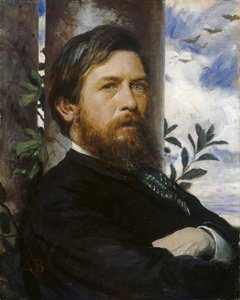
1827–1901, 스위스
아르놀트 뵈클린
섬의 그림자 스위스 바젤은 실재하는 것과 유령 같은 환상 사이의 긴장감으로 정의되는 한 예술가의 삶이 시작된 곳입니다. 1827년 10월 16일, 크리스티안 프리드리히 뵈클린과 우르술라 리페 사이에서 태어난 이 청년은 결국 아버지의 비단 무역을 넘어 뒤셀도르프 아카데미의 엄격한 예술적 규율 속으로 발을 들였습니다. 쉬르머의 지도 아래 그는 풍경의 언어를 흡수하기 시작했고, 이 기술은 훗날 인간 영혼의 지형을 그려내는 도구가 되었습니다. 그는 단순히 풍경을 그린 것이 아니라, 고전과 기괴함이 충돌하는 독자적인 세계를 구축했습니다.
아르놀트 뵈클린의 다른 작품들
 죽음의 섬 (초판)1880
 바이올린을 연주하는 죽음과 함께하는 자화상
 전쟁1896
 죽은 자들의 섬 (버전 5)1886

Spring Evening 관련 에세이
 French artworks of the 1880sFrench Impressionist masterpieces by Claude Monet, Pierre-Auguste Renoir, and Georges Seurat. Find museum-quality reproductions on Original…
 Symphony of Sunlight: The Luminous Legacy of Pine Tree Landscapes in Art HistoryExplore the luminous history of pine landscapes through Sorolla and Shishkin. Discover the magic of forest art today.
 En Plein Air Serenity: Exploring the Luminous Beauty of Impressionist Garden ArtExplore the luminous history of Impressionist garden art through Monet and Van Gogh. Discover the magic of plein air painting today.