

 미리보기
미리보기
 공유하기
공유하기 공유하기
공유하기
 상세 정보
상세 정보

 다운로드
다운로드
 유사 작품
유사 작품 X-레이
X-레이 슬라이드 쇼
 Stats
StatsShield with Gorgon


 더 보기
더 보기
지클레 / 아트 프린트
빠른 제작과 다양한 마감 옵션을 제공하는 박물관 품질의 지클레이 또는 캔버스 프린트. ( 손으로 그린 그림 구매 Switch to Digital Image)




P118B $10

P118H $10

P118W $10

P438Z $10

P508JH $12

P508YH $12

P805H $10

P805Z $10

P919BZ $10

P919G $10

P919XJ $10

P959ZH $10

P968JZ $12

W106C $8

W218G $10

W218JH $8

W218Y $10

W307PJ $10

W316G $10

W316PJ $8

W316Y $10

W398PJ $8

W4111J $10

W500HY $15

W500JH $15

W692G $12

W849H $8

W940BG $15

W953PJ $8




작품의 원본 비율을 유지하는 미리 설정된 크기 중에서 선택하세요.

특정 프레임이나 공간에 맞춰 직접 치수를 입력하실 수 있습니다. 선택하신 사이즈가 원본 이미지의 비율과 일치하지 않을 경우, 작품을 크롭(자르기)하거나 이미지를 대칭 또는 단색 채우기로 확장하여 제작합니다. 제작 시작 전, 최종 확인을 위해 디지털 목업이 전송됩니다.
화면상의 미리보기는 실제 크롭이나 확장 상태를 반영하지 않으므로, 최종 구도는 오직 목업을 통해서만 정확하게 확인하실 수 있습니다.
맞춤 사이즈 제작도 가능하지만, 원본 비율을 유지하기 위해서는 사전 정의된 목록에서 치수를 선택하시는 것을 권장합니다.


 유리 옵션은 110cm 미만 크기에서만 선택 가능합니다.

Shield with Gorgon
지클레 / 아트 프린트
복제본 크기
-


최종 결제 금액
$ 80
Shield with Gorgon – A Meditation on Mortality and Ancient Myth
The sculpture “Shield with Gorgon’s Head,” created by Arnold Böcklin in 1897, stands as a haunting testament to the artist's fascination with Greco-Roman mythology and his profound contemplation of death. Exhibited prominently at the Musée d’Orsay in Paris, this piece transcends mere representation; it invites viewers into a realm of psychological exploration where beauty intertwines with unsettling truths. Böcklin, deeply influenced by Nietzschean philosophy – specifically the concept of eternal recurrence – sought to capture not just an image but an experience, mirroring the cyclical nature of existence and confronting us with our inevitable demise.Style and Technique: Symbolist Precision
Böcklin’s style aligns perfectly with the tenets of Symbolism, a movement that rejected realism in favor of conveying emotions and ideas through suggestive imagery rather than literal depiction. Unlike Impressionists who aimed to capture fleeting moments of light and color, Böcklin meticulously crafted his sculpture using a technique rooted in meticulous observation and symbolic distillation. The artist employed a combination of modeling clay and bronze casting – a process demanding considerable skill and patience – to achieve an astonishing level of detail. Notice the subtle gradations of tone within the Gorgon’s head; these aren't merely aesthetic choices but deliberate efforts to convey texture and depth, mirroring the complexities of human emotion. The smooth surface contrasts sharply with the rough contours of the snake’s coils, creating a visual dialogue that underscores the sculpture’s thematic concerns.Historical Context: Nietzschean Echoes and Late Romantic Sentiment
Böcklin's artistic output flourished during the waning years of the Romantic era, a period characterized by an obsession with emotion, imagination, and the sublime—experiences perceived as exceeding human comprehension yet simultaneously elevating the soul. However, Böcklin’s vision extended beyond traditional Romantic tropes; he actively engaged with the burgeoning intellectual currents of his time, particularly Nietzsche's proclamation that “God is dead.” This existential crisis fueled Böcklin’s exploration of themes like nihilism and mortality—concepts central to both Nietzschean thought and Symbolist art. The sculpture reflects a broader cultural preoccupation with confronting death not as an end but as a transformative stage in the cosmic cycle, mirroring Nietzsche's assertion that life itself is an affirmation of eternal recurrence.Symbolism Unleashed: Gorgon’s Head – Terror and Transformation
The Gorgon Medusa represents more than just monstrous horror; she embodies the terrifying power of transformation—a concept inextricably linked to Böcklin’s Symbolist worldview. According to Greek mythology, Medusa possessed snakes for hair that turned anyone who gazed upon them into stone. This image served as a potent symbol of inescapable fate and the destructive force of repressed emotions. The sculptor skillfully captures this duality: the Gorgon's gaze exudes palpable terror, yet simultaneously hints at an underlying process of metamorphosis—a suggestion that confronting death can lead to profound spiritual renewal. Böcklin’s deliberate use of serpentine coils reinforces this symbolism, representing both constriction and liberation – mirroring the artist’s own preoccupation with reconciling beauty and darkness.Emotional Impact: A Confrontation With Eternity
Ultimately, “Shield with Gorgon’s Head” compels viewers to confront their own mortality—to grapple with the inescapable reality that life is finite yet perpetually reborn. The sculpture's unsettling stillness invites contemplation, prompting us to consider our place within the grand scheme of cosmic time. Böcklin doesn’t offer comfort or reassurance; instead, he presents a stark portrait of existence stripped bare – confronting us with the beauty and terror inherent in accepting death as an inevitable component of life’s eternal dance. It is precisely this unflinching gaze—this refusal to shy away from uncomfortable truths—that secures “Shield with Gorgon’s Head”'s enduring power as a masterpiece of Symbolist art and a timeless meditation on the human condition.작가 약력
초기 생애와 교육
아르놀트 뵈클린은 스위스의 상징주의 화가로, 1827년 10월 16일 스위스 바젤에서 태어났습니다. 그의 아버지 크리스티안 프리드리히 뵈클린은 샤프하우젠의 유서 깊은 가문 출신으로 비단 무역에 종사하였으며, 그의 어머니 우르술라 리페 역시 바젤 태생이었습니다. 뵈클린은 뒤셀도르프 아카데미에서 쉬르머(Schirmer) 문하에 수학하며 안젤름 페어바흐와 우정을 나누는 예술가로 성장하였고, 이는 그를 뒤셀도르프 화파의 흐름과 연결해 주었습니다.예술적 여정과 상징주의
뵈클린의 예술적 여정은 파리를 비롯한 여러 도시로 이어졌습니다. 그는 루브르 박물관에서 근무하며 예술적 지평을 넓혔고, 로마의 경이로운 풍경들로부터 깊은 영감을 받았습니다. 그의 작품 세계는 고전 건축을 배경으로 알레고리와 신화적 인물들을 등장시키며, 죽음과 필멸성이라는 심오한 주제를 탐구하는 데 집중되었습니다.- 그의 초기작 중 하나인 대공원(Great Park)은 고대 신화를 생생하게 보여줍니다.
- 이 시기의 주목할 만한 작품으로는 님프와 사티로스(1858)와 사포(1859)가 있습니다.
- 또한 뵈클린의 자화상: 죽음이 바이올린을 연주하는 모습(1872)은 그의 독창적인 화풍을 극명하게 보여주는 사례입니다.
유산과 영향력
뵈클린은 무엇보다 다섯 가지 버전으로 제작된 죽음의 섬(1880-1886)으로 가장 잘 알려져 있습니다. 이 작품은 그의 딸이 안치된 피렌체의 영국인 묘지를 떠올리게 하는 애틋한 정서를 담고 있습니다. 그의 예술적 성취는 한스 토마와 같은 후배 예술가들에게 영향을 미쳤을 뿐만 아니라, 여러 후기 낭만주의 작곡가들에게 영감을 불어넣었습니다.- 비평가 클레멘트 그린버그는 뵈클린의 작품을 당대의 "가장 완숙한 표현 중 하나"라고 극찬했습니다.
- 뵈클린의 화풍은 라파엘 전파와도 맞닿아 있으며, 꿈과 신비주의의 세계를 강조하는 특징을 지닙니다.
박물관 및 소장처
뵈클린의 걸작들은 현재 다음과 같은 여러 박물관에 소중히 보존되어 있습니다:- 외프엔틀리헤 쿠nstsammlung (스위스 바젤)
- 바젤 미술관 (스위스)
- 취리히 미술관 (스위스 취리히)
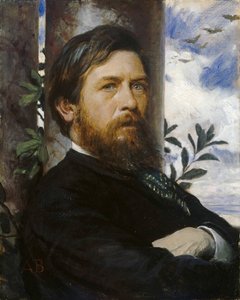
아르놀트 뵈클린
1827 - 1901
주요 정보
- Artistic Movement Or Style: 상징주의
- Artists Or Movements Influenced By This Artist:
- 한스 토마
- 라파엘 전파
- Artists Who Influenced This Artist:
- 쉬르머
- 포이어바흐
- Date Of Birth: 1827년 10월 16일
- Date Of Death: 1901년 1월 16일
- Full Name: 아르놀트 뵈클린
- Nationality: 스위스
- Notable Artworks:
- 죽음의 섬
- 님프와 사티로스
- 사포
- 자화상
- Place Of Birth: 스위스 바젤
관련 기사 더 보기

Theatricality & Triumph: Baroque Drama in Painting & Sculpture
Explore the dramatic world of Baroque art! Discover its history, defining characteristics, & lasting influence on painting & sculpture. Expert insights into Caravaggio, Zurbarán, and Bernini – plus high-quality reproductions at OriginalUniqueArt.

Bronze Sculptures That Defined Art History | OriginalUniqueArt
Journey through art history with our Top 10 bronze sculptures! Explore masterpieces by Rodin, Michelangelo & more. Discover stories behind iconic statues and find museum-quality reproductions for your home decor at OriginalUniqueArt.com.

The Enduring Form: Sculpture Across History, Technique & Emotional Resonance
Explore the rich history of sculpture with OriginalUniqueArt. Discover key techniques, influential artists & investment potential for discerning collectors. Expert insights into valuing and collecting timeless masterpieces.

Bronze Age to Modern Masters: 10 Sculptures That Redefined Art | OriginalUniqueArt
Journey through art history with 10 legendary bronze sculptures – from Michelangelo's David to Rodin’s Thinker. Explore the stories, techniques & timeless beauty of these masterpieces. Find museum-quality reproductions & elevate your home decor on OriginalUniqueArt.com.

The Enduring Form: Exploring Themes & Techniques in Sculpture Across Historical Periods
Explore the rich history of sculpture from ancient masterpieces to contemporary innovations. Discover key techniques, influential artists & investment potential for discerning art collectors.
