

 미리보기
미리보기
 프린트 구매
 공유하기
공유하기 공유하기
공유하기
 상세 정보
상세 정보

 다운로드
다운로드
 유사 작품
유사 작품 X-레이
X-레이 슬라이드 쇼
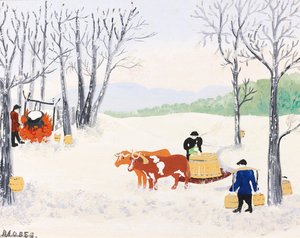
The Last Load
 46.0 x 61.0 cm
 더 보기
더 보기




































작품의 원본 비율을 유지하는 미리 설정된 크기 중에서 선택하세요.

특정 프레임이나 공간에 맞도록 직접 크기를 입력할 수 있습니다. 선택하신 크기가 원본 이미지의 비율과 일치하지 않는 경우, 작품을 자르거나 추가적인 손으로 그린 요소를 사용하여 그림을 확장합니다. 제작 시작 전 승인을 위해 디지털 목업을 보내드립니다.
화면 미리 보기는 실제 자르기 또는 확장을 반영하지 않습니다. 최종 구성은 목업을 통해서만 정확하게 확인하실 수 있습니다.
맞춤 크기 제작도 가능하지만, 원본 비율을 유지하기 위해 사전 정의된 목록에서 크기를 선택하시는 것을 권장합니다.
주문 후 OriginalUniqueArt.com 팀에서 상세 안내를 위해 고객님께 이메일을 보내드리며, 미리보기 시안을 제공해 드립니다.


 유리 옵션은 110cm 미만 크기에서만 선택 가능합니다.

The Last Load
재현 기법
복제본 크기
-


최종 결제 금액
$ 300
작가 약력
A Life Painted in Rural Grace
The story of Anna Mary Robertson, known to the world as Grandma Moses, is one of the most enchanting chronicles in American art history. Born on September 7, 1860, in the quiet hamlet of Greenwich, New York, her early years were deeply rooted in the rhythmic, seasonal labors of a family farm. This upbringing provided more than just a backdrop; it served as the very soul of her future work. Before she ever picked up a brush with intention, Robertson lived the scenes she would later immortalize. Her life was defined by the textures of rural existence—the biting chill of a New England winter, the warmth of a wood-burning stove, and the communal spirit of village traditions. Though she spent much of her life engaged in the demanding physical work of farming and housekeeping, an innate observant eye was always at work, capturing the subtle beauty of the natural world and the simple dignity of country life.
Her transition from a hardworking farmwife to a celebrated painter is nothing short of legendary. It was not until her late seventies, prompted by the physical limitations following a debilitating stroke in 1935, that she turned toward fine arts as a way to keep her hands busy and her spirit engaged. This late-blooming creativity transformed her from an observer of tradition into its most prominent chronicler. Her work did not emerge from formal academic training but from a deep-seated connection to the folk traditions of her heritage, drawing inspiration from the vibrant patterns of Amish quilts and the nostalgic charm of 19th-century Americana.
The Language of Folk Artistry
The technique of Grandma Moses is as heartwarming and accessible as the subjects she chose to depict. Eschewing the complex shadows and anatomical precision of classical realism, she embraced a style characterized by bold outlines, simplified forms, and a luminous palette. She often utilized casein paint—a durable medium derived from milk protein—which allowed her to achieve a soft yet lasting vibrancy on her canvases. Her compositions frequently featured meticulously crafted checkerboard patterns and sweeping landscapes that felt both intimate and expansive.
Her visual vocabulary was built upon the familiar:
- Vibrant Landscapes: Rolling hills, snow-covered roads, and sun-drenched meadows that evoke a sense of eternal spring or peaceful winter.
- Communal Scenes: Busy farmyards, church gatherings, and village festivities that celebrate the strength of human connection.
- Seasonal Narratives: A profound focus on the cycle of life, from the harvest celebrations to the quiet solitude of a frozen river.
- Symbolic Simplicity: Using bright, primary colors and clear shapes to convey emotion without the need for complex ornamentation.
Legacy and Historical Significance
As her fame grew during the 1950s, Grandma Moses became a cultural phenomenon, appearing on the covers of prestigious publications like Time Magazine and becoming a symbol of American resilience and nostalgia. Her work offered a sanctuary of peace to a nation navigating the rapid technological and social shifts of the mid-20th century. She did not merely paint pictures; she preserved a vanishing way of life, capturing the essence of an era that many feared was being lost to modernity.
The historical significance of her contribution lies in her role as a pioneer of the American Folk Art movement. By elevating "primitive" or "outsider" perspectives to the heights of fine art, she challenged the rigid hierarchies of the art world. Her ability to find profound beauty in the mundane—a sugar house, a horse-drawn carriage, or a simple flock of sheep—remains her greatest gift to posterity. Today, her legacy lives on through her celebrated works that continue to evoke a sense of wonder, reminding us that art is not found solely in museums, but in the very fabric of our shared history and the quiet moments of rural grace.
anna mary robertson
1860 - 1961
주요 정보
- Artistic Movement Or Style: Folk Art America
- Artists Or Movements Influenced By This Artist: ['']
- Artists Who Influenced This Artist: ['']
- Date Of Birth: September 7, 1860
- Full Name: Anna Mary Robertson
- Nationality: American
- Notable Artworks:
- At the Bend of the River
- Sugar House
- Place Of Birth: Greenwich, New York

