유화 원작 구매
 Electric Chair에 관한 모든 것







































 가로 또는 세로 중 어느 한 면이라도 105cm(약 41인치)를 초과하는 작품이나 복제화의 경우, 프레임은 분해된 키트 형태로 배송됩니다. 이는 안전한 배송을 보장하고 운송 중 발생할 수 있는 손상을 방지하기 위함입니다.


A Haunting Presence in Pop Art
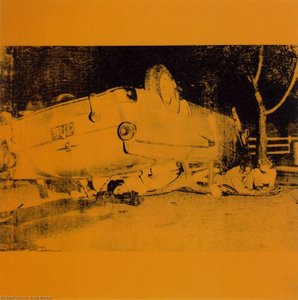
In the vast, vibrant landscape of twentieth-century art, few images possess the chilling, quiet intensity found in Andy Warhol’s Electric Chair. This work does not merely present a subject; it commands a presence that is both inescapable and deeply unsettling. At first glance, the viewer is confronted by the stark, mechanical silhouette of the chair itself, rendered with a deliberate simplicity that strips away any sense of comfort. While some interpretations might see traces of an industrial or even aeronautical form in its weathered textures, the true essence of the piece lies in its role as a cornerstone of Warhol’s celebrated Death and Disaster series. The composition avoids unnecessary detail, opting instead for a heavy, almost suffocating atmosphere that forces a direct confrontation between the observer and the instrument of capital punishment.
The technique employed is quintessentially Pop Art, utilizing the iconic silkscreen printing process that Warhol mastered to redefine modern aesthetics. Through this method, the artist achieves bold, flat planes of color and a distinctive, grainy texture that feels both mechanical and distressed. This stippled effect lends the work a sense of historical weight, as if the image itself has been weathered by time and repeated exposure. There is no traditional brushwork to admire here; instead, the beauty lies in the embrace of mass production. For the collector or designer, this technique offers a striking visual depth that works exceptionally well in contemporary spaces, providing a textured, monochromatic-leaning focal point that invites closer inspection of its layered, screen-printed surfaces.
The Echoes of American Anxiety
To understand the emotional gravity of Electric Chair, one must look back to the turbulent era of its creation. Emerging from the mid-1960s, a period defined by the Vietnam War and profound social upheaval, the work serves as a masterful distillation of American anxiety. Warhol was fascinated by the way mass media processes tragedy, turning moments of extreme violence into consumable spectacles. By isolating the electric chair—a symbol of state-sanctioned mortality—he captures the tension between the clinical, mechanical nature of modern society and the raw, human terror of death. The piece acts as a mirror to a culture increasingly desensitized by the repetitive imagery of newsreels and newspapers.
Beyond its historical weight, the artwork offers a profound symbolic resonance. It is not merely an object of grim utility; it is a meditation on the inescapable nature of our own mortality and the dehumanizing aspects of modern industrialization. The starkness of the image creates a vacuum of silence, a "silent scream" that resonates within the viewer. For those looking to integrate such a powerful piece into an interior, it serves as more than just decoration; it is a conversation starter, a piece of intellectual history that brings a sense of gravity and sophisticated tension to a curated collection. Whether viewed as a critique of media saturation or a somber reflection on justice, Warhol’s Electric Chair remains an enduring icon of the power of the image to haunt the collective consciousness.
질의응답
Electric Chair은(는) 수작업으로 그린 작품인가요, 아니면 프린트된 작품인가요?
수작업 제작: 숙련된 화가가 Electric Chair을(를) 리넨 캔버스 위에 유화로 재현합니다.
Electric Chair의 사이즈는 어떤 것을 선택해야 하나요?
사이즈는 27.1 x 36.8 cm (₩293960)부터 180.7 x 245.3 cm (₩2415813)까지 있으며, 이 페이지의 표에 주요 단계별 가격이 안내되어 있습니다.
배송은 얼마나 걸리나요?
배송은 전 세계 무료 특송으로 4~5주가 소요되며, 본 페이지에서 긴급 제작 옵션을 선택하실 수 있습니다. 제품은 조건 없이 100일 이내에 반품하여 전액 환불받으실 수 있습니다.
앤디 워홀 작가는 Electric Chair 작품에 어떤 재료를 사용했나요?
Silkscreen
 미리보기

 공유하기
 공유하기
 상세 정보
 학습용 요약본


 다운로드
 유사 작품 더 보기
 X-레이
 슬라이드 쇼 보기
 질의응답

 통계 정보