프린트 판매로 전환
 더 보기
더 보기







































 가로 또는 세로 중 어느 한 면이라도 105cm(약 41인치)를 초과하는 작품이나 복제화의 경우, 프레임은 분해된 키트 형태로 배송됩니다. 이는 안전한 배송을 보장하고 운송 중 발생할 수 있는 손상을 방지하기 위함입니다.


A Masterpiece of Renaissance Faith
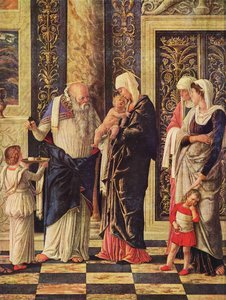
Andrea Mantegna’s Circumcision of Jesus stands as a testament to the artistic fervor and intellectual curiosity that characterized the Early Renaissance in Italy. Executed in 1461 for the Chapel of San Giorgio in Mantua—a commission entrusted to him by Marquis Ludovico Gonzaga—this fresco transcends mere depiction; it embodies profound theological contemplation and masterful technical execution. Its enduring appeal lies not only in its visual splendor but also in its ability to convey a complex tapestry of religious symbolism and humanist ideals.Composition and Perspective: A Revolutionary Approach
Measuring 86 x 43 cm, the painting immediately captivates viewers with its ambitious use of linear perspective—a technique pioneered by Mantegna and profoundly influencing subsequent artists. Unlike the flattened surfaces prevalent in medieval art, Mantegna achieves a remarkable illusion of depth through carefully calibrated orthogonals converging towards a vanishing point located just beyond the horizon line. This innovative approach reflects Mantegna’s unwavering dedication to studying classical sculpture and architecture, specifically the ruins of Roman temples—a fascination that fueled his artistic vision. The figures are arranged with meticulous precision, creating a dynamic interplay between foreground and background, drawing the eye inward toward the central figure of Jesus Christ.The Narrative Scene: Symbolism Richly Layered
At the heart of the fresco is Jesus Christ, surrounded by twelve disciples—a deliberate reference to the Twelve Apostles depicted in depictions of the crucifixion. The scene portrays the circumcision ritual performed eight days after Jesus’s birth, a pivotal event marking his acceptance into Jewish law and foreshadowing his sacrificial death. Among the figures gathered around Jesus are Joseph, Mary, and several attendants, symbolizing humility and piety. Notably, a newborn infant is held aloft by one of the disciples—a poignant emblem of innocence and divine grace—underscoring the painting’s overarching theme of redemption. The backdrop depicts a stylized Roman temple interior, evoking memories of antiquity and reinforcing Mantegna's commitment to classical ideals.Technique and Artistic Significance
Mantegna employed tempera paint on wood panels, utilizing a technique that allowed for exceptional detail and luminosity—characteristics particularly valued during the Renaissance. His meticulous brushwork captures subtle nuances of light and shadow, creating an atmosphere of solemn reverence. The artist’s masterful rendering of drapery—particularly Mary's robe—demonstrates his profound understanding of anatomy and sculptural form—skills honed through extensive study of Roman sculptures. More than just a beautiful image, The Circumcision of Jesus represents a watershed moment in Renaissance art—establishing linear perspective as a cornerstone of artistic representation and elevating religious painting to new heights of expressive power.Preservation and Legacy: A Jewel of Florentine Art
Today housed at the Galleria degli Uffizi in Florence, Italy—one of the world’s foremost repositories of Renaissance masterpieces—The Circumcision of Jesus continues to inspire awe and admiration. Its careful conservation ensures that future generations can appreciate its artistic brilliance and contemplate its enduring spiritual significance. For those seeking to immerse themselves in the splendor of Renaissance art, OriginalUniqueArt offers exquisite handmade oil painting reproductions—allowing you to bring this iconic masterpiece into your home. Explore OriginalUniqueArt today!- Painting Title: The Circumcision of Jesus
- Artist: Andrea Mantegna
- Date: 1461
- Medium: Frescoes
- Location: Galleria degli Uffizi, Florence, Italy
This artwork embodies the spirit of Renaissance artistic innovation and theological contemplation. Its detailed depiction of biblical narrative combined with groundbreaking perspective techniques cemented Mantegna’s place as a pioneer of his era. To experience this masterpiece firsthand, visit OriginalUniqueArt for stunning reproductions.
질의응답
"예수의 할례"에 대한 가이드는 어디에서 확인할 수 있나요?
"예수의 할례"에 대한 안내는 작품의 학습 가이드 페이지에서 확인하실 수 있습니다. 이 페이지는 작품의 캡션, 크레딧, 그리고 상세 정보 표(작가, 제작 연도, 재료, 원본 크기, 소장처)를 포함하여 출력 가능한 형태의 팩트시트로 제공됩니다.
만테냐의 "예수의 할례"에는 어떤 색상 팔레트가 사용되었나요?
만테냐의 "예수의 할례"의 색채 구성은 어스톤로 요약할 수 있습니다. 이는 작품에 사용된 색상들을 간결하게 표현한 것입니다.
"예수의 할례"의 세로로 긴 형태 형식은 어디에 전시하는 것이 가장 좋을까요?
만테냐의 "예수의 할례"의 세로로 긴 형태 형식은 거실 공간에 추천합니다. 작품의 형식과 공간의 조화는 복제화 배치에 중요한 가이드가 됩니다.
이 작품에 대해 더 알아보기
 미리보기
미리보기
 공유하기
공유하기 공유하기
공유하기
 상세 정보
상세 정보 가이드 보기

 다운로드
다운로드
 유사 작품 더 보기
 X-레이
X-레이 슬라이드 쇼 보기
 질의응답
질의응답 통계 정보
통계 정보