프린트 판매로 전환
 더 보기
더 보기







































 가로 또는 세로 중 어느 한 면이라도 105cm(약 41인치)를 초과하는 작품이나 복제화의 경우, 프레임은 분해된 키트 형태로 배송됩니다. 이는 안전한 배송을 보장하고 운송 중 발생할 수 있는 손상을 방지하기 위함입니다.


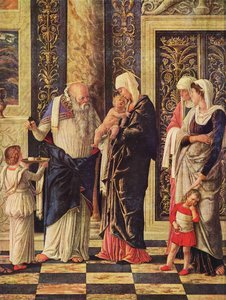
Andrea Mantegna’s Madonna of Victory: A Symphony of Antiquity and Faith
Andrea Mantegna’s Madonna of Victory stands as a cornerstone of Early Renaissance art—a testament to Mantegna's unparalleled mastery of perspective and sculptural form, coupled with an unwavering devotion to classical ideals.
The Composition: A Dialogue Between Heaven and Earth
Painted in 1496 for Francesco II Gonzaga’s chapel in Mantua, this tempera on canvas artwork depicts Mary cradling Jesus within a chair—a deliberate allusion to Roman imperial iconography. The positioning of the Virgin is subtly asymmetrical, reflecting a departure from traditional depictions that prioritized frontal symmetry. Below her throne sits a woman kneeling, diligently feeding the infant Jesus; this gesture embodies maternal care and piety.
- Chair Symbolism: The chair represents divine authority and majesty, mirroring imperial thrones—a conscious reference to Roman emperors who claimed legitimacy through lineage and divine favor.
- Gestures: Mary’s serene gaze and Jesus’s posture convey tranquility and innocence, embodying Christian virtues.
Ornate Design: Fruitful Abundance and Architectural Precision
Mantegna's artistic vision is immediately apparent in the painting’s elaborate ornamentation. Above Mary and Jesus dominates an arched gateway adorned with stylized fruit—a symbol of fertility and prosperity—underscoring Gonzaga’s ambition to portray his family as blessed by God. The chapel itself is designed according to strict geometric principles, reflecting Renaissance humanist ideals that celebrated rationality and order.
- Architectural Detail: Mantegna meticulously recreated the architectural elements of Roman temples, demonstrating his profound understanding of classical architecture.
- Fruit Motif: The fruit symbolizes divine grace and abundance—a visual representation of Gonzaga’s aspirations for his lineage.
Artistic Significance: Beyond Imitation – A Reflection of Moral Values
More than merely replicating ancient sculptures, Mantegna elevates them to a spiritual level. He achieves this through masterful use of *trompe-l'oeil*, creating illusions of depth and space that transport the viewer into the sacred realm. The painting’s nude figure—Mary—represents the human body as an ideal of perfection and absolute beauty—a concept rooted in classical art but imbued with Christian moral significance.
This depiction aligns with the broader humanist movement, which championed reason and observation alongside faith, reflecting a pivotal moment in Western artistic history.Contextualizing the Artwork: The Legacy of Antiquity
Mantegna’s work stands firmly within the tradition of classical art—influenced by the rediscovery of Greek sculptures during the Renaissance. Ancient Greece revered the human body as a manifestation of divine beauty and virtue, mirroring Christian theology's emphasis on spiritual perfection. However, Mantegna transcends mere imitation; he transforms classical ideals into expressions of faith and moral contemplation.
- Classical Influence: Mantegna’s fascination with Roman sculpture profoundly shaped his artistic style—evident in the monumental scale and sculptural quality of his compositions.
- Moral Dimension: The painting communicates Christian virtues—such as humility, compassion, and devotion—through its serene imagery and balanced composition.
Relevance Today: Semiotics and Gender Dynamics
Contemporary art scholarship examines artworks like Madonna of Victory through semiotic analysis—investigating the relationship between the artwork and its audience—and scrutinizing gender dynamics within Western art history. Feminist critiques challenge representations of women as objects of desire and patriarchal dominance, prompting ongoing dialogues about artistic interpretation.
- Semiotic Analysis: Scholars explore how visual symbols convey meaning beyond their literal depiction—revealing cultural values and societal assumptions.
- Gender Perspective: Feminist perspectives critique artworks for perpetuating stereotypes and reinforcing power imbalances between men and women.
Conclusion: An Enduring Masterpiece
Andrea Mantegna’s Madonna of Victory remains an unparalleled achievement—a synthesis of classical grandeur and Christian piety. Its meticulous craftsmanship, symbolic richness, and profound artistic vision continue to inspire admiration and contemplation centuries after its creation.
질의응답
승리의 마돈나은(는) 만테냐의 예술적 여정 중 어느 시기의 작품인가요?
"승리의 마돈나"은(는) 만테냐의 예술적 생애 중 전성기 시기의 작품입니다. 이 분류를 통해 해당 작품을 작가의 예술적 발전 과정과 연결해 볼 수 있습니다.
"승리의 마돈나"은 미술사적으로 어떤 위치를 차지하고 있습니까?
역사적으로 "승리의 마돈나"은(는) 더 넓은 의미의 르네상스 시대에 속하는 르네상스 양식의 작품입니다.
"승리의 마돈나"은(는) 만테냐의 반복되는 주제들 사이에서 어떤 위치를 차지하고 있나요?
"승리의 마돈나"은(는) 마돈나, 승리, 만테냐, 종교적, 르네상스, 원근법, 조각을(를) 묘사하고 있는 반면, 만테냐의 기존 주제들은 고대 고전주의의 영향, 심리적 깊이, 종교적 상징성, 기념비적 규모, 이상적인 미, 르네상스의 비전, 상징적 표현입니다. 이 두 가지를 비교해 보면 해당 작품이 작가의 통상적인 소재와 어떻게 연관되는지 알 수 있습니다.
이 작품에 대해 더 알아보기
 미리보기
미리보기
 공유하기
공유하기 공유하기
공유하기
 상세 정보
상세 정보 가이드 보기

 다운로드
다운로드
 유사 작품 더 보기
 X-레이
X-레이 슬라이드 쇼 보기
 질의응답
질의응답 통계 정보
통계 정보