

 실제 크기로 보기
 보내기
보내기 공유하기
공유하기
 상세 보기
상세 보기 가이드 보기

 이미지 다운로드
 유사 작품 더 보기
 X-레이
X-레이 슬라이드 쇼 보기
 Q&A
Q&A 통계 정보
통계 정보George III (1738–1820)
 Oil On Canvas
- WallArt
- Neoclassicism
 214.0 x 150.0 cm
 로열 호스피탈 첼시
 상세 보기
상세 보기
핸드메이드 유화 복제화
작가가 직접 캔버스에 손으로 그린 유화 작품으로, 원하는 크기와 액자로 맞춤 제작해 드립니다. ( 프린트 판매로 전환 디지털 이미지 판매 채널로 전환)




P118B ₩10

P118H ₩10

P118W ₩10

P438Z ₩10

P508JH ₩12

P508YH ₩12

P805H ₩10

P805Z ₩10

P919BZ ₩10

P919G ₩10

P919XJ ₩10

P959ZH ₩10

P968JZ ₩12

W106C ₩8

W218G ₩10

W218JH ₩8

W218Y ₩10

W307PJ ₩10

W316G ₩10

W316PJ ₩8

W316Y ₩10

W398PJ ₩8

W4111J ₩10

W500HY ₩15

W500JH ₩15

W692G ₩12

W849H ₩8

W940BG ₩15

W953PJ ₩8




작품의 원본 비율을 그대로 유지하는 프리셋 사이즈 중에서 선택해 보세요.

액자나 벽면 크기에 맞춰 필요한 가로와 세로 길이를 입력해 주세요. 본 작품은 수작업으로 제작되므로, 요청하신 비율에 따라 작가가 그림의 가장자리를 조금 더 넓게 그리거나 일부를 조정하여 작업할 수 있습니다. 작업 시작 전, 최종 확인을 위해 디지털 목업 이미지를 보내드립니다. 이 페이지에 표시된 이미지는 실제 결과물과 다를 수 있으며, 오직 목업 이미지만이 정확한 결과물을 보여줍니다.
주문 완료 후 OriginalUniqueArt.com 팀에서 상세 안내를 위해 고객님께 이메일을 보내드리며, 미리보기 시안을 함께 제공해 드립니다.


 유리 옵션은 110cm 미만 크기에서만 선택 가능합니다.

George III (1738–1820)
재현 매체
복제본 규격
-


총 결제 금액
₩ 406080
A Regal Portrait: Allan Ramsay’s George III
Allan Ramsay's portrait of King George III, completed around 1761-2, is more than just a likeness; it’s a carefully constructed embodiment of power, authority, and the nascent complexities of the British monarchy. This masterful work, rendered in oil on canvas, transcends mere representation to become a window into the era's political climate and artistic sensibilities – specifically, the rise of Neoclassicism within portraiture. The painting immediately commands attention with its dramatic lighting, a key element that draws the viewer’s eye directly to the King’s face, imbuing him with an almost palpable sense of presence.
Ramsay, a leading figure in 18th-century Scottish art, expertly employs linear perspective to create a sense of depth and spatial arrangement. The throne, rendered as a robust square, anchors the composition while the draped fabric behind George III flows into a dark, indistinct background – a deliberate choice that serves to highlight the subject’s importance and elevate his status. The use of geometric shapes—squares for the throne, rectangles for the robes—contrasts with the more organic curves of the King's face, suggesting a balance between rigid formality and human warmth.
A Study in Neoclassical Detail
Examining the brushwork reveals Ramsay’s meticulous technique. Layered glazes build up color depth and luminosity, particularly noticeable in the rich textures of the royal robes – a testament to his ability to capture the sheen of velvet and the weight of heavy fabrics. The artist skillfully renders skin tones with subtle variations, avoiding overly smooth surfaces; instead, he introduces a slight roughness that lends a sense of realism and immediacy. The careful attention to detail extends to the rendering of the King’s attire: the intricate embroidery, the gleaming gold accents, and the precise folds of his garments all speak to the immense wealth and power associated with the monarchy.
The painting's palette is restrained yet sophisticated, dominated by deep reds, blues, and browns – colors traditionally linked with royalty and authority. The lighting, originating from a strong left-hand source, casts dramatic shadows that sculpt George III’s features, emphasizing his brow, cheekbones, and the solemnity of his expression. This chiaroscuro effect not only adds visual interest but also contributes to the overall sense of gravitas and dignity.
Symbolism and Historical Context
George III reigned from 1760 until his death in 1820, a period marked by significant political and military upheaval. The portrait itself is deeply symbolic, reflecting the King’s role as head of state during a time of considerable change. The crown, prominently displayed, represents sovereignty and divine right – concepts that were increasingly challenged during George III's reign. The robes, rich in color and ornamentation, symbolize his wealth and status, while the scepter and orb further reinforce his authority.
Ramsay’s work was commissioned during a pivotal moment in British history—the early years of George III’s rule. The King's reign coincided with the Seven Years’ War and the subsequent American Revolution, events that profoundly shaped the course of British history. The portrait, therefore, can be interpreted as an attempt to project an image of stability and strength at a time of considerable uncertainty. It is also important to note that this particular painting was one of many commissioned by the King, reflecting his desire to solidify his position and assert his authority.
A Legacy of Elegance
Allan Ramsay’s portrait of George III stands as a remarkable achievement of Neoclassical portraiture. It is a testament to the artist's technical skill, his understanding of symbolism, and his ability to capture the essence of a historical figure. Reproductions of this iconic image continue to resonate with viewers today, offering a glimpse into the grandeur and complexities of 18th-century Britain. The painting’s enduring appeal lies not only in its aesthetic beauty but also in its ability to evoke a sense of history, power, and timeless elegance.
질의응답
앨런 램지의 "George III (1738–1820)"에는 무엇이 묘사되어 있나요?
앨런 램지의 "George III (1738–1820)"에 나타난 주제로는 royal portraiture, 18th century britain, george iii, king, neoclassical art, scottish nobility, portrait painting, regal authority 등이 있습니다. 이들은 모여 작품의 소재를 요약해 보여줍니다.
앨런 램지의 "George III (1738–1820)"을(를) 활용하기에 가장 좋은 용도와 공간은 무엇인가요?
앨런 램지의 "George III (1738–1820)"은(는) Statement(을)를 위해 추천되며, Living Room에 배치하기에 가장 이상적입니다. 용도와 공간 정보를 함께 참고하여 작품의 위치를 결정해 보세요.
"George III (1738–1820)"은(는) 앨런 램지의 다른 작품들과 어떤 공통점을 지니고 있나요?
앨런 램지의 작품 세계에서 "George III (1738–1820)"은 classical ideals, roman influence, royal power, british identity, political authority, monarchy, ramsay's aristocratic portraits, scottish nobility depiction라는 주제와 더불어 Neoclassicism 양식을 보여줍니다.
작가 소개
앨런 램지의 삶과 예술
1713년 10월 13일 스코틀랜드 에든버러에서 태어난 앨런 램지는 동시대의 우아함과 세련됨을 포착한 뛰어난 스코틀랜드 초상화가로 떠올랐습니다. 그의 예술 여정은 스무 살에 시작되어 스웨덴 화가 한스 히싱에게서 런던에서 공부하고, 이어 세인트 마틴 레인 아카데미에서 교육을 받았습니다. 이러한 기초적인 훈련은 그에게 기법과 구도에 대한 확고한 기반을 제공했습니다.
이탈리아의 영향과 예술적 발전
램지의 예술적 발전은 로마와 나폴리로의 여행으로 중요한 전환점을 맞이했습니다. 그는 3년 동안 (프란체스코 솔리메나와 임페리알리 (프란체스코 페르난디))의 지도 아래 공부하며 일했습니다. 이탈리아 거장들은 그의 스타일에 심오한 영향을 미쳤고, 고전적인 원리에 대한 더 깊은 이해를 키우고 인물과 성격을 포착하는 기술을 향상시켰습니다. 그는 유행하던 로코코 미학을 흡수하면서도 신고전주의 이상에 대한 감상을 발전시켰습니다.
번성하는 경력과 주요 작품
1738년 영국으로 돌아온 램지는 빠르게 성공적인 초상화가로 자리매김했습니다. 그의 정확성과 우아함을 겸비한 인물 표현 능력은 곧 저명한 고객들을 불러모았습니다. 그의 가장 주목할 만한 작품으로는 다음과 같은 것들이 있습니다:
- 샤를롯 여왕 (1744-1818)과 두 아들 (런던 로열 컬렉션): 여왕의 모성적인 면모를 보여주는 위엄 있는 묘사입니다.
- 메리 데그, 로버트 매너스 부인 (스코틀랜드 국립 미술관, 에든버러): 귀족의 아름다움을 포착하는 램지의 능력을 보여주는 우아한 초상화입니다.
- 컬로덴의 던컨 포브스의 머리: 이 초기 작품은 아길 공작의 주목을 받았고 나중에 로열뱅크 오브 스코틀랜드 지폐에 실렸습니다.
왕실 임명과 최고의 성취
램지의 경력에서 중요한 순간은 1761년 조지 3세의 정식 초상화가로 임명된 것입니다. 이 권위 있는 직책은 그를 예술계 엘리트로서 확고히 자리매김하게 했으며 왕족과 상류 사회로부터 꾸준한 의뢰를 보장했습니다. 그는 조지 시대의 대표적인 초상화가가 되었습니다.
후기 삶과 유산
램지의 후기 삶은 그의 폭넓은 지적 관심사를 반영하여 문학적 추구로 전환되었습니다. 그러나 오른쪽 팔의 우발적인 탈골과 1782년 두 번째 부인의 사망이라는 개인적인 비극은 그의 건강과 생산성에 영향을 미쳤습니다. 그는 1784년에 세상을 떠났습니다.
이러한 어려움에도 불구하고, 램지는 스코틀랜드에서 가장 유명한 초상화가 중 한 명으로 남았습니다. 사무엘 존슨이 언급했듯이 “나는 램지를 좋아한다. 그의 대화 속에서 더 많은 교훈과 정보, 그리고 더 많은 우아함을 발견할 수 없을 것이다.” 그의 작품은 기술적인 숙련도, 세련된 미학, 그리고 18세기 사회에 대한 통찰력 있는 묘사로 계속해서 감탄을 받고 있습니다.
역사적 중요성
앨런 램지의 기여는 그의 예술적 재능을 넘어섭니다. 그는 중요한 사회 및 정치적 변화의 시기에 스코틀랜드의 시각 문화를 형성하는 데 중요한 역할을 했습니다. 그의 초상화는 스코틀랜드 귀족과 지주들의 삶, 패션, 가치관에 대한 귀중한 통찰력을 제공합니다. 그의 작품은 에어 타운 홀 및 스코틀랜드 국립 초상화 갤러리와 같은 장소에서 찾아볼 수 있습니다.
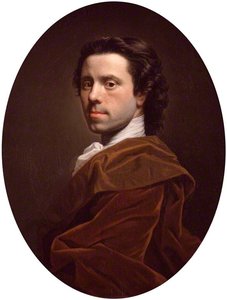
앨런 램지
1713 - 1784 , 영국
작가 정보 요약
- 국적: 스코틀랜드
- 사망일: 1784년
- 영향을 준 예술가:
- 한스 히싱
- 프란체스코 솔리메나
- 예술 사조: 로코코, 신고전주의
- 이름: 앨런 램지
- 주요 작품:
- 샬럿 여왕 초상화
- 메리 데그 부인 초상화
- 던컨 포브스 초상화
- 출생일: 1713년 10월 13일
- 출생지: 스코틀랜드 에든버러
관련 기사

Allen Ramsay: Portraiture, Patronage & Shaping Georgian Identity
Explore the life & work of Allen Ramsay, pivotal portraitist to George III. Discover his Rococo style, influence on Georgian society, and lasting legacy in British art history. Learn about his key works & patronage.

조르주 브라크의 걸작 25선: 예술과 공간을 초월하는 시선 | OriginalUniqueArt
조르주 브라크의 시대를 초월한 25개의 걸작을 만나보세요. 입체주의를 개척한 프랑스 화가의 예술 세계와 숨겨진 이야기를 OriginalUniqueArt에서 감상하고, 명작 유화 복제본으로 공간에 특별함을 더하세요. 지금 바로 컬렉션을 탐험하세요!

Neoclassical Portraiture: The Timeless Elegance of Order, Grace, and Academic Mastery
Explore the refined world of Neoclassical portraiture. Discover the mastery of line, light, and order through an expert exploration of academic art history, from Jacques-Louis David to Jean-Antoine Houdon. Immerse yourself in the timeless elegance of classical realism.

조르주 쇠라 대표작 25선: 빛과 색의 혁신, 당신의 공간에 예술을 더하세요
조르주 쇠라의 대표작 25선을 만나보세요. 점묘법의 혁신과 빛, 색채의 아름다움이 담긴 명작들을 감상하고, 인테리어에 예술적인 영감을 더하세요. OriginalUniqueArt.com에서 고품질 미술 작품을 컬렉션해보세요.

Majesty on Canvas: A Definitive Guide to Iconic Royal Portraits Through Art History
Explore the profound history of royal portraiture. From Baroque grandeur to Victorian elegance, discover how master artists captured power and lineage on canvas through the timeless medium of oil painting.