
 실제 크기로 보기
 보내기
보내기 공유하기
공유하기
 상세 보기
상세 보기 가이드 보기

 이미지 다운로드
 유사 작품 더 보기
 X-레이
X-레이 슬라이드 쇼 보기
 Q&A
Q&A 통계 정보
통계 정보Two Quinces

- 41.0 x 51.0 cm


 상세 보기
상세 보기
이 페이지에 표시된 작품은 저작권법의 보호를 받으며, 이에 따라 동일한 복제품을 제작하거나 판매하는 것은 법으로 금지되어 있습니다. 이러한 권리 보호는 다음과 같은 국제 협약에 따라 시행됩니다. 베른 협약 또한 다음에서 명시하는 법률을 포함한 국내법에 의해 보호됩니다. 미국 저작권법 제17조.
이 방식은 저작권 보호를 받는 예술 작품을 복제하거나 그대로 재현하는 것이 아니기에 저작권 규정을 완벽히 준수합니다. 대신, 이는 창의적인 재해석의 과정을 거칩니다. 즉, 원작에서 영감을 받되 원작과 동일하지 않은 새로운 회화 작품을 의미합니다.
지클레 / 아트 프린트
빠른 제작과 다양한 마감 옵션을 선택할 수 있는 박물관 수준의 지클레이 및 캔버스 프린트. ( 수작업 채색 복제본 주문하기 디지털 이미지 판매 채널로 전환)




P118B ₩10

P118H ₩10

P118W ₩10

P438Z ₩10

P508JH ₩12

P508YH ₩12

P805H ₩10

P805Z ₩10

P919BZ ₩10

P919G ₩10

P919XJ ₩10

P959ZH ₩10

P968JZ ₩12

W106C ₩8

W218G ₩10

W218JH ₩8

W218Y ₩10

W307PJ ₩10

W316G ₩10

W316PJ ₩8

W316Y ₩10

W398PJ ₩8

W4111J ₩10

W500HY ₩15

W500JH ₩15

W692G ₩12

W849H ₩8

W940BG ₩15

W953PJ ₩8




작품의 원본 비율을 그대로 유지하는 프리셋 사이즈 중에서 선택해 보세요.

액자나 벽면 크기에 맞춰 필요한 가로와 세로 길이를 입력해 주세요. 프린트는 원본 이미지보다 크게 제작할 수 없으며 오직 자르는 것만 가능하므로, 비율이 다른 사이즈를 선택할 경우 이미지의 일부가 잘려 나갈 수 있습니다. 인쇄 작업에 들어가기 전, 최종 확인을 위해 디지털 목업을 보내드립니다. 이 페이지에 표시된 이미지는 실제 잘리는 영역을 나타내지 않으며, 오직 목업을 통해서만 정확한 확인이 가능합니다.


 유리 옵션은 110cm 미만 크기에서만 선택 가능합니다.

Two Quinces
지클레 / 아트 프린트
복제본 규격
-


총 결제 금액
₩ 107587
A Study in Simplicity: The Quiet Radiance of Two Quinces
In the vast landscape of late twentieth-century Lithuanian art, few works capture the profound beauty of the mundane as intimately as Algimantas Švėgžda’s Two Quinces. Created in 1991, a period of immense transition and reflection, this still life serves as a masterclass in minimalist observation. At first glance, the composition appears deceptively simple: two ripe fruits resting against an ethereal, neutral backdrop. Yet, beneath this surface lies a sophisticated dialogue between light, form, and color. Švėgžda invites the viewer into a meditative space where the distractions of the modern world fall away, leaving only the tactile presence of nature’s bounty.
The technique employed in this piece reflects the artist's unique ability to blend elements of Pop Art clarity with a delicate, almost pointillist sensitivity. The vibrant, warm hues of the quinces—ranging from deep golds to soft ochres—create a striking visual tension against the stark, clean white background. This deliberate use of negative space is not merely an absence of subject, but a structural element that pushes the fruit forward, making the textures feel almost palpable. One can almost sense the weight and the slightly textured skin of the fruit, a testament to Švėgžda’s mastery over light and shadow.
Symbolism and the Essence of Existence
Beyond its aesthetic appeal, Two Quinces carries a deeper emotional resonance rooted in the artist's biography. Growing up in Kelmė, shaped by a father who understood the theatricality of scenery and a mother who valued the precision of teaching, Švėgžda developed an eye for the essential. The quince, often a symbol of fertility, longevity, and the sweetness of life, acts here as a vessel for memory and permanence. In a world characterized by rapid socio-political change, this painting offers a sanctuary of stillness. The placement of the two fruits—one slightly elevated above the other—creates a subtle rhythmic movement that guides the eye in a gentle loop, mirroring the cyclical nature of life and the seasons.
For the discerning collector or interior designer, this artwork represents more than just a decorative element; it is an anchor of tranquility. The painting’s ability to harmonize with diverse environments makes it a versatile choice for modern, minimalist, or classical interiors alike. Whether placed in a sun-drenched breakfast nook or a sophisticated gallery-style living room, the piece brings a sense of organic warmth and intellectual depth. It serves as a reminder that true elegance is often found in the most understated moments, making this reproduction an exquisite investment for those who seek to surround themselves with art that speaks of quiet strength and timeless beauty.
질의응답
Algimantas Svegzda은(는) 몇 세에 "Two Quinces"을(를) 제작했을까요?
Algimantas Svegzda은(는) 1991년에 "Two Quinces"을(를) 제작했을 당시 50세였습니다. 이 나이는 작가의 출생 연도인 1941을(를) 기준으로 계산되었습니다.
Algimantas Svegzda의 다른 이름이나 별칭에는 무엇이 있나요?
Algimantas Svegzda은(는) Algimantas Švėgžda, A. Švėgžda(으)로도 알려져 있습니다.
Algimantas Svegzda의 "Two Quinces"을(를) 홈 데코에 어떻게 활용할 수 있을까요?
Algimantas Svegzda의 "Two Quinces"은(는) Neutral(을)를 위해 추천되며, Dining Room에 배치하기에 가장 이상적입니다. 용도와 공간 정보를 함께 참고하여 작품의 위치를 결정해 보세요.
작가 소개
A Life Rooted in Lithuanian Soil: The Art of Algimantas Švėgžda
Algimantas Švėgžda, born in 1941 in the small town of Kelmė, Lithuania, emerged as a significant figure in the landscape of post-war Lithuanian art. His life and work were deeply intertwined with the socio-political currents of his time, evolving from early explorations influenced by Western European movements to a uniquely personal expression rooted in minimalist observation and a profound connection to nature. Švėgžda’s journey wasn't one of immediate acclaim but rather a gradual unfolding of artistic vision, marked by periods of experimentation, teaching, and ultimately, a quiet dedication to capturing the essence of existence through his art. His mother’s profession as a teacher instilled in him a value for learning and observation, while his father, a scenic designer, sparked an early appreciation for visual aesthetics. These formative influences laid the groundwork for a career that would span painting, graphic arts, and drawing, all unified by a distinctive sensibility.Early Influences and Artistic Development
Švėgžda’s formal artistic training began at the Lithuanian State Institute of Art in Vilnius from 1961 to 1967, where he studied under Antanas Gudaitis and Vladas Karatajus. This period was crucial in shaping his technical skills and introducing him to a broader range of artistic possibilities. However, it was during the 1970s that Švėgžda truly began to find his voice, becoming associated with an informal group known as “Ketverti” – alongside artists D. Dereškevičius, A. Kuras, and A. Šaltenis. This collective challenged the established norms of Lithuanian art, pushing boundaries and experimenting with new forms of expression. He was also among the first to embrace photographic realism in Lithuania, a technique that demanded meticulous attention to detail and a keen eye for capturing objective reality. His early work reflected the impact of Pop Art and Pointillism, movements that were gaining prominence internationally, but Švėgžda never simply replicated these styles; he adapted them, infusing them with his own unique perspective and a distinctly Lithuanian sensibility.A Shift Towards Minimalism and Nature
The 1980s marked a turning point in Švėgžda’s artistic trajectory. Due to health concerns, he relocated to Berlin, Germany, a move that profoundly influenced his work. While maintaining strong ties with Lithuania through frequent returns and cultural exchanges, his time in Germany led him towards a more minimalist aesthetic. He increasingly focused on natural forms – trees, branches, leaves, berries – rendered with painstaking detail and an almost meditative quality. This wasn’t merely representation; it was an attempt to understand the underlying structure of life itself. His drawings, often executed in colored pencil, became particularly significant during this period, serving as a means of both observation and contemplation. He saw plants and humans as interconnected, sharing experiences of growth, maturity, and aging. This pantheistic worldview permeated his art, imbuing it with a sense of transcendence.Teaching and Legacy
Beyond his own artistic practice, Švėgžda dedicated himself to education, teaching drawing at the Lithuanian State Institute of Art from 1978 to 1981. He later influenced generations of artists as a professor at the Vilnius Academy of Fine Arts. His impact extended beyond the classroom; he also worked with young students at the Vilnius Children's Art School (now the J. Vienožinskis Art School). Švėgžda’s generosity and dedication to fostering artistic talent left an indelible mark on the Lithuanian art community. Upon his death in 1996, he bequeathed his entire creative legacy to Lithuanian museums and the Academy, ensuring that his work would continue to inspire future generations.Historical Significance and Enduring Appeal
Algimantas Švėgžda’s historical significance lies in his ability to navigate complex artistic currents while remaining true to his own vision. He bridged the gap between Western European influences and a distinctly Lithuanian aesthetic, challenging conventional norms and paving the way for new forms of expression. His work is characterized by its meticulous detail, minimalist sensibility, and profound connection to nature. His drawings, in particular, stand as testaments to his unwavering dedication to observation and contemplation. Today, Švėgžda’s art continues to resonate with audiences, offering a quiet yet powerful reflection on the beauty and fragility of life. He is remembered not only as a skilled artist but also as a dedicated teacher and a generous mentor who helped shape the landscape of contemporary Lithuanian art. His paintings offer more than just visual representations; they invite viewers to slow down, observe closely, and connect with the natural world on a deeper level.
Algimantas Svegzda
1941 - 1996 , Lithuania
작가 정보 요약
- Full Name: Algimantas Švėgžda
- Nationality: Lithuanian
- Date Of Birth: 1941
- Date Of Death: 1996
- Place Of Birth: Kelmė, Lithuania
- Artistic Movement Or Style: Pop Art, Minimalism
관련 기사
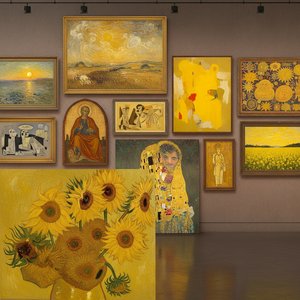
Golden Hues: 10 Masterpieces Dominated by Chrome Yellow | OriginalUniqueArt
Immerse yourself in golden light! Explore 10 famous paintings dominated by 'Chrome Yellow', from Van Gogh’s Sunflowers to Monet's Haystacks. Discover the stories behind these iconic Impressionist & Post-Impressionist masterpieces and find museum-quality art reproductions at OriginalUniqueArt.com.

White on Canvas: 10 Masterpieces & Timeless Elegance for Your Home Decor
Explore 10 iconic white paintings by Monet, Whistler & Rothko! Discover the stories behind these serene masterpieces and their impact on art history. Find museum-quality reproductions for your home decor at .
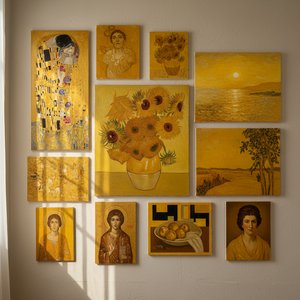
Golden Hues: Top 10 Paintings Dominated by Yellow Ochre |
Explore 10 iconic paintings bathed in golden yellow ochre! From Van Gogh's sunflowers to Monet’s haystacks, discover the stories behind these masterpieces. Find museum-quality art reproductions & elevate your home decor on .

The Bountiful Still Life: Symbolism & Artistic Representation of Fruit Across Art History
Explore the rich history of still life painting & the symbolism of fruit across art movements. Discover masterpieces from Caravaggio to Cézanne with OriginalUniqueArt – expert guidance & museum-quality reproductions.

폴 세잔 명작 25선: 시대를 초월하는 예술과 공간의 미학 | OriginalUniqueArt
폴 세잔의 시대를 초월하는 명작 25점을 만나보세요. 인상주의를 넘어 후기 인상주의를 개척한 화가의 예술 세계와 정물화, 풍경화 속 숨겨진 이야기를 OriginalUniqueArt에서 감상하세요. 고품질 아트 프린트와 캔버스 액자로 공간에 예술을 더해보세요! 지금 바로 컬렉션을 탐험하세요.