실제 크기로 보기
 보내기
보내기 공유하기
공유하기
 상세 보기
상세 보기 가이드 보기

 이미지 다운로드
 유사 작품 더 보기
 X-레이
X-레이 슬라이드 쇼 보기
 통계 정보
통계 정보Ecce Homo (No. 8)
 Engraving
- WallArt
- Northern Renaissance
 1512
1512 117.0 x 75.0 cm
 University Art Museum
 상세 보기
상세 보기
핸드메이드 유화 복제화
작가가 직접 캔버스에 손으로 그린 유화 작품으로, 원하는 크기와 액자로 맞춤 제작해 드립니다. ( 프린트 판매로 전환 디지털 이미지 판매 채널로 전환)




P118B ₩10

P118H ₩10

P118W ₩10

P438Z ₩10

P508JH ₩12

P508YH ₩12

P805H ₩10

P805Z ₩10

P919BZ ₩10

P919G ₩10

P919XJ ₩10

P959ZH ₩10

P968JZ ₩12

W106C ₩8

W218G ₩10

W218JH ₩8

W218Y ₩10

W307PJ ₩10

W316G ₩10

W316PJ ₩8

W316Y ₩10

W398PJ ₩8

W4111J ₩10

W500HY ₩15

W500JH ₩15

W692G ₩12

W849H ₩8

W940BG ₩15

W953PJ ₩8




작품의 원본 비율을 그대로 유지하는 프리셋 사이즈 중에서 선택해 보세요.

액자나 벽면 크기에 맞춰 필요한 가로와 세로 길이를 입력해 주세요. 본 작품은 수작업으로 제작되므로, 요청하신 비율에 따라 작가가 그림의 가장자리를 조금 더 넓게 그리거나 일부를 조정하여 작업할 수 있습니다. 작업 시작 전, 최종 확인을 위해 디지털 목업 이미지를 보내드립니다. 이 페이지에 표시된 이미지는 실제 결과물과 다를 수 있으며, 오직 목업 이미지만이 정확한 결과물을 보여줍니다.
주문 완료 후 OriginalUniqueArt.com 팀에서 상세 안내를 위해 고객님께 이메일을 보내드리며, 미리보기 시안을 함께 제공해 드립니다.


 유리 옵션은 110cm 미만 크기에서만 선택 가능합니다.

Ecce Homo (No. 8)
재현 매체
복제본 규격
-


총 결제 금액
₩ 610671
A Moment of Contemplation: Unveiling Dürer’s “Ecce Homo”
Albrecht Dürer's "Ecce Homo" (No. 8), a meticulously rendered engraving from 1512, transcends the boundaries of mere religious illustration to become a profound meditation on humanity and suffering. More than simply depicting a biblical scene – the presentation of Christ to the people by Pontius Pilate – it’s an intensely personal statement from one of the Renaissance's most astute observers of human nature. The work, now housed in a high-quality reproduction, invites viewers into a world of stark contrasts, intricate detail, and quietly powerful emotion.
Dürer’s choice to focus on this specific moment within the Passion narrative is significant. It's not the dramatic crucifixion or the scourging that dominates the image, but rather the immediate aftermath – the hesitant curiosity, the veiled judgment, and the palpable tension between Christ and the assembled crowd. The composition itself is carefully orchestrated: Christ, presented as “Behold the Man,” stands elevated on a simple pedestal, drawing the eye immediately to his face—a portrait of serene dignity amidst evident pain. Around him swirl figures representing the populace of Jerusalem, their expressions ranging from bewildered acceptance to skeptical questioning. This arrangement isn’t merely decorative; it's a deliberate exploration of human response to divinity and authority.
The Language of Line: Technique and Craftsmanship
Dürer’s mastery lies in his unparalleled control of the engraving process. The image is built entirely from lines – fine, precise, and meticulously varied in density—a testament to his dedication and technical skill. He employs a technique known as cross-hatching, layering intersecting lines to create an astonishing range of tonal values, mimicking the subtle gradations of charcoal or pencil. This isn’t simply about rendering form; it's about capturing atmosphere and emotion through the manipulation of light and shadow. The textures are remarkably convincing – the rough weave of Christ’s hair, the folds of his garment, even the weathered stone of the pedestal—all achieved with a seemingly effortless hand.
- Linear Perspective: Dürer utilizes linear perspective to create a sense of depth and space, drawing the viewer's eye into the scene.
- Cross-Hatching: The extensive use of cross-hatching builds up tonal values and adds incredible detail and texture.
- Monochrome Palette: The absence of color forces the viewer to focus on form, value, and line, intensifying the emotional impact.
Symbolism and Emotional Resonance
Beyond its technical brilliance, “Ecce Homo” is rich in symbolic meaning. The thorns crowning Christ’s head are a potent reminder of his suffering and sacrifice, while the simple cross he holds represents both his earthly death and his promise of redemption. The faces of the onlookers—a mixture of curiosity, doubt, and even hostility—reflect the complex human response to faith and authority. Dürer doesn't offer easy answers or simplistic judgments; instead, he presents a nuanced portrait of humanity grappling with profound questions.
The engraving’s enduring power lies in its ability to evoke empathy and contemplation. It is not a celebratory depiction of Christ’s divinity, but rather a poignant observation of the human condition—a reminder of our shared vulnerability, our capacity for both compassion and cruelty, and our ongoing search for meaning in a world often marked by suffering.
A Legacy of Precision: Reproduction and Display
Reproductions of “Ecce Homo” offer an exceptional opportunity to experience Dürer’s genius firsthand. The meticulous detail and tonal range are faithfully captured, allowing viewers to appreciate the depth and complexity of this iconic work. When displayed in a home or gallery setting, it serves as a powerful reminder of the enduring legacy of the Northern Renaissance—a period defined by its artistic innovation, intellectual rigor, and profound engagement with the human spirit.
질의응답
알브레히트 뒤러의 "Ecce Homo (No. 8)"은(는) 퍼블릭 도메인에 속하나요? 그 이유는 무엇인가요?
알브레히트 뒤러의 "Ecce Homo (No. 8)"은(는) 퍼블릭 도메인 - 저작권 보호 기간이 만료되었습니다 상태입니다. 저작권 보호 기간은 작가가 사망한 1528년부터 기산됩니다.
알브레히트 뒤러의 "Ecce Homo (No. 8)"은 어떤 사조와 시대에 속하나요?
알브레히트 뒤러의 "Ecce Homo (No. 8)"에서는 Northern Renaissance 사조와 르네상스 시대가 만납니다.
"Ecce Homo (No. 8)"은(는) 알브레히트 뒤러의 반복되는 주제들 사이에서 어떤 위치를 차지하고 있나요?
"Ecce Homo (No. 8)"은(는) religious scene, christ, pilate, crowning thorns, suffering, sacrifice, renaissance, albrecht dürer을(를) 묘사하고 있는 반면, 알브레히트 뒤러의 기존 주제들은 northern renaissance, classical motifs, religious iconography, christian themes, pilate’s judgment, human suffering, dürer's mastery, engraving technique입니다. 이 두 가지를 비교해 보면 해당 작품이 작가의 통상적인 소재와 어떻게 연관되는지 알 수 있습니다.
작가 소개
뉘른베르크에서 피어난 천재: 알브레히트 뒤러의 삶과 예술
알브레히트 뒤러는 15세기 독일 르네상스를 대표하는 거장으로, 그의 이름은 오늘날까지도 뛰어난 예술적 재능과 혁신적인 정신을 상징합니다. 1471년 독일 뉘른베르크에서 금세공인 아버지와 어머니 사이에서 태어난 뒤러는 어린 시절부터 그림에 천부적인 재능을 보였습니다. 그의 아버지는 처음에는 뒤러가 가업을 이어갈 것이라고 생각했지만, 곧 아들의 예술적 열정을 인정하고 그를 뉘른베르크의 대표적인 화가였던 미하엘 볼게무트에게 보내기로 결정합니다. 볼게무트의 작업실에서 뒤러는 목판화 제작 기술과 디자인 원리를 익히며, 그의 예술적 기반을 다졌습니다. 특히 볼게무트는 *뉘른베르크 만년기* 삽화를 제작하는 데 참여하며, 방대한 양의 작품을 통해 뒤러는 구성력과 표현력을 키웠습니다. 1484년에 그린 은봉 점묘 자화상은 그의 어린 시절 재능을 보여주는 놀라운 증거이며, 예술가로서의 정체성이 이미 형성되고 있음을 암시합니다.이탈리아 여행과 예술적 성숙
뒤러는 자신의 예술적 지평을 넓히고 회화 기법을 연마하기 위해 1494년 이탈리아로 첫 번째 여정을 떠납니다. 이는 단순한 관광 여행이 아닌, 르네상스 심장부로 향하는 예술적 순례였습니다. 라파엘로, 조반니 벨리니, 레오나르도 다 빈치와 같은 거장들의 작품을 직접 접하며 뒤러는 고전적인 모티프, 조화로운 구도, 그리고 인간 표현의 새로운 가능성을 탐구했습니다. 이탈리아 경험은 그의 예술에 깊은 영향을 미쳤습니다. 그는 이탈리아 화가들이 보여준 균형미와 이상화를 받아들였지만, 동시에 북유럽 미술 특유의 섬세한 묘사와 상징적인 깊이를 잃지 않았습니다. 1505년부터 1507년까지 이탈리아에서 보낸 두 번째 여정은 고대 로마 유적을 탐구하고 인체 해부학에 대한 이해를 심화시키는 계기가 되었습니다. 이러한 경험들은 뒤러의 독특한 예술 스타일을 완성하는 데 결정적인 역할을 했습니다.다재다능함: 회화, 판화, 목판화
뒤러는 회화뿐만 아니라 판화, 목판화 등 다양한 매체를 능숙하게 다루며 예술적 역량을 발휘했습니다. 그의 유화 작품들은 기름 물감의 섬세한 표현과 인물에 대한 깊이 있는 통찰력을 보여줍니다. 특히 베네치아 화풍의 영향을 받은 *장미 축제 연회*는 생동감 넘치는 색채와 풍부한 디테일로 르네상스 시대 회화의 정수를 보여줍니다. 그러나 뒤러를 진정으로 특별하게 만드는 것은 판화, 특히 동판화와 목판화에 대한 그의 탁월한 능력이었습니다. 그는 판화를 단순한 복제 기술이 아닌 독립적인 예술 형태로 끌어올렸으며, 복잡한 이야기와 깊은 감정을 전달하는 데 활용했습니다. *요한계시록* 연작(1498)은 목판화의 한계를 극복하고 웅장한 비전을 표현해낸 걸작입니다. 1514년에 제작된 *메랑콜리아 I*과 *성 제롬의 연구실*은 그의 동판화 기술을 극한으로 끌어올린 작품으로, 상징적인 의미와 숨 막힐 듯한 정밀함이 어우러져 있습니다.이론가이자 혁신가: 알브레히트 뒤러의 유산
뒤러는 예술가로서의 재능뿐만 아니라 학자, 이론가, 그리고 혁신가로서도 두각을 나타냈습니다. 그는 예술 창작의 근본 원리를 이해하고자 노력하며, 수학적 원리에 기반한 예술 접근 방식을 추구했습니다. *인간 비례에 관한 네 권의 책* (1528)과 같은 저술은 인체 해부학, 기하학, 그리고 군사 공학 분야에 대한 그의 깊이 있는 지식을 보여줍니다. 이러한 저술들은 예술가들을 단순한 장인이 아닌 지적 실천자로 격상시키는 데 기여했습니다. 뒤러의 유산은 시대를 초월하여 수많은 예술가와 학자들에게 영감을 주고 있습니다. 그는 북유럽 미술 전통과 이탈리아 르네상스 이상을 융합하며, 새로운 예술적 가능성을 열었습니다. 그의 기술적인 숙달, 혁신적인 정신, 그리고 깊이 있는 비전은 오늘날까지도 서양 미술사의 중요한 부분을 차지하고 있습니다. 그의 작품은 관찰력, 지식 추구, 그리고 아름다움과 의미를 창조하려는 인간의 끊임없는 열망을 증명하는 증거입니다.영향과 지속적인 영향
- 미하엘 볼게무트: 뒤러에게 기본적인 그림 및 목판화 기술을 가르쳐준 스승.
- 레오나르도 다 빈치: 해부학, 원근법, 그리고 스푸마토 기법에 대한 탐구를 자극했습니다.
- 라파엘로: 조화로운 구도와 이상적인 형태에 영향을 미쳤습니다.
- 조반니 벨리니: 색채와 베네치아 회화 전통에 대한 이해를 높였습니다.
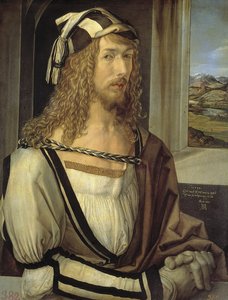
알브레히트 뒤러
1471 - 1528 , 이탈리아
작가 정보 요약
- 국적: 독일인
- 대표작:
- 묵시록 연쇄
- 멜랑콜리아 I
- 성 예로니모
- 사망일: 1528년 4월 6일
- 출생일: 1471년 5월 21일
- 출생지: 뉘른베르크, 독일
관련 기사

Albrecht Dürer: A Renaissance Master's Legacy of Innovation and Self-Portraiture
Explore the life & art of Albrecht Dürer, a pivotal German Renaissance master. Discover his groundbreaking printmaking techniques, iconic self-portraits, and lasting influence on Western art history. A deep dive into innovation & symbolism.
Engraving's Golden Age: 10 Masterpieces That Redefined Art | OriginalUniqueArt
Journey through art history with our Top 10 Legendary Engravings! Explore masterpieces by Dürer, Rembrandt & Goya. Discover the stories behind these iconic prints and find museum-quality reproductions for your home at OriginalUniqueArt.com.
런던 대영박물관의 걸작 25선: 역사와 예술이 만나는 특별한 여정
런던 대영박물관의 숨겨진 이야기 25가지! 로제타석부터 파르테논 신전 조각까지, 역사와 예술이 살아 숨 쉬는 명작들을 만나보세요. 렘브란트, 반 고흐 등 거장들의 작품을 OriginalUniqueArt.com에서 감상하고 특별한 인테리어를 완성하세요.

Engraving: A Historical Survey of Technique, Artistic Expression & Enduring Legacy
Explore the rich history of engraving with OriginalUniqueArt. Discover techniques, iconic artists like Dürer & Callot, collecting tips, and expert guidance for preserving your art investment. Learn about intaglio printing & more!
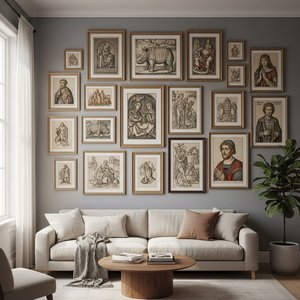
Albrecht Dürer's Masterpieces: 25 Iconic Artworks for Your Home | OriginalUniqueArt
Explore 25 iconic artworks by Albrecht Dürer, a master of the German Renaissance. Discover the stories behind Melencolia I, Knight Death and Devil & more. Find museum-quality art reproductions for your home at OriginalUniqueArt.com.