

 실제 크기로 보기
 보내기
보내기 공유하기
공유하기
 상세 보기
상세 보기 가이드 보기

 이미지 다운로드
 유사 작품 더 보기
 X-레이
X-레이 슬라이드 쇼 보기
 통계 정보
통계 정보Valve Trombone


 상세 보기
상세 보기
핸드메이드 유화 복제화
작가가 직접 캔버스에 손으로 그린 유화 작품으로, 원하는 크기와 액자로 맞춤 제작해 드립니다. ( 프린트 판매로 전환 디지털 이미지 판매 채널로 전환)




P118B $10

P118H $10

P118W $10

P438Z $10

P508JH $12

P508YH $12

P805H $10

P805Z $10

P919BZ $10

P919G $10

P919XJ $10

P959ZH $10

P968JZ $12

W106C $8

W218G $10

W218JH $8

W218Y $10

W307PJ $10

W316G $10

W316PJ $8

W316Y $10

W398PJ $8

W4111J $10

W500HY $15

W500JH $15

W692G $12

W849H $8

W940BG $15

W953PJ $8




작품의 원본 비율을 그대로 유지하는 프리셋 사이즈 중에서 선택해 보세요.

특정 프레임이나 공간에 맞춰 원하는 크기를 직접 입력하실 수 있습니다. 선택하신 크기가 원본 이미지의 비율과 일치하지 않을 경우, 작품을 자르거나 추가적인 수작업 요소를 더해 그림을 확장하여 제작합니다. 제작 시작 전, 최종 확인을 위해 디지털 목업을 보내드립니다.
화면상의 미리 보기는 실제 크롭(자르기)이나 확장된 상태를 완벽히 반영하지 않을 수 있습니다. 최종 구도는 오직 목업을 통해서만 정확하게 확인하실 수 있습니다.
맞춤 크기 제작도 가능하지만, 원본의 비율을 그대로 유지하기 위해서는 미리 정의된 목록에서 크기를 선택하시는 것을 권장합니다.
주문 완료 후 OriginalUniqueArt.com 팀에서 상세 안내를 위해 고객님께 이메일을 보내드리며, 미리보기 시안을 함께 제공해 드립니다.


 유리 옵션은 110cm 미만 크기에서만 선택 가능합니다.

Valve Trombone
재현 매체
복제본 규격
-


총 결제 금액
$ 300
작가 소개
A Legacy Forged in Sound: The Life and Innovations of Adolphe Sax
Antoine-Joseph ‘Adolphe’ Sax, born in Dinant, Belgium, on November 6, 1814, was more than just an inventor; he was a sonic architect who reshaped the landscape of musical expression. His name is inextricably linked to the saxophone, yet to define him solely by this iconic instrument would be to overlook a lifetime dedicated to refining and expanding the possibilities of brass and woodwind instruments. Sax’s journey was one driven by a relentless pursuit of tonal perfection, fueled by both artistic vision and a deep understanding of acoustics and mechanics. From his earliest days immersed in his father's workshop, surrounded by the scent of wood shavings and the gleam of polished brass, Adolphe displayed an innate curiosity and a remarkable aptitude for instrument making. His childhood was marked not only by this creative environment but also by a series of near-fatal accidents – tales that earned him the nickname “little Sax, the ghost” – perhaps imbuing his life with a sense of urgency and purpose. This formative period instilled in him a profound respect for craftsmanship and an unwavering determination to overcome obstacles, qualities that would define his career.Bridging Worlds: The Genesis of the Saxophone and Beyond
Sax’s ambition wasn't merely to create new instruments but to address perceived deficiencies in existing ones. He envisioned a sound world where the brilliance of brass could be seamlessly blended with the warmth and expressiveness of woodwinds – a tonal bridge that had long eluded instrument makers. This vision culminated in the invention of the saxophone, patented in 1846. It was not born from pure inspiration but from meticulous experimentation and a deep understanding of acoustic principles. The saxophone’s single-reed mouthpiece, conical bore, and brass construction combined to produce a uniquely versatile sound capable of both powerful projection and delicate nuance. However, the saxophone was just one facet of Sax's prolific inventiveness. He didn’t rest on this singular achievement; instead, he embarked on a relentless campaign of innovation, designing or significantly redesigning a remarkable array of instruments. The saxhorn, a family of valved brass instruments designed for greater versatility in military bands, emerged as another significant contribution. He also developed the saxtuba, a hybrid instrument blending features of both tuba and saxophone, and made substantial improvements to the bass clarinet, creating a model that remains widely used today. His work extended to valved trumpets – including versions with six independent valves aimed at enhancing chromatic capabilities – and even a pioneering six-valve trombone, showcasing his commitment to improving intonation and expanding instrumental range.Challenges and Triumphs: Navigating the 19th-Century Musical Landscape
Despite his groundbreaking innovations, Sax faced considerable resistance from established instrument manufacturers and conservative musical circles. His patents were frequently challenged, and his designs often copied without proper compensation. This period was marked by protracted legal battles and financial struggles, testing his resilience and determination. The burgeoning Romantic era, with its demand for richer orchestral textures and more expressive instrumental capabilities, provided a fertile ground for Sax’s inventions, yet acceptance wasn't immediate. He tirelessly promoted his instruments through performances with orchestras and military bands, demonstrating their unique sonic qualities firsthand. His association with composers like Hector Berlioz – who championed the saxophone in his compositions – proved crucial in gaining recognition. Berlioz recognized the instrument’s potential and incorporated it into several of his works, helping to establish its place within the orchestral palette. However, even with such endorsements, Sax continued to grapple with skepticism and competition throughout much of his career.A Lasting Resonance: Adolphe Sax's Enduring Legacy
Adolphe Sax died in Paris on February 7, 1894, leaving behind a legacy that continues to resonate profoundly within the world of music. While he may not have achieved widespread fame or fortune during his lifetime, his inventions irrevocably altered the course of musical history. The saxophone quickly gained popularity in military bands and Parisian dance halls, eventually finding its way into classical compositions by composers like Berlioz, Verdi, and Debussy. However, it was in the realm of jazz that the saxophone truly found its voice, becoming an indispensable instrument in this uniquely American art form. From the pioneering improvisations of Sidney Bechet to the virtuosic performances of Charlie Parker and John Coltrane, the saxophone has been central to the evolution of jazz music. Beyond the saxophone’s iconic status, Sax's other innovations significantly advanced brass instrument design, contributing to the evolution of orchestral sound and providing musicians with a wider range of tonal possibilities. He remains a pivotal figure in the history of musical instruments, a true pioneer whose vision continues to inspire generations of musicians and instrument makers alike. His story is a testament to the power of innovation, perseverance, and an unwavering commitment to artistic expression.
Adolphe Sax
1814 - 1894 , Belgium
작가 정보 요약
- Artistic Movement Or Style: Instrument Design
- Artists Or Movements Influenced By This Artist:
- Berlioz
- Verdi
- Debussy
- Jazz music
- Date Of Birth: November 6, 1814
- Date Of Death: February 7, 1894
- Full Name: Antoine-Joseph 'Adolphe' Sax
- Nationality: Belgian-French
- Notable Artworks:
- Saxophone
- Saxhorn
- Saxtuba
- Valved Trumpet
- Six-Valve Trombone
- Place Of Birth: Dinan, Belgium
관련 기사
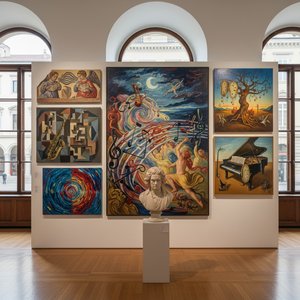
Harmonies on Canvas: Exploring the Visual Representation of Music in Art History
Explore the fascinating history of music's visual representation in art! From ancient symbolism to modern abstraction, discover how artists have captured sound and emotion on canvas. Expert insights & stunning examples.

Adolph von Menzel: Realism, Prussian Society & the Painterly Chronicle of a Changing Era
Explore the life & work of Adolph von Menzel, a leading German Realist painter. Discover his detailed depictions of Prussian society, innovative techniques, and lasting influence on art history. Hand-painted reproductions available at OriginalUniqueArt.

The Symphony of Canvas: Capturing the Timeless Resonance of Musical Instruments in Fine Art Masterpieces
Explore the profound connection between music and fine art. From ancient iconography to Impressionist masterpieces, discover how legendary instruments are captured on canvas with unparalleled artistry and historical depth for the discerning collector.