

 실제 크기로 보기
 보내기
보내기 공유하기
공유하기
 상세 보기
상세 보기 가이드 보기

 이미지 다운로드
 유사 작품 더 보기
 X-레이
X-레이 슬라이드 쇼 보기
 통계 정보
통계 정보Collage
 Collage
- WallArt
- Geometric Abstraction
 1938
1938 38.0 x 28.0 cm
 휘트니 미술관
 상세 보기
상세 보기
이 페이지에 표시된 작품은 저작권법의 보호를 받으며, 이에 따라 동일한 복제품을 제작하거나 판매하는 것은 법으로 금지되어 있습니다. 이러한 권리 보호는 다음과 같은 국제 협약에 따라 시행됩니다. 베른 협약 또한 다음에서 명시하는 법률을 포함한 국내법에 의해 보호됩니다. 미국 저작권법 제17조.
이 방식은 저작권 보호를 받는 예술 작품을 복제하거나 그대로 재현하는 것이 아니기에 저작권 규정을 완벽히 준수합니다. 대신, 이는 창의적인 재해석의 과정을 거칩니다. 즉, 원작에서 영감을 받되 원작과 동일하지 않은 새로운 회화 작품을 의미합니다.
지클레 / 아트 프린트
빠른 제작과 다양한 마감 옵션을 선택할 수 있는 박물관 수준의 지클레이 및 캔버스 프린트. ( 수작업 채색 복제본 주문하기 디지털 이미지 판매 채널로 전환)




P118B ₩10

P118H ₩10

P118W ₩10

P438Z ₩10

P508JH ₩12

P508YH ₩12

P805H ₩10

P805Z ₩10

P919BZ ₩10

P919G ₩10

P919XJ ₩10

P959ZH ₩10

P968JZ ₩12

W106C ₩8

W218G ₩10

W218JH ₩8

W218Y ₩10

W307PJ ₩10

W316G ₩10

W316PJ ₩8

W316Y ₩10

W398PJ ₩8

W4111J ₩10

W500HY ₩15

W500JH ₩15

W692G ₩12

W849H ₩8

W940BG ₩15

W953PJ ₩8




작품의 원본 비율을 그대로 유지하는 프리셋 사이즈 중에서 선택해 보세요.

액자나 벽면 크기에 맞춰 필요한 가로와 세로 길이를 입력해 주세요. 프린트는 원본 이미지보다 크게 제작할 수 없으며 오직 자르는 것만 가능하므로, 비율이 다른 사이즈를 선택할 경우 이미지의 일부가 잘려 나갈 수 있습니다. 인쇄 작업에 들어가기 전, 최종 확인을 위해 디지털 목업을 보내드립니다. 이 페이지에 표시된 이미지는 실제 잘리는 영역을 나타내지 않으며, 오직 목업을 통해서만 정확한 확인이 가능합니다.


 유리 옵션은 110cm 미만 크기에서만 선택 가능합니다.

Collage
지클레 / 아트 프린트
복제본 규격
-


총 결제 금액
₩ 108354
Ad Reinhardt’s “Collage”: A Geometric Meditation on Order and Absence
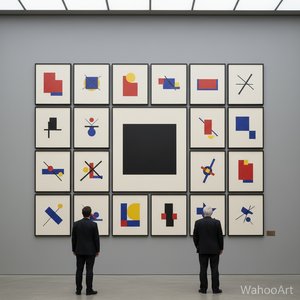
Ad Reinhardt's "Collage," executed in 1938, isn’t merely a collection of paper rectangles; it’s a carefully constructed exploration of order, structure, and the very essence of visual perception. This deceptively simple work, housed within a modest frame of 38 x 28 cm (15 x 11 inches), reveals a profound intellectual engagement with abstraction and the limitations – and possibilities – of representation. Reinhardt, a key figure in the development of American abstract art, sought to strip away all extraneous detail, leaving behind only the fundamental elements of form and color, a pursuit that deeply informed his approach to this particular piece.
The artwork’s foundation lies in its geometric rigor. Rectangular shapes – predominantly muted tones of purple, green, orange, brown, and white – are arranged against a stark black background. These forms aren't haphazardly placed; they exist within a meticulously defined grid, suggesting an underlying system of control and balance. The overlapping and intersecting lines create a dynamic interplay of spatial relationships, inviting the viewer to contemplate the artwork’s composition as a carefully orchestrated arrangement. It’s reminiscent of Suprematism or Constructivism, movements that prioritized geometric abstraction and explored the potential of non-representational forms to convey meaning.
The Language of Absence: Technique and Materiality
“Collage” is a testament to Reinhardt's deliberate technique. The artwork is constructed from precisely cut rectangular pieces of colored paper, adhered to a backing surface – likely cardstock or board – with an adhesive. There’s a remarkable lack of texture; the surfaces are smooth and flat, devoid of impasto or visible brushstrokes. This flatness isn’t simply aesthetic; it reflects Reinhardt's philosophical stance on art: he believed that painting should be “pure” – free from illusionistic representation and focused solely on its own materiality. The careful precision in cutting and arranging the shapes speaks to a methodical process, an almost meditative engagement with the materials themselves.
The choice of muted colors is equally significant. Reinhardt deliberately avoided vibrant hues, opting instead for a restrained palette that emphasizes form and structure over emotional impact. This austerity contributes to the artwork’s sense of intellectual rigor – it feels like a deliberate rejection of decorative excess, a commitment to the essential qualities of art.
Historical Context: A Response to Modernity
Created in 1938, “Collage” emerged during a period of profound social and political upheaval. Europe was grappling with the rise of fascism, while America faced the looming shadow of World War II. Reinhardt’s work can be understood as a response to this turbulent era – a search for stability and order amidst chaos. His interest in geometric abstraction mirrored a broader trend within modern art, which sought to break free from traditional representational conventions and explore new ways of expressing ideas and emotions.
Furthermore, Reinhardt’s work aligns with the broader intellectual currents of the time, particularly the debates surrounding the role of art in society. As he himself articulated, his aim was to create “art-as-art,” a category of works that were self-contained and independent of any external reference or didactic purpose. “Collage” embodies this philosophy perfectly – it’s a purely formal exercise, devoid of narrative content or symbolic meaning beyond its own visual structure.
A Quiet Resonance: Symbolism and Emotional Impact
Despite its apparent simplicity, “Collage” possesses a subtle emotional resonance. The stark contrast between the black background and the colored rectangles creates a sense of tension and dynamism. The geometric order evokes feelings of control and stability, while the muted colors suggest a quiet introspection. It’s not an artwork that demands immediate attention or provokes strong emotions; rather, it invites contemplation and rewards repeated viewing.
Ultimately, “Collage” is a powerful meditation on the nature of art – a testament to Reinhardt's belief in the power of form, structure, and material to convey meaning. It’s a work that speaks to our enduring fascination with order, balance, and the search for beauty in the simplest of forms.
질의응답
"Collage"은 어떤 기법으로 제작되었으며, 크기는 어떻게 되나요?
애드 라인하르트의 "Collage"의 기법은 Collage이며, 기록된 크기는 38 x 28 cm입니다.
"Collage" 작품은 명암 대비가 강한 편인가요?
"Collage"의 명암 대비는 Bold로 기록되었습니다. 대비는 밝은 부분과 어두운 부분의 차이가 얼마나 강한지를 나타냅니다.
애드 라인하르트의 "Collage" 작품의 경우 어떤 복제본 크기를 추천하시나요?
"Collage" 작품은 Medium 인쇄 크기를 권장합니다. 동일한 비율의 다른 사이즈로도 제작 가능합니다.
작가 소개
예술의 본질에 바친 삶
1913년 12월 24일 뉴욕 버팔로에서 아돌프 프리드리히 라인하르트(Adolph Friedrich Reinhardt)로 태어난 그는 단순히 예술을 창조하는 데 그치지 않고, 예술이란 무엇이 될 수 있는지 그 경계를 정의하는 삶을 바친 인물입니다. 그의 초기 생애는 가족의 이동과 함께 시작되었는데, 아버지의 직장 때문에 뉴욕 시로 이주하게 되었고 사촌 오토와 깊은 유대감을 나누었습니다. 어린 시절부터 라인하르트는 드로잉과 회화에 대한 비범한 재능을 보여주었고, 학교에서 받은 상들은 그 앞에 놓일 엄격한 예술적 여정을 암시하고 있었습니다. 그는 단순히 이미지를 '만드는' 것에 흥미를 느낀 것이 아니라, 시각적 표현의 근본적인 토대를 이해해야 한다는 필요성에 의해 움직였습니다. 이러한 지적 호기심은 그를 컬럼비아 대학교로 이끌었고, 그곳에서 영향력 있는 마이어 샤피로(Meyer Schapiro) 밑에서 미술사를 공부한 경험은 미학과 예술가의 역할에 대한 그의 사유방식을 깊이 형성했습니다. 이후 컬럼비아 교사 대학, 칼 홀티와 프랜시스 크리스가 있던 아메리칸 아티스트 스쿨에서의 추가 훈련, 그리고 국립 디자인 아카데미에서 칼 안더슨 밑으로 받은 초상화 연구는 그의 기술적 기량을 단단하게 다져주었지만, 역설적으로 그는 이 기술을 의도적으로 초월하려 했습니다. 라인하르트는 자신이 전통적인 기법들을 일찍이 마스터했다고 믿었고, 이는 그가 보다 개념적인 길을 추구할 자유를 주었습니다.기하학적 시작에서 '궁극의' 검은색으로
라인하르트의 예술적 진화는 결코 직선적이지 않았습니다. 그는 기하학적 추상성에 뿌리를 둔 작품들로 시작하여, 형태와 색채를 탐구하는 과정에서 자신의 기술적 숙련도를 증명해냈습니다. 하지만 이 초기 작업은 그보다 더 급진적인 무언가를 향한 디딤돌 역할을 했습니다. 1930년대 WPA 연방 미술 프로젝트에 참여했던 경험은 그에게 결정적인 지원과 노출을 제공했고, 공공 예술 활동에 기여하는 동시에 자신의 기량을 갈고닦을 수 있게 해주었습니다. 1940년대에는 자신이 발전의 핵심이라고 여긴 그룹인 아메리칸 추상 예술가(AAA)의 활발한 일원이 되었습니다. 그는 비재현적 예술에 대한 공통된 신념을 가진 동료 예술가들과 깊은 유대감을 느꼈고, 그들과 정기적으로 전시하며 회화의 미래에 대해 생동감 넘치는 토론을 벌였습니다. 베티 파슨스 갤러리와의 관계는 뉴욕 미술계라는 떠오르는 무대 위에서 그의 입지를 더욱 공고히 했습니다. 1950년대 내내, 라인하르트는 단일 색조 안의 미묘한 변화를 탐구하는 일련의 그림들을 그렸습니다—모두 빨간색, 모두 파란색, 모두 흰색으로 말입니다—이는 그의 가장 상징적인 작품들을 예고하는 의도적인 축소였습니다. 그러나 1960년대에 이르러서야 그는 많은 이들이 그의 결정적인 성취로 여기는 '검은 그림'을 완성했습니다. 이것들은 단순히 검은 캔버스가 아니었습니다. 그것들은 지각 자체에 도전하고 회화의 경계를 밀어붙이도록 고안된, 거의 검은색 음영, 미묘한 명암 변화와 질감으로 정교하게 만들어진 탐구였습니다. 그는 이를 자신의 "궁극적인" 작품이라 칭하며, 예술적 노력의 절정점—더 이상의 진전이 불가능한 지점—을 암시했습니다.예술 그 자체로서의 예술: 순수 미학주의 철학
라인하르트의 작업을 이해하는 데 있어 핵심은 바로 그의 *예술 그 자체로서의 예술(Art-as-Art)*이라는 철학입니다. 그는 예술의 자율성에 대해 맹렬히 믿었으며, 그것이 정치적, 사회적, 혹은 서사적 목적에 봉사해야 한다는 어떠한 개념도 거부했습니다. 라인하르트에게 그림의 가치는 오직 그 미학적 속성—형태, 색채, 구성, 그리고 순전히 시각적인 차원에서 관람자와 교감하는 방식—에만 존재했습니다. 이러한 신념은 그로 하여금 미술계 내에서 문제가 있다고 본 경향들, 특히 메시지를 미학보다 우선시하는 예술가들을 비판하게 만들었습니다. 그는 풍자 만화와 글쓰기를 통해 이러한 비판을 표현하며, 종종 재치와 지적 엄밀함으로 지배적인 예술적 규범에 도전했습니다. 로버트 랙스와 토마스 머튼과의 우정은, 두 사람 모두 각자의 분야에서 단순성의 주제를 탐구했기에 그의 미학적 원칙에 더욱 깊이 영향을 주었습니다. 라인하르트의 작품은 미니멀리즘과 개념 미술에 대한 커져가는 관심과 공명하며, 불필요한 요소를 걷어내고 매체의 본질적인 특성에 집중하고자 하는 예술가들에게 영감을 주었습니다. 그는 단순히 그림을 그리고 있던 것이 아니라, 예술 자체의 본질에 관한 이론적 입장을 천명하고 있었던 것입니다.지속되는 유산: 미니멀리즘, 개념주의, 그리고 그 너머
아돌프 라인하르트의 영향력은 그의 작품 세계를 훨씬 뛰어넘습니다. 그의 '검은 그림'들은 이제 미니멀리즘과 단색화에 대한 선구적인 기여로 인정받으며, 재현이라는 통념에 도전하고 시각적 지각의 경계를 넓혔습니다. *예술 그 자체로서의 예술*에 관한 그의 글들은 여전히 예술가와 비평가들 사이에서 연구되고 있으며, 사회 속 예술의 역할과 형태와 내용 간의 관계에 대한 논쟁을 불러일으키고 있습니다. 비록 그가 AAA 및 베티 파슨스 갤러리와의 연관성을 통해 추상 표현주의의 핵심 인물이었지만, 라인하르트는 궁극적으로 범주를 초월하여 후대의 개념적이고 미니멀한 예술가들에게 길을 열어주었습니다. 그는 브루클린 칼리지, 캘리포니아 미술학교, 와이오밍 대학교, 예일 대학교, 헌터 칼리지 등 수많은 기관에서 가르치며 지망하는 예술가들에게 자신의 엄격한 지적 접근 방식을 전수했습니다. 심지어 1940년대 MoMA에 대한 시위 참여, 1950년대 메트로폴리탄 미술관을 향한 '흥분한 자들(The Irascibles)'과의 활동, 그리고 1967년 베트남 전쟁 반대 예술가 및 작가들의 석판화 제작 참여까지도 예술적 자유와 사회적 책임에 대한 그의 헌신을 보여주었습니다. 아돌프 라인하르트는 1967년 8월 30일 뉴욕 시에서 세상을 떠났지만, 여전히 영감을 주고 도발하는 유산을 남겼습니다. 그의 작품은 추상 미술의 지속적인 힘과 창조성 자체에 대한 근본적인 가정에 의문을 제기하는 것의 중요성에 대한 강력한 증거로 남아 있습니다. 아돌프 라인하르트 재단은 현재 데이비드 즈비르너 갤러리에서 대변하고 있으며, 이는 그가 현대 미술계에 계속해서 존재함을 보장합니다.
애드 라인하르트
1913 - 1967 , 미국
작가 정보 요약
- Artistic Movement Or Style: 추상 표현주의, 미니멀리즘
- Artists Or Movements Influenced By This Artist:
- 개념 미술
- 미니멀리즘
- 단색화
- Artists Who Influenced This Artist:
- 마이어 샤피로
- 로버트 랙스
- 토머스 머튼
- Date Of Birth: 1913년 12월 24일
- Date Of Death: 1967년 8월 30일
- Full Name: 아돌프 프리드리히 라인하르트
- Nationality: 미국인
- Notable Artworks:
- 제목 없음
- 빨강과 회색
- 넘버 - (107)
- Place Of Birth: 미국 버팔로
관련 기사
카지미르 말레비치 최고작 25선: 추상 미술의 혁신과 영감을 만나다 | OriginalUniqueArt
카지미르 말레비치의 최고작 25선을 만나보세요. 추상 미술의 혁신적인 세계, 슈프레마티즘의 정수를 담은 작품들의 이야기와 영감을 OriginalUniqueArt에서 경험하세요. 고품질 아트 프린트와 인테리어 데코 아이디어를 지금 바로 확인하세요! OriginalUniqueArt.com

Kandinsky's Masterpieces: 25 Paintings That Define Abstract Art | OriginalUniqueArt
Journey through Wassily Kandinsky's 25 most iconic abstract paintings. Explore his revolutionary use of color, form & spiritual expressionism. Find museum-quality Kandinsky reproductions and elevate your home decor with OriginalUniqueArt.com. Discover all masterpieces on OriginalUniqueArt.com!

Beyond Form & Color: Geometric Abstraction's Evolution in 20th/21st Century Art
Explore the evolution of geometric abstraction from Cubism to contemporary art. Discover key artists like Malevich & Mondrian, investment insights, and expert collecting advice at OriginalUniqueArt.

Neo-Abstract Art: The High-Impact Evolution of Modern Visual Energy and Geometric Sophistication
Discover the power of Neo-Abstract art. Explore how bold geometric forms and high-impact visual energy are redefining modern design. Learn to curate sophisticated, high-energy spaces with the latest trends in contemporary abstraction and structural color.

기하학적 추상 미술을 정의한 명작 10가지 | OriginalUniqueArt.com
몬드리안, 말레비치 등 거장들의 기하학적 추상 미술 명작 10선을 만나보세요. 각 작품의 예술사적 의미와 색채, 구성을 탐구하고 OriginalUniqueArt.com에서 고품질 아트 프린트를 소장하세요. 지금 바로 온라인 컬렉션을 확인하세요!