프린트 판매로 전환
 더 보기
더 보기







































 가로 또는 세로 중 어느 한 면이라도 105cm(약 41인치)를 초과하는 작품이나 복제화의 경우, 프레임은 분해된 키트 형태로 배송됩니다. 이는 안전한 배송을 보장하고 운송 중 발생할 수 있는 손상을 방지하기 위함입니다.


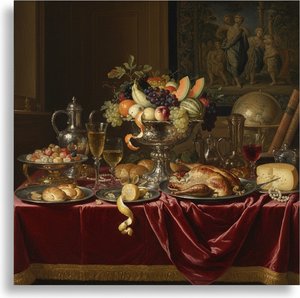
A Symphony of Color and Texture: Exploring Abraham Hendricksz. van Beyeren’s Still Life
Abraham Hendricksz. van Beyeren (1620 – 1690) remains an enduring emblem of Dutch artistic prowess, revered for his masterful portrayals of floral arrangements, luscious fruits, and shimmering fish—subjects that perfectly encapsulated the Golden Age's profound appreciation for natural splendor and painstaking observation. Born in The Hague, Netherlands, he cultivated his artistic talent amidst a period brimming with intellectual curiosity and creative dynamism, securing recognition as a respected artist across Leiden, Delft, and Amsterdam. His legacy resides not merely in technical skill but also in an ability to imbue his canvases with palpable emotion and layered meaning—a characteristic that distinguishes him from many of his peers.The Vermeer Legacy: Light and Atmosphere
Van Beyeren’s artistic journey commenced under the tutelage of Johannes Vermeer, arguably the luminary of Dutch painting. This formative relationship profoundly shaped van Beyeren's stylistic sensibilities, instilling within him a meticulous dedication to capturing light and color—a technique that would become synonymous with his distinctive oeuvre. Vermeer’s influence extended beyond mere aesthetic preference; it represented a fundamental shift in artistic methodology—a move away from dramatic chiaroscuro towards subtle gradations of illumination designed to evoke an atmosphere of serene contemplation. This approach is evident throughout van Beyeren's paintings, where light dances across surfaces adorned with meticulously rendered fruit and flowers, creating an illusion of depth and inviting the viewer into a realm of visual harmony.Technique and Material: Precision and Detail
Van Beyeren’s artistic technique was characterized by unwavering precision and painstaking attention to detail—qualities that demanded considerable patience and mastery over pigment manipulation. He employed oil paints on canvas, applying thin glazes layered upon glazes to achieve remarkable luminosity and textural complexity. The artist's meticulous brushwork captured the delicate contours of individual blossoms and fruits with breathtaking accuracy, conveying a sense of palpable realism that transcended mere representation. Furthermore, van Beyeren skillfully utilized glazing techniques—applying translucent layers of pigment over previously painted surfaces—to subtly modulate color hues and enhance visual depth. This painstaking process resulted in canvases imbued with an unparalleled richness of texture and luminosity—a testament to the artist’s unwavering commitment to excellence.Historical Context: The Dutch Golden Age – A Celebration of Beauty
Van Beyeren's artistic output flourished during the Dutch Golden Age (approximately 1635–1702), a period marked by unprecedented economic prosperity, cultural innovation, and artistic fervor. This era witnessed an outpouring of creativity across disciplines—painting, sculpture, literature, and music—fueled by burgeoning mercantile ambitions and a humanist worldview that championed reason and observation. Still life painting gained particular prominence during this time, serving as both a decorative art form and a vehicle for philosophical contemplation—artists sought to distill the essence of nature onto canvas, exploring themes of mortality, beauty, and spiritual transcendence. The prevalence of floral arrangements and fruit depictions reflected not only aesthetic preferences but also broader cultural values—a desire to adorn domestic spaces with symbols of fertility and abundance.Symbolism and Emotional Resonance: Beyond Mere Representation
Beyond its technical brilliance, van Beyeren’s Still Life transcends mere representation, resonating with profound symbolic significance and eliciting a powerful emotional response from the viewer. The choice of subjects—flowers, fruits, fish—carried layered meanings rooted in Renaissance iconography and Christian symbolism—roses represented purity and divine love, apples symbolized knowledge and temptation, while fish embodied spiritual salvation. Artists deliberately employed visual cues to convey complex ideas about human existence—the fleeting beauty of life juxtaposed against the inevitability of death—inviting contemplation on themes of faith, morality, and artistic aspiration. Van Beyeren’s canvases evoke a sense of tranquil serenity mingled with melancholic reflection—a testament to his ability to capture not just what he saw but also what he felt—transforming visual experience into an emotionally resonant encounter.A Timeless Masterpiece: Inspiration for Reproduction
Abraham Hendricksz. van Beyeren's Still Life stands as a cornerstone of Dutch artistic heritage—a timeless masterpiece that continues to inspire artists and collectors alike. High-quality reproductions capture the luminous beauty and textural intricacy of his original canvases, allowing audiences worldwide to appreciate the enduring legacy of this visionary painter. Consider commissioning a bespoke print from OriginalUniqueArt.com – experience the grandeur of the Golden Age firsthand!질의응답
"Still Life" 작품은 명암 대비가 강한 편인가요?
"Still Life"의 명암 대비는 Statement로 기록되었습니다. 대비는 밝은 부분과 어두운 부분의 차이가 얼마나 강한지를 나타냅니다.
아브라함 헨드릭스즈 판 베이레렌의 "Still Life" 작품은 어떤 공간에 잘 어울릴까요?
아브라함 헨드릭스즈 판 베이레렌의 "Still Life"은(는) Living Room에 추천하는 작품입니다. 이 제안은 작품의 주제, 색상 및 분위기를 바탕으로 합니다.
아브라함 헨드릭스즈 판 베이레렌의 "Still Life" 이미지는 어디에서 다운로드할 수 있나요?
아브라함 헨드릭스즈 판 베이레렌의 "Still Life"의 이미지는 작품의 디지털 이미지 다운로드 페이지에서 다운로드하실 수 있습니다: 고해상도 디지털 이미지 다운로드.
이 작품에 대해 더 알아보기
 미리보기
미리보기
 공유하기
공유하기 공유하기
공유하기
 상세 정보
상세 정보 가이드 보기

 다운로드
다운로드
 유사 작품 더 보기
 X-레이
X-레이 슬라이드 쇼 보기
 질의응답
질의응답 통계 정보
통계 정보