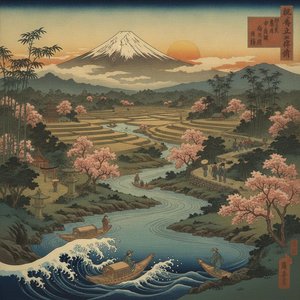
A Tapestry of Dual Heritage
The life of Venancio Shinki Huamán was a profound exploration of cultural duality, woven from the threads of his Japanese and Peruvian roots. Born in Supe, Peru, to a Japanese immigrant father from Hiroshima Prefecture and a Peruvian mother, his very existence bridged two distant worlds. Raised on the Hacienda San Nicolás, his early years were shaped by a unique synthesis of influences; he was nurtured by the traditions of his Japanese heritage—recalling childhood memories of origami and Japanese school materials—while remaining deeply anchored in the landscapes of the Pativilca valley. This rich, multicultural foundation provided the essential palette for an artist who would eventually masterfully blend Eastern, Western, and Andean themes into a singular, evocative visual language.
Before finding his definitive voice on canvas, Shinki’s journey through the arts began with the lens of a camera. At fifteen, he traveled to Lima to serve as a photographer's apprentice, eventually opening his own photographic studio at twenty-one. This early immersion in light, shadow, and composition undoubtedly informed the atmospheric depth found in his later paintings. His formal academic training at the National School of Fine Arts in Peru further refined his technical prowess. A standout student, he graduated as the valedictorian of his class in 1962, a feat that marked the beginning of a meteoric rise within the South American art scene.
Surrealism and the Subconscious
As an artist, Shinki became renowned for a distinctive brand of surrealism that sought to map the unknown territories of the human psyche. His work often functions as a dreamscape, where the boundaries between reality and the subconscious dissolve into a delicate dance of tone and texture. Drawing inspiration from the surrealist explorations of masters such as Klee and Miró, as well as the haunting qualities of Bosch and El Greco, he developed a style characterized by undefined forms and a sophisticated use of symbolism. In his masterpieces, viewers might encounter scenes that feel both intimate and otherworldly—spaces where figures and fauna drift like silent thoughts, and where objects like clocks or books serve as anchors for the wandering imagination.
Technically, Shinki’s work is a triumph of tonal exploration. He avoided rigid outlines, preferring instead to let forms emerge from subtle ranges of color and light. This approach allowed him to create atmospheres that could be simultaneously warm and unsettlingly surreal. His paintings often possess a quiet intensity, utilizing striking hues to evoke profound introspection or to present visions invisible to the naked eye. Through this purified technique and renovated figuration, he successfully expressed the complexities of his diverse heritage, creating an intriguing universe that remains as enigmatic as it is beautiful.
Legacy and Recognition
The career of Venancio Shinki Huamán was marked by significant accolades and a prolific presence in the international art community. His talent was recognized early and often through prestigious honors, including:
- The Gold Medal and Special Painting Award “Sérvulo Gutiérrez” (1962)
- The Teknoquímica Bi-annual Award (1966)
- The National Award Ignacio Merino from the Peruvian National Culture Institute (1967)
His reach extended far beyond the borders of Peru, with his works being exhibited in numerous countries across Latin America, North America, Europe, and Japan. Notably, in 1999, he had the opportunity to present his work in Hiroshima and Inuyama, honoring the centennial of Japanese immigration to Peru. Today, his legacy lives on through his inclusion in esteemed public and private collections spanning from the United States and Italy to Germany, Argentina, Chile, and Brazil. Shinki remains celebrated as one of the most outstanding Peruvian painters, a visionary who transformed his personal history into a universal language of art.
კითხვები და პასუხები
როგორ განვითარდა Venancio Shinki Huamán-ის შემოქმედება დროთა განმავლობაში?
Venancio Shinki Huamán-ის შემოქმედების ქრონოლოგიური მიმოხილვა ხელოვანის ქრონიკა გვერდზეა ხელმისაწვდომი, სადაც ნამუშევრები შექმნის თანმიმდევრობით, თავების მიხედვით წარმოდგენილია.
შემიძლება თუ არა Venancio Shinki Huamán-ის ნამუშევრების დათვალიერება მასალების მიხედვით?
ყველა ტექნიკა გვერდზე Venancio Shinki Huamán-ის ნამუშევრები ტექნიკის მიხედვით არის დაჯგუფებული.
შესችლება Venancio Shinki Huamán-ის ნამუშევრების ვირტუალური მუზეუმით დავესტუმრო?
ვირტუალური ጉብარი შესაძლებელია: Venancio Shinki Huamán-ის 3D მუზეუმი გვერდი ხელოვანის ნამუშევრებს სამგანზომილებიან გალერეაში წარმოგიდგენთ.