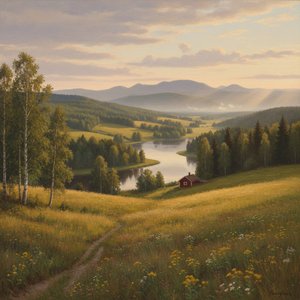
The Soul of the Nordic Landscape
To encounter the work of Harald Sohlberg is to step into a realm where the terrestrial and the infinite converge. While his contemporary, Edvard Munch, famously turned the landscape into a mirror for human anguish and psychological turmoil, Sohlberg sought a different kind of truth. He found it in the silent, majestic stillness of the Norwegian wilderness. As one of the most profound masters of landscape painting in Norwegian history, his oeuvre serves as a bridge between Naturalism, Romanticism, and Symbolism, capturing a sense of the eternal within the fleeting light of the North.
Born in 1869 in Kristiania—the city we now know as Oslo—Sohlberg was raised in a family of modest means. The eighth of twelve children, his early life was shaped by the ambitions of parents who deeply valued education and cultural elevation. Though he possessed a natural talent for music as a pianist and singer, it was the visual arts that would eventually define his legacy. His path to mastery was not direct; initially apprenticed at sixteen to a theatre decorator, he eventually found his true calling through formal training at the Royal School of Art and Design of Christiania. This rigorous foundation allowed him to develop a technique characterized by an almost supernatural clarity, where every pine needle and mountain ridge seems etched against the sky with crystalline precision.
A Visionary Technique and Artistic Awakening
Sohlberg’s artistic development was marked by a profound sense of independence. He famously resisted the idea that his work was merely a product of external influences, instead attributing his "artistic awakening" to the depths of his own psyche. This inward journey allowed him to infuse his landscapes with a spiritual weight. Under the guidance of mentors such as Johan Nordhagen and Kristian Zahrtmann, he honed a style that could capture the ethereal glow of the midnight sun or the haunting blue shadows of a winter night. His brushwork, while precise, never felt mechanical; rather, it possessed an expressive power that transformed the rugged terrain of Norway into something mythic.
His fascination with the Rondane mountains and the historic town of Røros provided him with a recurring stage for his explorations of light and solitude. In these works, human presence is often reduced to a mere whisper—a tiny silhouette or a distant structure—ensuring that the true protagonist remains the landscape itself. This focus allowed him to explore themes of isolation, permanence, and the sublime, making his paintings feel less like mere topographical records and more like meditations on the nature of existence.
Legacy and Eternal Night
The pinnacle of Sohlberg’s achievement is perhaps best embodied in his most iconic masterpiece, Winter's Night in Rondane. In this work, the interplay of deep blues and stark whites creates a mesmerizing atmosphere that has become synonymous with the Norwegian identity. It is a painting that does not merely depict a scene but evokes a feeling of profound, sacred silence.
Throughout his life and beyond his passing in 1935, Sohlberg’s significance has only deepened. His ability to synthesize the physical reality of the Nordic landscape with the symbolic depths of the human spirit ensures his place in the pantheon of great European painters. Today, his works continue to captivate audiences worldwide, reminding us that even in the most desolate and frozen landscapes, there is a luminous beauty waiting to be discovered by those willing to look closely.
- Key Artistic Movements: Neo-Romanticism, Symbolism, Naturalism
- Primary Subjects: The Rondane Mountains, Røros Town, Norwegian Coastlines
- Notable Mentors: Johan Nordhagen, Kristian Zahrtmann, Erik Werenskiold
- Masterworks: Winter's Night in Rondane, Natt (Røros Church)
კითხვები და პასუხები
სად შეიძლება ჰარალდ სოლბერგი-ის ნამუშევრების ნახვა ფერების მიხედვით დალაგებულად?
ჰარალდ სოლბერგი-ის ნამუშევრების ფერების მიხედვით დათვალიერება შესაძლებელია ხელოვანის ფერების სპექტრული ინდექსი გვერდზე.
სად შემიძლია ვნახო ჰარალდ სოლბერგი-ის ნამუშევრები ატმოსფეროს მიხედვით დალაგებული?
ჰარალდ სოლბერგი-ის განწყობის სივრცე გვერდი ხელოვანის ნამუშევრებს განწყობის მიხედვით აჯგუფებს.
სად შემიძლია ვიპოვო სტატისტიკა ჰარალდ სოლბერგი-ის ნამუშევრების შესახებ?
ჰარალდ სოლბერგი-ის ნამუშევრების შესახებ სტატისტიკა ხელოვანის სტატისტიკა გვერდზეა ხელმისაწვდომი.
როგორ ვიპოვო ჰარალდ სოლბერგი-ის ნამუშევრები კონკრეტული ფერთა პალიტრის მიხედვით?
პალიტრების მიხედვით გვერდზე ჰარალდ სოლბერგი-ის ნამუშევრები ფერల პალიტრების მიხედვითაა დაჯგუფებული.