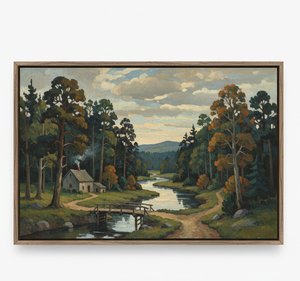
The Quiet Observer of the Dutch Landscape
George Andries Roth lived a life tied closely to the soil and the shifting light of the Netherlands. Born in Amsterdam, his eyes were trained early on the textures of the natural world. He studied under George Pieter Westenberg, learning to translate the physical presence of the earth onto canvas. His hands were those of a painter and a printmaker, working through the decades as he moved between the streets of Amsterdam and the quieter reaches of Opheusden, Tiel, and beyond. He was a man of the academy, a member of the Koninklijke Akademie van Beeldende Kunsten, yet his work often felt more grounded in the immediate, tangible reality of the woods and the riverbanks.
His brushwork followed the rhythms of the seasons and the specific geometry of the terrain. He did not seek to distort the world but to record it with a clear, steady hand. In his landscapes, one finds a meticulous attention to how light settles upon a surface, whether it is the bark of an old tree or the movement of a forest floor. He spent time traveling through Germany in the mid-1830s, a period that likely deepened his understanding of how different light and topography might be captured through paint.
The Structure of Nature
The works left behind by Roth reveal a specific way of seeing. He looked at the forest not as a chaotic mass, but as a series of organized, distinct elements. His compositions often relied on a careful balance between the massive and the minute. In his later years, his paintings achieved a clarity that allowed the viewer to trace the path of the light as it moved through the trees.
Several details define his approach to the canvas:
- A focus on wooded landscapes, cityscapes, and river views.
- The use of light to highlight specific focal points, such as a single tree or a group of workers.
- A sense of scale that places human activity within a much larger, more enduring natural setting.
- A detailed rendering of the ground, the sky, and the foliage.
A Legacy in Detail
By the time of his death in Amsterdam, Roth had established a body of work that captured the quiet dignity of the Dutch landscape. His paintings, such as those found in the Rijksmuseum, show a man who understood the weight of a tree and the smallness of a person working within its shadow. He taught others, including Elias Pieter van Bommel and Cornelis Petrus van ’t Hoen, passing on his method of observation. His paintings remain as records of a specific time and place, held in collections from Amsterdam to Cleveland, preserved for their clarity and their steady, unhurried gaze.
კითხვები და პასუხები
შესაძლებელია თუ არა George Andries Roth-ის ნამუშევრების ძებნა საკვანძო სიტყვების მიხედვით?
George Andries Roth-ის კონკრეტული თემატიკის ნამუშევრების მოსაძებნად გამოიყენეთ ხელოვანის საკვანძო სიტყვების მიხედვით გვერდი, სადაც ნამუშევრები საკვანძო სიტყვების მიხედვით არის დაჯგუფებული.
შესაძლებელია თუ არა George Andries Roth-ის ნამუშევრების ფერების სპექტრის მიხედვით დათვალიერება?
George Andries Roth-ის ფერების სპექტრული ინდექსი გვერდი ხელოვანის ნამუშევრებს ფერების მიხედვით აჯგუფებს.
სად შეიძლება George Andries Roth-ის ნამუშევრების ნახვა ფერების პალიტრის მიხედვით დაჯგუფებულად?
George Andries Roth-ის ნამუშევრების კონკრეტული ფერების პალიტრის მიხედვით მოსაძებნად ეწვიეთ ხელოვანის პალიტრების მიხედვით გვერდს.
არსებობს თუ არა George Andries Roth-ის ნამუშევრების 3D ვირტუალური ტური?
George Andries Roth-ის ნამუშევრების ნახვა შესაძლებელია 3D გალერეაში, ხელოვანის 3D გალერეა გვერდზე.