შეიძინეთ ხელით შესრულებული ნახატი
 გააგრძელეთ კითხვა







































 ნებისმიერი მხარისთვის 105 სმ-ზე (დაახლოებით 41 ინჩი) მეტი ზომის ხელოვნებული ნამუშევრების ან რეპროდუქციებისთვის, ჩარჩო მოგზავნდება დაშლილ კომპლექტში. ეს მეთოდი უზრუნველყოფს უსაფრთხო მიწოდებას და თავიდან აგაცილებთ ტრანსპორტირებისას შესაძლო დაზიანებას.


The Composition and Visual Elements
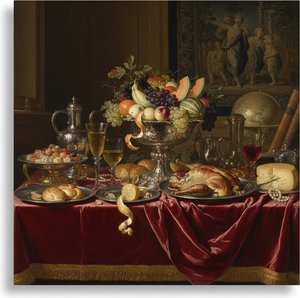
In "Still Life" by Hans Purrmann, a dramatic, theatrical scene unfolds through a high-contrast, monochromatic lens. The composition draws the viewer into an intimate, close-up portrait, focusing tightly on the upper bodies and heads of a man and a woman. This eye-level, straight-on perspective places the observer directly in front of the subjects, as if witnessing a private, stolen moment. The lighting is highly directional, employing a chiaroscuro effect that carves the figures out of the darkness. Deep shadows swallow the background, while bright highlights catch the sharp edges of the man's profile and the delicate textures of the woman's lace headband.
The atmosphere feels heavy with an intense, somber emotion, perhaps leaning toward the romantic or the tragic. Given the stylized costumes and the staged quality of the lighting, the scene suggests a frozen moment from a play or an opera. Depth emerges not through vast landscapes, but through the tight layering of the two figures against a pitch-black void. Every line is defined by the stark collision of light and shadow, from the man's hair to the folds of their garments. The style carries the weight of a photographic film still, capturing a sense of stillness that feels charged with unspoken tension.
Related Works by the Same Artist
The artist's hand moves through different stages of light and form across his various compositions. In 1903, he captures the essence of Park in Svinar. A few years later, in 1905, he turns his attention to the Seated Nude (“Polish Equestrienne”). These earlier explorations set a foundation for his evolving relationship with the subjects he chooses to observe.
Later in his career, his fascination with the arrangement of objects leads to the creation of Stillleben mit Anemonen, Relief und Spiegel mit Selbstbildnis. This oil on canvas from 1957 brings a unique depth to the genre. It integrates a self-portrait through a scheme-like mirror image, allowing the artist to engage directly with the viewer. The work uses a harmonic coloring to bring the mug, the ancient relief fragment, and the flowers into a singular, living moment.
კითხვები და პასუხები
რა ეპოქას მიეკუთვნება "Still Life"?
ჰანს პურმანი-ის „Still Life“-ის ისტორიული პერიოდია Modern. ეს კლასიფიკაცია ნამუშევარს ხელოვნების ისტორიაში განსაზღვრავს.
შეიძლება თუ არა „Still Life“-ის დამატებული რეალობის (AR) რეჟიმში წინასწარ ნახვა?
თავსებად მოწყობილობაზე თავსდამხვევი რეალობის გამოყენებით, შეგიძლიათ ნახოთ ჰანს პურმანი-ის „Still Life“ თქვენს საკუთარ კედელზე, ნამუშევრის AR წინასწარი ნახვა გვერდის მეშვეობით.
ზუსტად რომელ ოთახშია რეკომენდებული ჰანს პურმანი-ის „Still Life“?
ჰანს პურმანი-ის „Still Life“ რეკომენდებულია Restaurant-ისთვის. ეს შეფასება ეფუძნება ნამუშევრის თემატიკას, ფერებსა და განწყობას.
 გაგზავნა
 გაზიარება
 დეტალები
 გზამკვლევი


 ჩამოტვირთვა
 მსგავსები
 სლაიდშოუ
 კითხვა-პასუხი
 სტატისტიკა