
 წინასწარი ნახვა
 გაგზავნა
 გაზიარება
 დეტალები
 გზამკვლევი

 ჩამოტვირთვა
 მსგავსები
 რენტგენოგრაფიული კვლევა
 სლაიდშოუ
 კითხვა-პასუხი
 სტატისტიკა
Montauk

- 45.0 x 18.0 cm


 გააგრძელეთ კითხვა
გიკლე / ხელოვნების პრინტი
მუზეუმის დონის ჟიკლე ან ტილოზე ბეჭდვა სწრაფი წარმოებისა და დასრულების მოქნილი ვარიანტებით. ( შეიძინეთ ხელით შესრულებული ნახატი გადართვა ციფრულ გამოსახულებაზე)




P118B ₾10

P118H ₾10

P118W ₾10

P438Z ₾10

P508JH ₾12

P508YH ₾12

P805H ₾10

P805Z ₾10

P919BZ ₾10

P919G ₾10

P919XJ ₾10

P959ZH ₾10

P968JZ ₾12

W106C ₾8

W218G ₾10

W218JH ₾8

W218Y ₾10

W307PJ ₾10

W316G ₾10

W316PJ ₾8

W316Y ₾10

W398PJ ₾8

W4111J ₾10

W500HY ₾15

W500JH ₾15

W692G ₾12

W849H ₾8

W940BG ₾15

W953PJ ₾8




აირჩიეთ ჩვენს მიერ წინასწარ განსაზღვრული ზომებიდან, რომლებიც ნაწარმოების ორიგინალურ პროპორციებს შეესაბამება.

შეიყვანეთ თქვენთვის საჭირო სიგანე და სიმაღლე, რათა გამოსახულებამ თქვენს ჩარჩოს ან კედელს ზუსტად მოერგოს. ბეჭდვისას შესაძლებელია მხოლოდ მისი შემცირება და არა გაზრდა, ამიტომ სხვა ფორმის ზომის შემთხვევაში სურათი ნაწილობრივ იკარგება. სანამ რაიმეს დაბეჭდავთ, ჩვენ გამოგიგზავნით ციფრულ მაკეტს დასდასტურებლად. ამ გვერდზე ნაჩვენები სურათი არ ასახავს რეალურ ჭრას — ამას მხოლოდ მაკეტი გვიჩვენებს.
მიწოდება მთელ მსოფლიოში () 2 კვირაში, სტანდარტული 4/5 კვირის ნაცვლად. (11 ნოემბერი)

უფასო ექსპრეს მიწოდება მთელ მსოფლიოში

მაღალი ხარისხის ტილოს ქსოვილი

ტრანსპორტირების სრული დაზღვევა

საბაჟო გადასახადების დაბრუნების გარანტია

ფერების სრული შესაბამისობის გარანტია

დაბრუნების 100-დღიანი პოლიტიკა (მხოლოდ დეფექტის შემთხვევაში)

100% თანხის სრული დაბრუნების გარანტია

ფასდაკლება დიდი რაოდენობით შეკვეთისას
 მინის ჩარჩოს არჩევანი შესაძლებელია მხოლოდ 110 სმ-მდე ზომისთვის

Montauk
გიკლე / ხელოვნების პრინტი
რეპროდუქციის ზომა
-


საბოლოო ღირებულება
₾ 210
Frederick Childe Hassam: A Pioneer of American Impressionism
Frederick Childe Hassam (1859–1935) stands as one of the most influential figures in establishing American Impressionism, a movement that fundamentally reshaped how artists perceived and depicted their surroundings. Unlike many European contemporaries focused on academic conventions, Hassam cultivated his artistic prowess largely through self-study and practical experience—working initially as an illustrator for publications like *Harper’s Weekly* and *Scribner’s Monthly*. This formative period instilled within him a keen observational eye and a narrative impulse that would become defining characteristics of his distinctive style. His dedication to capturing the ephemeral beauty of American landscapes and urban life cemented his legacy as a champion of modern artistic expression.- Early Influences: Hassam’s initial training was primarily self-directed, absorbing influences from artists like Claude Monet and Pierre Auguste Renoir who championed Impressionism's core principles—a preoccupation with light and color, and an abandonment of meticulous detail in favor of capturing fleeting moments.
- Notable Works: He gained renown for his evocative depictions of coastal scenes, particularly Montauk (1921), where he skillfully rendered the interplay of sunlight on water and foliage, embodying the movement’s aesthetic ideals.
- Technique: Hassam's signature technique—impasto—involved applying thick layers of paint onto the canvas, creating a palpable textural surface that conveyed the immediacy of observation and enhanced the vibrancy of his palette.
Montauk: Capturing Coastal Tranquility
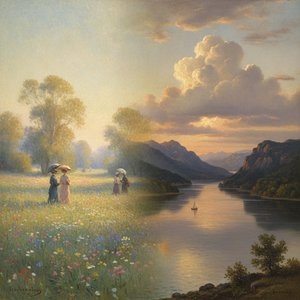
“Montauk,” painted in 1921, exemplifies Hassam’s masterful grasp of Impressionist principles. The artwork portrays a serene seaside vista featuring two female figures positioned against a backdrop of lush greenery and the expansive ocean horizon. Immediately striking is the artist's deliberate use of color—muted greens, yellows, and blues dominate the palette, punctuated by delicate pinks and whites in the women’s skin tones and scattered blossoms. These hues aren’t merely decorative; they serve to evoke a sense of warmth and tranquility, mirroring the idyllic atmosphere of the coastal landscape.- Composition: The horizontal orientation emphasizes the grandeur of the seascape, while the placement of the figures—one standing gracefully with an outstretched arm—suggests engagement with the invigorating sea breeze.
- Lighting: Soft, diffused light filters through the foliage, casting subtle shadows that contribute to the painting’s ethereal quality and heighten its emotional resonance.
- Symbolism: The scene resonates with themes of liberation and rejuvenation – mirroring the broader Impressionist preoccupation with capturing the sensory experience of nature.
Impasto Technique & Texture
Hassam's distinctive impasto technique—the deliberate application of thick paint—is crucial to understanding the artwork’s visual impact. Rather than blending colors seamlessly, Hassam employed brushstrokes that retain their individual texture, creating a tactile surface reminiscent of grass and foliage. This technique wasn’t merely stylistic; it served as a conduit for conveying emotion and immediacy – mirroring the Impressionists' desire to capture the fleeting essence of a moment. The visible brushwork underscores Hassam’s commitment to portraying the world as he perceived it—a vibrant, dynamic realm brimming with sensory detail.Legacy & Influence
Frederick Childe Hassam’s contribution to American art history transcends mere stylistic innovation; he championed a new vision of artistic representation—one rooted in observation and emotion rather than academic tradition. His pioneering work paved the way for subsequent generations of artists, establishing Impressionism as a cornerstone of modern American painting and securing his place among the most celebrated landscape painters of his era. Reproductions of “Montauk” continue to inspire collectors and interior designers alike, offering a glimpse into Hassam’s unparalleled ability to distill beauty and serenity onto canvas.კითხვები და პასუხები
რა მასალისგან არის შექმნილი "Montauk" და რა სტილშია შესრულებული?
წარმოებაში "Montauk", Oil On Canvas ტექნიკა და Impressionism სტილი ერთმანეთს ერწყმის.
ფრენსის კილდი ჰასამი-ის „Montauk“ ნახატია, ფერწერილობა თუ გრავიურა?
"Montauk" არის WallArt ნამუშევარი.
რომელ მხატვრულ მიმდევრობას წარმოადგენს ფრენსის კილდი ჰასამი-ის „Montauk“?
ფრენსის კილდი ჰასამი-ის „Montauk“ მიეკუთვნება Impressionism მიმდევრობას. ეს მიმდევრობა ნამუშევარს სტილისტურ კონტექსტს სძენს.
მხატვრის ბიოგრაფია
A Pioneer of American Impressionism: The Life and Art of Frederick Childe Hassam
Frederick Childe Hassam, born October 17, 1859, in Dorchester, Boston, Massachusetts, stands as a cornerstone of American Impressionism—a movement that irrevocably transformed the landscape of artistic expression at the turn of the century. His journey from youthful fascination with art to becoming one of the nation’s most celebrated painters is an inspiring tale of perseverance, intellectual curiosity, and unwavering devotion to capturing the beauty inherent in everyday life. Unlike many artists of his era who pursued formal training exclusively abroad, Hassam cultivated his skills primarily through self-study and practical experience—a path that instilled within him a profound understanding of observation and narrative—qualities which would define his distinctive artistic style for decades to come. Initially employed as an illustrator for publications like *Harper’s Weekly* and *Scribner’s Monthly*, Hassam honed his observational abilities and developed a knack for portraying scenes with vivid detail and emotional resonance.Early Years: Roots in Boston and Artistic Beginnings
Hassam's formative years were steeped in the intellectual ferment of Boston—a city renowned for its vibrant artistic community and scholarly institutions. His father, Frederick Fitch Hassam (1825–1880), a cutlery businessman with considerable wealth, fostered an environment that encouraged artistic pursuits. Rosa Delia Hawthorne (1832–1880), Hassam’s mother—a descendant of Nathaniel Hawthorne—shared an ancestor with the celebrated novelist, reflecting the cultural heritage of New England. From a young age, Hassam demonstrated an undeniable inclination toward drawing and watercolor, receiving instruction at The Mather School—a testament to his parents' commitment to nurturing his talent. Despite their initial reluctance to prioritize art alongside business responsibilities, Hassam’s passion persisted, shaping his artistic trajectory throughout his life. His family’s collection of antiques and artworks served as an early stimulus for his aesthetic sensibilities, exposing him to diverse visual traditions and fostering a lifelong appreciation for beauty.Influences and Artistic Development: From Paris to New York
Hassam's artistic vision was profoundly shaped by encounters with European Impressionists—particularly Claude Monet and Edgar Degas—during his brief but formative sojourn in Paris between 1886 and 1889. He embraced the Impressionist principles of capturing fleeting moments and atmospheric effects, prioritizing luminous color palettes and loose brushstrokes over meticulous detail. However, Hassam refused to merely imitate European techniques; he skillfully adapted them to depict distinctly *American* experiences—scenes of urban life, coastal landscapes, and domestic interiors—transforming commonplace subjects into canvases brimming with emotion and artistic innovation. His decision to return to Boston solidified his commitment to capturing the spirit of American culture, establishing him as a central figure in the burgeoning Impressionist movement within the United States.The Flag Paintings: Patriotism and Artistic Expression
The outbreak of World War I ignited Hassam’s creative fervor, propelling him toward an ambitious project that would become synonymous with his artistic legacy—the “Flag” paintings. Between 1916 and 1919, he embarked on a series of canvases depicting American flags waving proudly along Fifth Avenue in New York City—a poignant response to the anxieties and aspirations of wartime America. These paintings transcend mere depictions of national symbols; they embody a powerful expression of civic pride and solidarity—capturing the palpable energy and optimism that characterized the era. Hassam’s masterful manipulation of color and light elevates these images beyond simple patriotism, transforming them into evocative representations of human emotion and artistic contemplation. The Flag Paintings stand as enduring emblems of American idealism and artistic achievement—a testament to Hassam's ability to infuse his art with profound meaning and lasting impact. ## Legacy: An Enduring Influence on American Art Frederick Childe Hassam passed away August 27, 1935, in East Hampton, New York, leaving behind an unparalleled body of work—over 3,000 paintings, oils, watercolors, etchings, and lithographs that continue to inspire artists and captivate audiences worldwide. His contribution to American Impressionism is undeniable—he championed a distinctive artistic style characterized by luminous color palettes and expressive brushwork, establishing it as a prominent voice within the broader landscape of modern art. Hassam’s unwavering dedication to capturing the beauty of everyday life—from bustling cityscapes to tranquil coastal vistas—remains remarkably relevant today. His influence can be discerned in the works of countless artists who followed him, securing his place as one of the most important figures in American artistic history—a true pioneer whose vision continues to illuminate the path for future generations of painters.
ფრენსის კილდი ჰასამი
1859 - 1935 , สหรัฐอเมริกา
მოკლე ინფორმაცია
- Artistic Movement Or Style: იმპრესიონიზმი და ტონალიზმი
- Artists Or Movements Influenced By This Artist: ['ამერიკელი იმპრესიონიზმი']
- Artists Who Influenced This Artist: ['კლოდ მონეტი']
- Date Of Birth: ოქტომბერი 17, 1859
- Date Of Death: აგვისტო 27, 1935
- Full Name: Frederick Childe Hassam
- Nationality: ამერიკელი
- Notable Artworks:
- მაიდსი ინ მით სტიქს პრესი
- მთ ბიაკონი ატ ნიუ ბორკი
- დიჯელ ბოქსი სტიქს პრესი
- Głლასტერ სტიქს პრესი
- სონატა სტიქს პრესი
- გამარჯეობის დღე მ აი 1919
- Place Of Birth: ბოსტონი, აშშ
დაკავშირებული სტატიები

Frederick Childe Hassam: American Impressionism's Chronicler of Light & Modern Life
Explore the captivating world of Frederick Childe Hassam, a pioneer of American Impressionism. Discover his iconic paintings capturing light, urban life & coastal beauty. Learn about his legacy and influence on American art history.

Evocations of Place: A Historical Journey Through Landscape Art
Explore the rich history of landscape art with OriginalUniqueArt. Discover renowned artists, movements like Impressionism & Romanticism, and expert guidance for collecting timeless pieces. Find your perfect serene escape today!

Evocations of Place: A Historical Journey Through Landscape Art
Explore the rich history of landscape art with OriginalUniqueArt. Discover renowned artists, movements like Impressionism & tonalism, and expert guidance for collecting timeless pieces. Find your perfect serene escape today!

John Frederick Kensett: Luminosity, Landscape & the American Identity
Explore the luminous landscapes of John Frederick Kensett, a master of Luminism and key figure in the Hudson River School. Discover his serene paintings & enduring legacy with OriginalUniqueArt.
Capturing the Light: A Journey Through the Soul of American Impressionism and the Hudson River School
Explore the luminous beauty of American Impressionism and the Hudson River School. Discover a curated journey through light, landscape, and history, celebrating the enduring legacy of masters through exquisite, hand-painted oil reproductions for the discerning art lover.


