A Life of Ink and Office
Wang Chengpei lived during the Qing dynasty, a period when the boundaries between scholarly administration and artistic expression were often blurred. Born to Wang Youdun, a poet-official of note, he was raised in an environment where literature and governance were deeply intertwined. While his family roots trace back to Xiuning in Anhui, his life was closely tied to Qiantang in Zhejiang. He was a man of significant standing, eventually rising to the position of Secretary of the Department of Military. This was a high-ranking role that required a disciplined mind, yet his heart often turned toward the delicate movements of a brush.
His path was shaped by the rigorous expectations of the imperial system. In 1747, he achieved the status of a Provincial Graduate, a milestone that solidified his place within the scholar-official class. Despite the heavy responsibilities of his civil service, he found a quiet space for creativity. He was not merely an official who painted in his spare time; he was a man who moved within the inner court, contributing his hand to the visual life of the imperial circle. His work was a reflection of a life lived between the formal duties of the state and the intimate observation of the natural world.
The Precision of the Brush
The subjects Wang Chengpei chose to depict were as varied as the seasons. He possessed a technical versatility that allowed him to move from the broad strokes of scenery to the minute, controlled movements required for finger painting. His skill was not limited to a single mode of expression, as he moved between the following subjects:
- Flowers and botanical studies
- Landscapes and scenery
- Portraits
- Finger painting
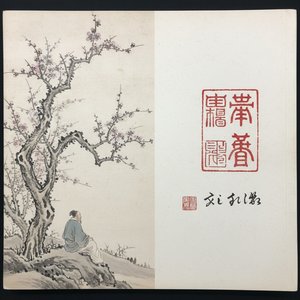
His ability to capture the essence of a flower or the stillness of a landscape was a skill highly valued by the court. This technical proficiency allowed him to navigate the expectations of the imperial collections, where his works were gathered and preserved. His handscrolls, such as the one titled Spring Fortune Collected in a Brocade, demonstrate a mastery of ink and color on paper, capturing a sense of seasonal change through careful, deliberate application.
Legacy in the Imperial Collection
Though much of his life was spent in the service of the state, his lasting presence is felt through the objects he left behind. His works have found a permanent home within the Palace Museum in Beijing, where they remain as physical traces of his hand. These pieces offer a glimpse into the aesthetic preferences of the Qing dynasty, specifically during the era when the imperial collections were being meticulously assembled. He remains a figure of interest for those studying the intersection of officialdom and the arts, representing a class of men who balanced the weight of governance with the lightness of the brush.
アーティストへのQ&A
Wang Chengpeiには他にどのような名で知られているものがありますか?
Wang Chengpeiは、Chunnongという名でも知られています。
Wang Chengpeiの活動年表はありますか?
Wang Chengpeiのアーティスト・クロニクルは、スクロールに合わせて展開するタイムライン形式となっており、アーティストのキャリアを時代ごとに章立てし、その作品群を時系列に沿ってご紹介しています。
Wang Chengpeiの作品を色別に並べ替えることはできますか?
Wang Chengpeiのカラーインデックスでは、作品を色別に探すことができます。
Wang Chengpeiによるすべての作品を見るには、どうすればよいですか?
本サイトにおけるWang Chengpeiのすべての作品は、アーティストの全作品一覧ページからご覧いただけます。