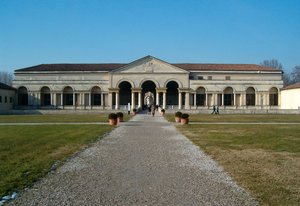
天井画:ジュピターの玉座を囲む神々の集い
「天井画:ジュピターの玉座を囲む神々の集い」は、ジュリオ・ロマーノの手による極めて重要なフレスコ画です。1532年に制作されたこの作品は、イタリア・マントゥアのパラッツォ・テ内にある「巨人の間(Sala dei Giganti)」の天井を飾っています。この記念碑的な装飾は、盛期ルネサンスが追求した古典的な調和から、表現豊かな緊張感を孕んだマニエリスムへと、芸術家がその歩みを進めたことを雄弁に物語っています。
要約すると
天井画:ジュピターの玉座を囲む神々の集い (1532)は、ジュリオ・ロマーノの作品の中で最も注目を集めている絵画です。 その後、視線はView of the Sala dei Giganti (vault and south wall) (1526)とTapestry with Playing Putti (1545)へと移ります。 当カタログに含まれるジュリオ・ロマーノの114点の作品のうち、これら100点は最も有名な作品です。制作年、所蔵美術館、そして時代を超えて愛される理由とともに、一点もののオリジナル作品をご紹介します。
「天井画:ジュピターの玉座を囲む神々の集い」は、ジュリオ・ロマーノの手による極めて重要なフレスコ画です。1532年に制作されたこの作品は、イタリア・マントゥアのパラッツォ・テ内にある「巨人の間(Sala dei Giganti)」の天井を飾っています。この記念碑的な装飾は、盛期ルネサンスが追求した古典的な調和から、表現豊かな緊張感を孕んだマニエリスムへと、芸術家がその歩みを進めたことを雄弁に物語っています。
To gaze upon this magnificent fresco, View of the Sala dei Giganti (vault and south wall), is to step directly into the vibrant heart of the High Renaissance. Painted in 1526 by the masterful hand of Giulio Romano, this work transcends mere decoration; it is a profound narrative tapestry woven from human drama, natural vitality, and divine symbolism. The scene explodes with life, drawing the viewer into a monumental gathering…
To gaze upon this depiction of a tapestry with playing putti is to step directly into an idealized moment plucked from the heart of the Italian Renaissance. It is more than just a painting; it is a captured breath of youthful exuberance, rendered with the masterful touch characteristic of Giulio Romano. The scene unfolds as a vibrant pastoral tableau, where several cherubic figures—the beloved putti—engage in playful revelry. Their presence…
To stand before an image like the Allegory of the Virtues of Federico II Gonzaga is to step directly into the vibrant, intellectual heart of the Italian High Renaissance transitioning into Mannerism. This monumental work, executed in 1531 by Giulio Romano, is far more than a mere depiction of figures; it is a carefully orchestrated philosophical statement rendered in pigment and plaster. The scene unfolds with an almost theatrical richness,…
Giulio Romano’s “The Lovers,” painted around 1525, isn't merely a depiction of intimacy; it’s a meticulously crafted tableau brimming with symbolism and echoing the complex currents of the High Renaissance. Born Giulio Pippi in Rome around 1499, Romano swiftly ascended through the ranks of Raphael’s studio, absorbing the master’s classical ideals while simultaneously forging his own distinctive Mannerist style – a style characterized by heightened emotion, distorted forms, and an…
This detail from 1535 captures a fragment of a larger religious narrative, focusing on the human response to a divine presence. A central figure, distinguished by a large staff topped with a cross, anchors the composition. The arrangement of figures creates a sense of depth through overlapping forms and varying scales, drawing the eye from the immediate foreground into a complex, crowded space. The composition avoids the static balance of…
Giulio Romano's "The Birth of Bacchus," a monumental charcoal and chalk drawing from 1533, isn’t merely a depiction of a mythological scene; it’s a visceral exploration of human drama, a raw sketch brimming with energy and symbolic weight. Born Giulio Pippi in Rome around 1499, Romano emerged as a pivotal figure within the waning embers of the High Renaissance, swiftly absorbing the influence of Raphael while forging his own distinctive…
Giulio Romano’s “Flaying of Marsyas” isn't merely a depiction of a mythological punishment; it’s a visceral embodiment of struggle, humiliation, and the brutal intersection of divine power and mortal defiance. Painted in 1525-35 during his tenure as court artist for Duke Federico Gonzaga of Mantua, this monumental fresco – now meticulously reproduced on canvas – plunges the viewer directly into the heart of Ovid’s *Metamorphoses*. The story itself is a…
A Tapestry of Time and Transformation: Giulio Romano’s “Victory, Janus, Chronos, and Gaea” Giulio Romano's "Victory, Janus, Chronos, and Gaea," painted in 1532-1534 during his illustrious tenure as court artist for Federico II Gonzaga of Mantua, is more than just a visually arresting fresco; it’s a profound meditation on the cyclical nature of time, the duality of existence, and the very essence of Roman mythology. Born Giulio Pippi in Rome…
A Vision of Renaissance Grandeur: Exploring Giulio Romano’s Palazzo del Té Giulio Romano's *View of the Palazzo del Té* stands as a testament to the zenith of Mannerist art and architectural ambition—a project conceived by Federico Gonzaga, Duke of Mantua, between 1526 and 1534. More than just a building, it embodies an entire worldview: a deliberate rejection of linear perspective and idealized beauty in favor of dramatic illusionism and psychological…
これらのオリジナル作品に繰り返し描かれている4つの主題と、それぞれの最高傑作。
このページに掲載されている絵画を最も多く所蔵している 8 の美術館
| 美術館 | 都市 | ジュリオ・ロマーノの作品 | このリストの絵画 |
|---|---|---|---|
| マントヴァ | 6 | View of the Sala dei Giganti (vault and south wall), View of the Palazzo del Tè, Façade | |
| パリ | 6 | Adoration of the Shepherds (detail), Flaying of Marsyas, Triumph of Titus and Vespasian | |
| ロサンゼルス | 5 | Allegory of the Virtues of Federico II Gonzaga, The Birth of Bacchus, Victory, Janus, Chronos, and Gaea | |
| コペンハーゲン | 3 | The Holy Family, St John with a small Bird in his Hand, Bacchus and Ariadne, Vertumnus and Pomona | |
| フィレンツェ | 2 | Nude Child with Open Arms, Virgin with the Child | |
| エディンバラ | 2 | The Holy Family with the Infant Saint John the Baptist, Tapestry Cartoon: Two Heads from the Massacre of the Innocents | |
| マントヴァ | 2 | Tarquin and Lucretia, Ajax Defends Patroclus's Corps | |
| ロンドン | 2 | Portrait of a Woman (detail) |
その時代を象徴する名作を見るために、年代を選択してください。
In this intimate oil on panel, we find ourselves drawn into a private, shadowed space where the Madonna cradles her infant. The composition is centered on the tender connection between mother and child, while the young Infant St. John stands at her side, adding a sense of movement to the stillness. There is a profound sense of weight to the figures, achieved through a careful application of light that emerges…
To gaze upon this magnificent fresco, View of the Sala dei Giganti (vault and south wall), is to step directly into the vibrant heart of the High Renaissance. Painted in 1526 by the masterful hand of Giulio Romano, this work transcends mere decoration; it is a profound narrative tapestry woven from human drama, natural vitality, and divine symbolism. The scene explodes with life, drawing the viewer into a monumental gathering…
「天井画:ジュピターの玉座を囲む神々の集い」は、ジュリオ・ロマーノの手による極めて重要なフレスコ画です。1532年に制作されたこの作品は、イタリア・マントゥアのパラッツォ・テ内にある「巨人の間(Sala dei Giganti)」の天井を飾っています。この記念碑的な装飾は、盛期ルネサンスが追求した古典的な調和から、表現豊かな緊張感を孕んだマニエリスムへと、芸術家がその歩みを進めたことを雄弁に物語っています。
To gaze upon this depiction of a tapestry with playing putti is to step directly into an idealized moment plucked from the heart of the Italian Renaissance. It is more than just a painting; it is a captured breath of youthful exuberance, rendered with the masterful touch characteristic of Giulio Romano. The scene unfolds as a vibrant pastoral tableau, where several cherubic figures—the beloved putti—engage in playful revelry. Their presence…
天井画:ジュピターの玉座を囲む神々の集い (1532)。続いてView of the Sala dei Giganti (vault and south wall) (1526)、Tapestry with Playing Putti (1545)が続きます。
33歳:天井画:ジュピターの玉座を囲む神々の集いは1532年の作品で、ジュリオ・ロマーノの生年は1499年です。
天井画:ジュピターの玉座を囲む神々の集い, View of the Sala dei Giganti (vault and south wall), Tapestry with Playing Putti, Allegory of the Virtues of Federico II Gonzaga, The Lovers, Adoration of the Shepherds (detail), The Birth of Bacchus, Flaying of Marsyas, Victory, Janus, Chronos, and Gaea と View of the Palazzo del Tè。上記のランキングには、それぞれの制作年と所蔵美術館が記載されています。
当カタログには、1516年から1545年にかけて制作されたジュリオ・ロマーノによる114点の作品が収められています。
主にテ宮殿 (Palazzo del Te) (マントヴァ), ルーブル美術館 (パリ) と J・ポール・ゲティ美術館 (ロサンゼルス)に所蔵されています。上記の美術館一覧にすべて記載されています。
1520s年:このページにある全100作品のうち、50作品がその時期に制作されました。そのうちView of the Sala dei Giganti (vault and south wall)作品が含まれます。
このページでは、最も古い作品はMadonna and Child with the Infant St. John (1516)、最新の作品はTapestry with Playing Putti (1545)です。
このページに掲載されている100点の作品におけるBuildings (20), Woman (13) と Scenes (12)
このページに掲載されている全100作品のうち、10作品のFresco
このページに掲載されているオリジナル作品から判断すると、マニエリスムです。
View of the Sala dei Giganti (vault and south wall), View of the Palazzo del Tè と Façade:テ宮殿 (Palazzo del Te), マントヴァには、このページに掲載されている作品のうち5点が所蔵されています。