
 設置イメージを確認
 送る
送る シェア
シェア
 詳細情報
詳細情報 ガイドを表示

 画像をダウンロード
 似ている作品
 X線調査
X線調査 スライドショー
 統計情報
統計情報Conflict


 続きを読む
続きを読む
このページに掲載されている作品は著作権法によって保護されており、当社の許可なく同一の複製物を制作または販売することは法律で禁じられています。この保護は、以下のような国際条約に基づき執行されます。 ベルヌ条約 および、以下の条項に定められたものを含む各国の法律により、 米国著作権法 第17編。
この手法は、著作権で保護された作品の複製や複写を伴わないため、著作権法に完全に準拠しています。これは単なる模倣ではなく、創造的な再解釈です。元の作品からインスピレーションを受けつつも、それとは異なる、全く新しい絵画を生み出すものです。
ジークレー/アートプリント
スピーディーな制作と多彩な仕上げオプションが魅力の、ミュージアムクオリティなジークレー・キャンバスプリント。 ( 手描きの複製画を注文する デジタル画像販売へ切り替え)




































作品のオリジナル比率に合わせた、当店の規定サイズからお選びください。

額縁や壁のスペースに合わせて、ご希望の幅と高さを入力してください。プリントはカットすることは可能ですが、元の画像より大きくすることはできないため、異なる比率のサイズを選択された場合は、画像の一部が欠けることになります。印刷を開始する前に、内容を確認していただくためのデジタルモックアップをお送りいたします。このページに表示されている画像は、実際のカット後の状態を示すものではありません。実際の仕上がりはモックアップにてご確認ください。


 ガラスオプションは、110cm未満のサイズでのみご利用いただけます。

Conflict
ジークレー/アートプリント
複製画サイズ一覧
-


合計金額
¥ 12650
Artistic Style and Technique
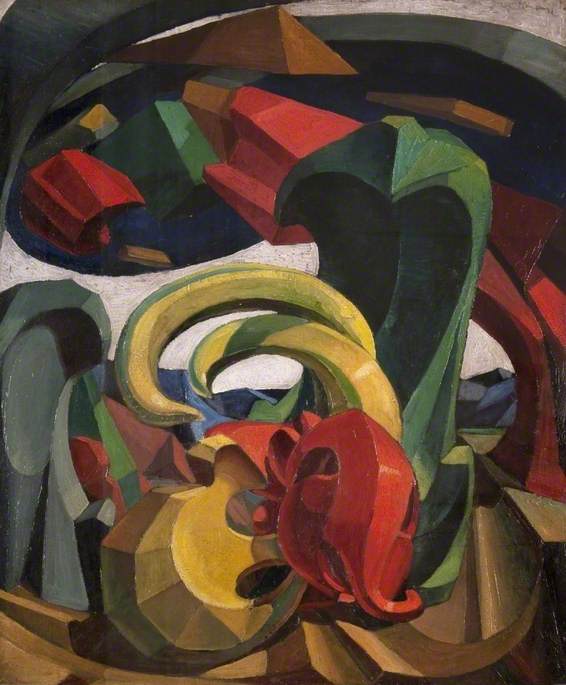
The painting features a colorful and intricate composition, with various shapes and colors that create an interesting visual experience for viewers. The main focus of the painting appears to be on a red bird or animal figure, which is surrounded by other geometric shapes and patterns. This style is reminiscent of other artists, such as Kazimir Severinovich Malevich, who was known for his contributions to the Cubism movement. For example, Malevich's painting The Triumph of Heaven can be found on OriginalUniqueArt.com.Historical Context and Significance
The Conflict painting can be seen as a representation of the turmoil and upheaval of the early 20th century. The use of bold colors and geometric shapes creates a sense of tension and conflict, which is reflective of the artistic and cultural movements of the time. Other artists, such as Sir George Clausen, also explored themes of loss and grief in their work, as seen in his painting Youth Mourning, which can be found on OriginalUniqueArt.com.- The painting is a significant example of modern art and its ability to evoke emotions and spark conversation.
- The use of oil on canvas creates a rich and vibrant texture that adds depth to the overall composition.
- The Glasgow Museums Resource Centre is home to a diverse collection of artworks, including pieces by other notable artists such as Eugène Delacroix.
The Conflict painting by William Mccance is a captivating and thought-provoking artwork that showcases the artist's unique style and technique. As a handmade oil painting reproduction, it can be found on OriginalUniqueArt.com, along with other notable artworks from history's most famous artists.
よくあるご質問
William Mccance作「Conflict」の手描き複製画を販売しているのはどこですか?
「Conflict」は、リネンキャンバスに手描きされた油彩複製画としてご購入いただけます。ご注文は手描き油彩複製画のページから、お好みのサイズをお選びいただけます。
「Conflict」の閲覧数はどのくらいですか?
William Mccance作「Conflict」に関する統計情報は、作品の統計情報ページでご確認いただけます。こちらでは、作品の月間訪問数、アーティストの作品への訪問数、および最近の訪問者の国別・言語別の内訳をご覧いただけます。
「Conflict」の作者とスタイルは何ですか?
「Conflict」の背景には、William MccanceとCubism運動があります。
アーティストについて
The Architect of Cubist Vision: The Life and Legacy of William McCance
In the vibrant, turbulent landscape of early twentieth-century British modernism, few figures possessed the singular, transformative vision of William McCance. Born in 1894 in Cambuslang, Scotland, McCance emerged not merely as a painter, but as a pioneer who dared to bridge the gap between traditional Scottish sensibilities and the radical, fractured aesthetics of European Cubism. His journey was one defined by profound moral conviction and an unyielding pursuit of new visual languages, moving through the halls of the Glasgow School of Art and into the very heart of the avant-garde movement in Wales and London.
McCance’s early years were marked by a rigorous academic foundation, yet his spirit was shaped as much by social upheaval as by formal training. As a conscientious objector during the First World War, he endured imprisonment—an experience that undoubtedly deepened the emotional gravity found within his later compositions. Following his release, his life became an intricate tapestry of artistic collaboration and intellectual exploration. His marriage to the talented illustrator and engraver Agnes Miller Parker created a formidable creative partnership, one that saw them navigate the bustling art scenes of London and eventually settle into influential roles within the Welsh artistic community.
A Revolution in Form and Color
The true metamorphosis of McCance’s style occurred during the 1920s, a decade when he became one of Scotland's most daring proponents of Cubism. Rejecting the comfortable boundaries of representational art, McCance embraced the revolutionary techniques of masters like Picasso and Braque. He began to dismantle the physical world into a series of overlapping planes, geometric shapes, and rhythmic patterns. This was not merely an exercise in abstraction; it was an attempt to capture the complex visual sensations and the underlying energy of a modernizing world.
His works from this period, such as the striking Conflict (1922), demonstrate a masterful command of color and tension. In these pieces, dark blues and greens often collide with sudden, vibrant accents, creating a sense of movement and psychological depth. His technique frequently utilized layered impasto and expressive lines to give weight to his geometric explorations. Whether depicting a figure in Woman Reading or the quiet stillness of a domestic scene, McCance infused his subjects with a machine-inspired precision and a modern, fractured perspective that challenged the viewer to look beyond the surface.
The Gregynog Legacy and Typographic Mastery
Beyond the canvas, McCance’s influence extended into the very fabric of book design and typography. His tenure as the second Controller of the renowned Gregynog Press in Powys, Wales, allowed him to merge his painterly eye with the precision of printmaking. This period of his life represents a vital intersection of fine art and functional design, where his understanding of form and space found new expression in the medium of the printed word. His work at Gregynog solidified his reputation as a polymath—a man capable of translating the radical energy of Cubism into the delicate, structured world of book production.
As his career progressed, McCance continued to educate and inspire, serving as a lecturer in typography and book design at the University of Reading. His contributions were not limited to his own brushstrokes; he was a vital voice in the intellectual currents of his time, working as an art critic for The Spectator and engaging with the luminaries of the Scottish Renaissance movement.
Today, the significance of William McCance lies in his role as a bridge-builder. He connected the traditionalist roots of Scottish art to the burgeoning internationalism of the modern era. His legacy is preserved in the collections of the National Galleries of Scotland and the Dundee Art Gallery, serving as a testament to an artist who saw the world not as a static image, but as a dynamic, beautiful, and ever-shifting mosaic of form.

William Mccance
1894 - 1970
アーティスト情報
- Artistic Movement Or Style: Cubist Art
- Artists Or Movements Influenced By This Artist: ['Modern Scottish Art']
- Artists Who Influenced This Artist:
- Pablo Picasso
- Georges Braque
- Date Of Birth: 1894
- Date Of Death: 1970
- Full Name: William McCance
- Nationality: Scottish
- Notable Artworks:
- Conflict
- Woman Reading
- Place Of Birth: Cambuslang, Scotland
関連記事

Neo-Abstract Art: The High-Impact Evolution of Modern Visual Energy and Geometric Sophistication
Discover the power of Neo-Abstract art. Explore how bold geometric forms and high-impact visual energy are redefining modern design. Learn to curate sophisticated, high-energy spaces with the latest trends in contemporary abstraction and structural color.
フェルナン・レジェ傑作25選:機械美と色彩の革新 | OriginalUniqueArt
フェルナン・レジェの傑作25選。機械美と色彩が織りなすキュビズムの世界を紐解きます。OriginalUniqueArtで、フランス絵画の巨匠レジェの作品を高精細プリントで。インテリアアートやギフトにも最適です。全コレクションはこちら: OriginalUniqueArt.com

幾何学的抽象絵画を定義した傑作10選|アート、アーティスト、インテリア装飾
モンドリアン、マレーヴィチ…幾何学的抽象絵画を代表する傑作10選。各作品の背景や色彩構成、アーティストの情熱に迫ります。美術館品質の複製画はOriginalUniqueArt.comで。オンラインでアートコレクションをご覧ください。
Beyond the Lines: The High-Impact Trend Forecast of Geometric Abstraction
Discover the high-impact world of Geometric Abstraction. From Cubist roots to modern urban trends, explore how bold shapes and colors redefine contemporary design. Elevate your space with expert art insights and custom-made abstract masterpieces.

Kandinsky's Masterpieces: 25 Paintings That Define Abstract Art | OriginalUniqueArt
Journey through Wassily Kandinsky's 25 most iconic abstract paintings. Explore his revolutionary use of color, form & spiritual expressionism. Find museum-quality Kandinsky reproductions and elevate your home decor with OriginalUniqueArt.com. Discover all masterpieces on OriginalUniqueArt.com!