設置イメージを確認
 送る
送る シェア
シェア
 詳細情報
詳細情報 ガイドを表示

 画像をダウンロード
 似ている作品
 X線調査
X線調査 スライドショー
 統計情報
統計情報時代の結婚
 キャンバスに油彩
- ウォールアート
- バロック・リアリズム
 1743
1743- 近世
 70.0 x 91.0 cm
 ナショナル・ギャラリー
 続きを読む
続きを読む
ジークレー/アートプリント
スピーディーな制作と多彩な仕上げオプションが魅力の、ミュージアムクオリティなジークレー・キャンバスプリント。 ( 手描きの複製画を注文する デジタル画像販売へ切り替え)




P118B ¥10

P118H ¥10

P118W ¥10

P438Z ¥10

P508JH ¥12

P508YH ¥12

P805H ¥10

P805Z ¥10

P919BZ ¥10

P919G ¥10

P919XJ ¥10

P959ZH ¥10

P968JZ ¥12

W106C ¥8

W218G ¥10

W218JH ¥8

W218Y ¥10

W307PJ ¥10

W316G ¥10

W316PJ ¥8

W316Y ¥10

W398PJ ¥8

W4111J ¥10

W500HY ¥15

W500JH ¥15

W692G ¥12

W849H ¥8

W940BG ¥15

W953PJ ¥8




作品のオリジナル比率に合わせた、当店の規定サイズからお選びください。

額縁や壁のスペースに合わせて、ご希望の幅と高さを入力してください。プリントはカットすることは可能ですが、元の画像より大きくすることはできないため、異なる比率のサイズを選択された場合は、画像の一部が欠けることになります。印刷を開始する前に、内容を確認していただくためのデジタルモックアップをお送りいたします。このページに表示されている画像は、実際のカット後の状態を示すものではありません。実際の仕上がりはモックアップにてご確認ください。


 ガラスオプションは、110cm未満のサイズでのみご利用いただけます。

時代の結婚
ジークレー/アートプリント
複製画サイズ一覧
-


合計金額
¥ 12596
風刺と社会批判の傑作
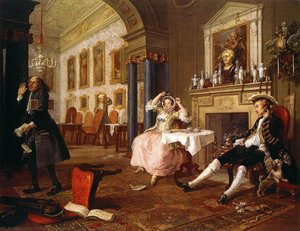
18世紀イギリス美術という壮大なタペストリーにおいて、ウィリアム・ホガースのMarriage à la Mode(時代風の結婚)ほど、鋭い機知と物語の深みを兼ね備えた作品は稀です。1743年に完成したこの類まれな連作は、ジョージ朝時代を定義づけた社会慣習に対する、痛烈な告発としての役割を果たしています。ホガースが描き出したのは、理想化された家庭の幸福ではありません。それは、野心と強欲がいかにして人間関係の根幹を腐敗させていくかを探求した、緻密に構成された演劇的なドラマなのです。豪華に設えられた室内の一瞬の緊張感を描き出すこの絵画では、絢爛豪華な舞台設定が、上流社会の表面下で進行する道徳的退廃と、あまりにも残酷で皮肉な対照を成しています。
この情景は、細部を通じた物語術(ストーリーテリング)の極致といえます。鑑賞者が豊かに装飾された室内へと視線を移すとき、重厚な織物、華美な家具、そして地位への執着を反映した金色の装飾が織りなす世界へと引き込まれていきます。版画家としての卓越した技術に裏打ちされたホガースの技法は、驚異的なまでの精密さを実現しています。シルクの冷ややかな光沢から木目の粗い質感に至るまで、あらゆるテクスチャーが鮮明に描き出されており、その室内はまるで手で触れられるかのような実在感を放っています。こうした細部への徹底したこだわりは、単なる装飾ではありません。それは、あらゆる物体を壮大な社会悲劇における登場人物の一人として機能させる、ホガース独自の視覚的な物語術に不可欠な要素なのです。
象徴の言語と社会の腐敗
この作品を真に理解するためには、表面的な優雅さを超え、構図の中に埋め込まれた象徴を読み解かなければなりません。ホガースは芸術を社会批評の手段として用いた先駆者であり、『Marriage à la Mode』におけるあらゆる要素には重い意味が込められています。作品の核心にあるのは、政略結婚がもたらす悲劇的な結末です。そこでの結婚は魂の結合ではなく、遺産を確保し社会的地位を高めるための戦略的な取引として扱われています。贅沢品や豪華な食事の存在は、ホガryptが容赦なく糾弾した、空虚な物質主義を浮き彫りにしています。
この作品が与える感情的な衝撃は、名声の脆さや虚栄心の代償について、深い思索を促す力にあります。審美眼を持つコレクターやインテリアデザイナーにとって、この芸術作品は単なる美しい焦点(フォーカルポイント)以上の価値を提供します。それは深い知的な対話を誘う、極上の会話の種となるのです。洗練された雰囲気と、その底流に流れる悲劇というテーマの相互作用は、忘れがたいほど美しい緊張感を生み出しています。歴史的な真実と人間の脆弱性が複雑に絡み合うこの作品は、見る者を惹きつけて離さず、イギリス・ロココ美術の不朽のアイコンとして君臨しています。
厳選されたコレクションに欠かせない逸品
空間に歴史的な重厚さと物語の深みをもたらそうとする人々にとって、ホガースの傑作による高品質な複製画は、比類なき選択肢となります。格式高い書斎、壮麗なダイニングルーム、あるいは現代的なギャラリーのいずれにおいても、この絵画は時代を超越した感覚と知的な奥行きを添えてくれます。美と風刺の紙一重の境界を愛でる愛好家にとっても、深い文化的意義を持つ作品によって空間を定義しようとするデザイナーにとっても、この作品は極めて魅力的な存在です。
これほどの格調高い作品を所有することは、ホガースが築き上げた視覚的歴史の遺産に触れることを意味します。この芸術作品は単に壁を飾るだけではありません。それは環境そのものを変容させ、18世紀ロンドンの核心へと向かう窓を開き、社会を映し出す鏡としての芸術の力を、永遠に思い起こさせてくれるのです。
よくあるご質問
ウィリアム・ホガース作「時代の結婚」は、明るい印象の作品ですか、それとも暗い印象の作品ですか?
ウィリアム・ホガース作「時代の結婚」 の記録された数値は、明度 陰影、輝度 柔らかな影 です。
ウィリアム・ホガース作「時代の結婚」のレプリカは、どのような用途に適していますか?
ウィリアム・ホガース作「時代の結婚」の複製画は、対話的に最適です。作品の主題、情緒、そして色彩に基づいたおすすめの活用方法です。
「時代の結婚」全体の明るさはどの程度ですか?
視覚的な明るさの観点から見ると、ウィリアム・ホガース作「時代の結婚」 は 陰影 です。
アーティストについて
A London Life in Ink and Paint: The World of William Hogarth
William Hogarth, born into the bustling heart of 18th-century London in 1697, was more than just an artist; he was a visual historian, a keen observer of human nature, and a satirical commentator on the societal currents of his age. His life story is inextricably linked to the very fabric of England during a period of significant transformation – its burgeoning ambitions, underlying anxieties, and pervasive hypocrisies all finding potent expression in his remarkably detailed and often biting works. The son of a struggling Latin schoolmaster, Hogarth’s early experiences instilled within him both a love for learning and a sharp awareness of social inequalities, a foundation that would prove crucial to shaping his artistic vision. Initially apprenticed to an engraver, he quickly demonstrated a talent extending beyond mere technical skill; he possessed an innate ability to observe the nuances of human behavior and translate them into compelling visual narratives. However, he chafed against the constraints of traditional engraving, seeking a more expressive outlet for his burgeoning creativity. This led him to studies at both St Martin’s Lane Academy and under Sir James Thornhill, where he honed his skills in painting and composition, absorbing influences that would later inform his unique style.The Birth of Modern Moral Subjects
Hogarth's true innovation lay not simply *what* he painted, but *how*. He pioneered what he termed “modern moral subjects” – series of pictures designed to tell a story, often imbued with a strong satirical edge. These weren’t isolated portraits or landscapes; they were visual novels unfolding before the viewer’s eyes, offering pointed commentary on contemporary society. A Harlot's Progress, created in 1742, stands as perhaps his most famous example. This series of six paintings meticulously follows the tragic downfall of Mary, a young woman arriving in London full of hope but quickly succumbing to the temptations and dangers of city life. Each scene is rendered with painstaking detail, filled with symbolic elements that reveal the moral decay surrounding her. The figures are portrayed with unflinching realism, capturing every gesture and expression with remarkable accuracy—a deliberate departure from idealized depictions prevalent at the time. Similarly, A Rake's Progress, begun in 1733, charts the reckless decline of Tom Rakewell, a man who squanders his inheritance on gambling, debauchery, and ultimately, madness. These weren’t merely cautionary tales; they were unflinching portraits of a society grappling with issues of class, morality, and social mobility. Hogarth's genius resided in his ability to elevate everyday scenes – the bustling streets of London, the opulent interiors of the wealthy, the squalid lives of the poor – into works of art that resonated deeply with his audience. He didn’t shy away from depicting the harsh realities of life, presenting them with a blend of humor and pathos that forced viewers to confront uncomfortable truths about themselves and their society.Technique and Influences: A Synthesis of Styles
Hogarth's artistic style was a unique amalgamation of diverse influences. He greatly admired the realism and narrative detail found in the works of Dutch genre painters like Pieter de Hooch, evident in his meticulous depictions of interiors and everyday life. The expressive dynamism of Rembrandt’s portraits also captivated him—a testament to his ability to convey emotion through subtle shading and composition. Furthermore, Hogarth was profoundly impacted by the writings of Jonathan Swift and Henry Fielding, whose satirical wit served as inspiration for his own social observations. He believed that art should not merely be beautiful but should also serve a moral purpose, challenging viewers to think critically about the world around them and their place within it. His technique was characterized by a masterful use of line and shading, particularly evident in his engravings. He employed a distinctive cross-hatching technique—a painstaking process of intersecting lines—that created depth and texture, bringing his scenes to life with remarkable clarity. This method allowed him to capture the nuances of light and shadow, conveying atmosphere and emotion with unparalleled precision. Beyond visual art, Hogarth’s intellectual curiosity extended into various fields, fostering a broader understanding of human psychology and social dynamics.Major Achievements and Legacy
Hogarth achieved considerable renown during his lifetime for his groundbreaking series of paintings and engravings—most notably *A Harlot's Progress* and *A Rake's Progress*. These works established him as a pioneer of “modern moral subjects,” transforming the genre of visual storytelling and influencing generations of artists to come. His unflinching portrayal of social ills—corruption, poverty, hypocrisy—challenged prevailing societal norms and provoked considerable debate among intellectuals and critics alike. He is widely regarded as one of the most important figures in British art history, celebrated for his innovative style, his masterful technique, and his enduring contribution to the visual arts. As Charles Lamb famously remarked, Hogarth’s images were “like books to be read rather than merely looked at”—a testament to their narrative power and intellectual depth. His legacy continues to inspire artists today who strive to engage audiences with thought-provoking stories that illuminate both beauty and truth. He demonstrated that art could serve as a catalyst for social reform, prompting viewers to confront uncomfortable realities and fostering a deeper appreciation for human dignity.Historical Significance: Reflecting the Enlightenment
Hogarth’s artistic output embodies the spirit of the Enlightenment—a period characterized by intellectual curiosity, rational inquiry, and a commitment to humanist values. He rejected idealized representations of virtue and beauty, favoring instead unflinching depictions of human flaws and failings. This bold stance reflected the broader cultural shift toward questioning traditional authority and embracing empirical observation—a hallmark of the era’s philosophical advancements. By confronting viewers with uncomfortable truths about society, Hogarth challenged them to engage in critical reflection and strive for moral improvement—values that resonated deeply with Enlightenment thinkers and contributed to shaping the intellectual landscape of his time. His work stands as a powerful reminder that art can serve as a vehicle for social commentary and inspire transformative change—a legacy that continues to endure centuries after his death.
ウィリアム・ホガース
1697 - 1764 , イギリス
アーティスト情報
- Artistic Movement Or Style: 諷刺、写実主義
- Artists Or Movements Influenced By This Artist: ['ジェイムズ・ギルレイ']
- Artists Who Influenced This Artist:
- ピエートル・デ・フーク
- ジョナサン・スウィフト
- Date Of Birth: 1697年
- Date Of Death: 1764年
- Full Name: William Hogarth
- Nationality: イギリス人
- Notable Artworks:
- ヘイラートの進行記
- ラースペルスの進行記
- 結婚式
- Place Of Birth: ロンドン、イギリス
関連記事

William Hogarth: Satire, Social Commentary & the Birth of Modern British Art
Explore the satirical world of William Hogarth, pioneering British painter & engraver. Discover his iconic works like *A Rake's Progress* and insightful social commentary on 18th-century London life.

The Rococo Aesthetic: Opulence, Rebellion & the Pursuit of Pleasure in 18th-Century Art
Explore the opulent world of Rococo art! Discover its origins, key artists like Watteau & Boucher, and lasting influence on design. Expert insights for collectors & enthusiasts.
John Hoppner: Portraiture, Patronage & British Identity in the Late Georgian Era
Explore the life & work of John Hoppner, a leading Georgian portraitist. Discover his vibrant style, influential patrons, and lasting impact on British art history. Expert insights for collectors.

華麗なるロココ:芸術史を彩る10大傑作の世界
華麗なるロココ美術の世界へ。バロックから生まれた優雅な芸術、その10大傑作を徹底解説!ブーシェ、フロマンなど巨匠たちの技と物語を紐解き、お部屋を彩るアートを見つけよう。OriginalUniqueArt.comで至高の美術館品質レプリカとインテリアアイデアを発見。
Thomas Rowlandson: Satire, Society & the Art of Caricature in Georgian England
Explore the witty world of Thomas Rowlandson, master Georgian caricaturist! Discover his satirical prints & insightful social commentary on 18th-century England. Learn about his life, techniques, and enduring influence.